Published
The point of an environmental lien and AUL search is to find things, and sometimes it does. A recorded lien or an Activity and Use Limitation on the report isn’t the end of the deal. It’s the beginning of an informed negotiation. Here’s how buyers, lenders, and their advisors typically work through a hit.
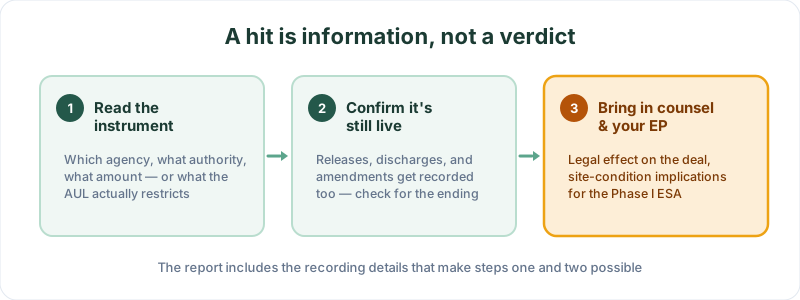
Step one: read what was actually recorded
The report doesn’t just flag that something exists; it identifies the recorded instrument itself. Start there:
- For a lien: which agency recorded it, under what authority, and for what amount (when the instrument states one)
- For an AUL: what the restriction actually prohibits or requires (groundwater use, residential use, digging below a cap, maintaining an engineered barrier)
The gap between “there’s an environmental lien” and “there’s a $40,000 state cost-recovery lien recorded in 2011” is the gap between panic and a plan. Many AULs turn out to be entirely compatible with the buyer’s intended use.
Step two: confirm it’s still live
Recorded claims get resolved, and resolutions get recorded too. A lien paid off years ago should have a release or discharge in the record; an AUL can be amended or terminated when a site reaches a cleaner endpoint. Part of reading a hit is checking whether the record shows the story ended. And because instruments can be recorded any business day, a hit found months before closing is worth re-checking through an updated search before money moves.
Step three: bring in your counsel and your EP
This is where the search report becomes a working document. Your attorney reads the instrument’s legal effect; your environmental professional reads its site-condition implications. Depending on the facts, an EP may treat contamination that’s controlled by an AUL as a controlled recognized environmental condition in the Phase I: a known, managed condition rather than an open question. And in superlien states, counsel will care a great deal about priority.
The paths deals actually take
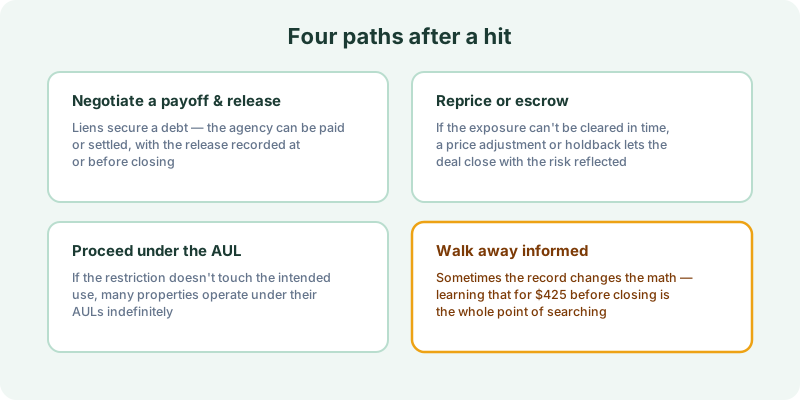
- Negotiate a payoff and release. Liens secure a debt; debts can be paid or settled with the agency, with the release recorded at or before closing.
- Reprice or escrow. If the exposure can’t be resolved before closing, deals move forward with a price adjustment or holdback that reflects it.
- Proceed under the AUL. If the restriction doesn’t touch the intended use (no residential plans on a commercial-use-only site, no wells where groundwater use is barred), many properties simply operate under their AULs indefinitely.
- Walk away informed. Sometimes the record changes the math. Finding that out for $425 before closing is the whole value of searching.
Timing is the leverage
Every option above gets cheaper and easier the earlier the hit is found. A lien discovered three months out leaves room to negotiate a release; the same lien surfacing the week of closing is a fire drill, or a closing that doesn’t happen at all.
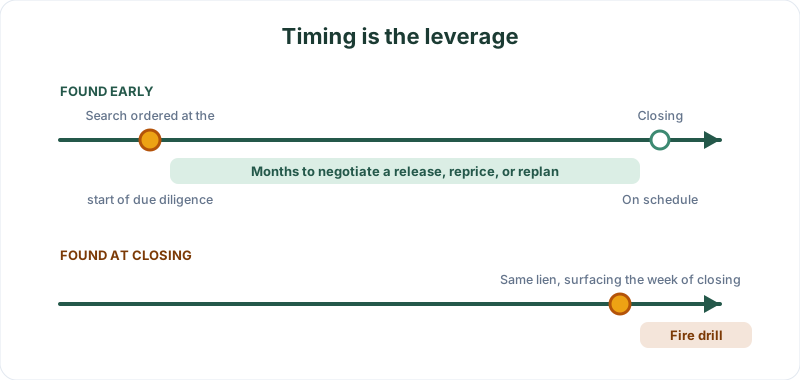
That’s the case for ordering the search at the start of due diligence, not the end. Our 1980 Environmental Lien & AUL report is researched by certified title abstractors and delivered by email in 3–5 business days. You can order online in a few minutes, and see the FAQ for what the report covers.
Get an E1527-21 compliant lien & AUL report
Our 1980 Environmental Lien & AUL reports are researched by certified title abstractors, cover judicial records, and are guaranteed accurate. Delivered in 3–5 business days.
or call 877-848-5337