Published
Running an environmental lien and AUL search on one property is a well understood task. Running it across a nineteen property portfolio under a single purchase agreement is a different exercise, and the failure mode is rarely a missed record. It is a scoping error made in week one that nobody notices until diligence closes. Our guide to how the search is performed covers the single site version. This one is about what changes when there are dozens of them.
Count parcels, not sites
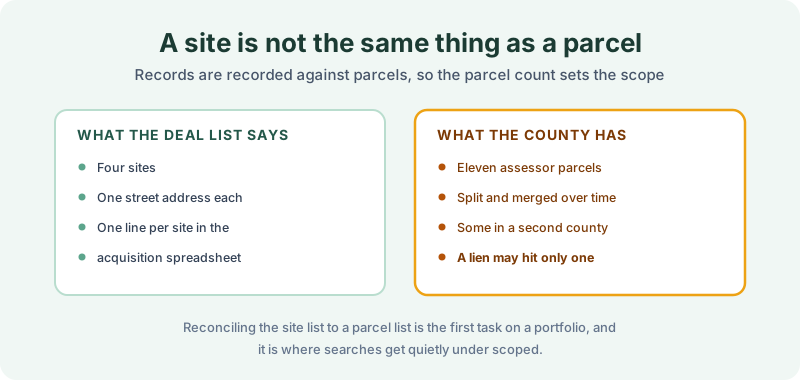
Deal lists are organized around sites, because that is how a business thinks: one address, one operation, one line on the spreadsheet. County records are organized around parcels, because that is what instruments get recorded against. Those two counts are almost never the same.
A single industrial site routinely spans several assessor parcels that were split and merged over decades. Occasionally a parcel sits across a county line, which means two sets of records. And a lien or a recorded restriction may touch only one parcel out of five, which is the case that matters most, because a search scoped to “the site” and run against the primary parcel number will come back clean while an instrument sits on the adjoining strip.
Reconciling the site list into a parcel list, with assessor numbers, legal descriptions, and the county for each, is the first real task on a portfolio. It is unglamorous and it is where searches get quietly under scoped.
Order in one batch, on one clock
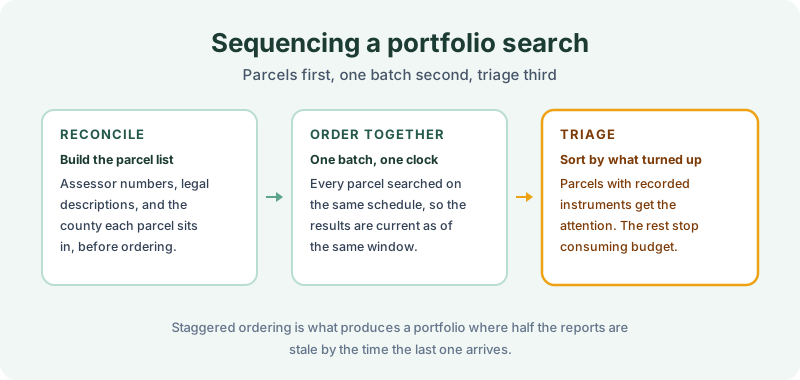
The instinct on a large deal is to order as sites clear internal review, a handful at a time. That produces a portfolio where the first reports are months older than the last, and a records review is only current as of the day it was run. Anything recorded after that date is outside it, which is the same reason single site searches get updated before closing.
Ordering the whole parcel list together keeps the results inside one comparable window. It also means one point of contact and one consistent format across every parcel, which matters more than it sounds when the deliverable is going to a consultant who has to reconcile them.
Two practical notes:
- Sequence the search ahead of the Phase I work, so the environmental professional is reading recorded instruments rather than waiting on them
- Expect to update before closing on a deal with a long diligence period, since the search speaks as of its own date and nothing later
Triage is the point of doing it early
Most parcels in most portfolios come back with nothing recorded. That is a useful result, and it is what makes an early batch worth the money: it tells you which parcels deserve real attention.
The parcels that do carry a recorded lien, an environmental covenant, or an AUL are where the consultant’s hours, counsel’s review, and any price negotiation should go. Sorting the portfolio that way early is far cheaper than spreading attention evenly across nineteen properties and discovering the one that matters in the final week. When something does turn up, what to do when a lien is found covers the paths from there.
County practice sets the pace, not the property
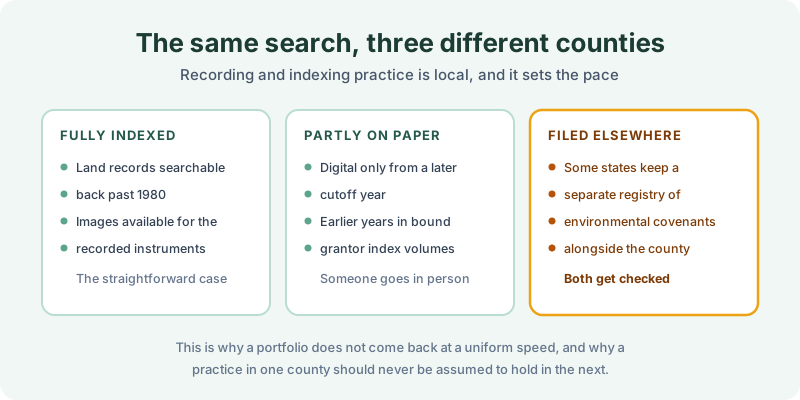
A portfolio spread across eight counties will not come back at a uniform speed, and the reason has nothing to do with the properties. Some counties have land records indexed and imaged well back past 1980. Others are digital only from a later cutoff, with the earlier years in bound grantor index volumes that somebody has to open in person. Some states maintain a separate registry of environmental covenants alongside the county records, so both get checked.
None of that is a defect to route around. It is the reason a records review is work rather than a lookup, and it is why a practice observed in one county should never be assumed to hold in the next. Our FAQ page covers scope and turnaround questions, and the sample report shows what arrives per parcel. For how this fits the wider standard, see our ASTM E1527-21 guide.
The 1980 Environmental Lien & AUL report is the same product at any volume: certified title abstractors review land title and judicial records from 1980 to the present and document every environmental lien, encumbrance, and AUL found, with the recorded instruments attached. It’s $425, delivered by email in 3–5 business days. Order online, and send the parcel list rather than the site list.
Get an E1527-21 compliant lien & AUL report
Our 1980 Environmental Lien & AUL reports are researched by certified title abstractors, cover judicial records, and are guaranteed accurate. Delivered in 3–5 business days.
or call 877-848-5337