Published
Asbestos and lead paint are among the most heavily regulated hazards in American buildings, and a records search will almost never find either one. That is not a gap in the search. It is a difference in how the two regimes work, and understanding it prevents a client drawing the wrong conclusion from a clean report. The same distinction underlies how an environmental lien and AUL search is performed.
Two regimes that behave differently
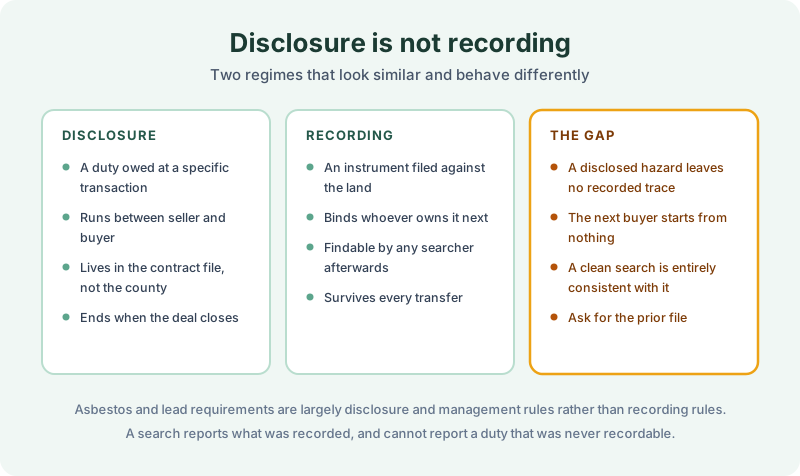
Disclosure is a duty owed at a transaction. A seller or landlord tells a buyer or tenant what they know, provides the pamphlet, and the obligation is discharged. It lives in the contract file. It runs between the two parties and it ends when the deal closes.
Recording puts an instrument against the land. It binds whoever owns the property next, it is findable by any searcher afterwards, and it survives every transfer.
The federal requirements for lead-based paint in pre-1978 housing and the workplace and renovation rules for asbestos are overwhelmingly of the first kind. They govern conduct rather than creating interests in land, which is why the county recorder has nothing to say about them.
The gap this creates is specific. A hazard disclosed in 2004 leaves no recorded trace, so the buyer in 2026 starts from nothing, and a clean search is entirely consistent with a building full of known asbestos.
It is worth noticing that this is a deliberate design rather than an oversight. Recording systems exist to establish interests in land so that later purchasers take subject to them. A duty to hand somebody a pamphlet is not an interest in land, and loading the index with it would serve nobody.
When it does reach the record
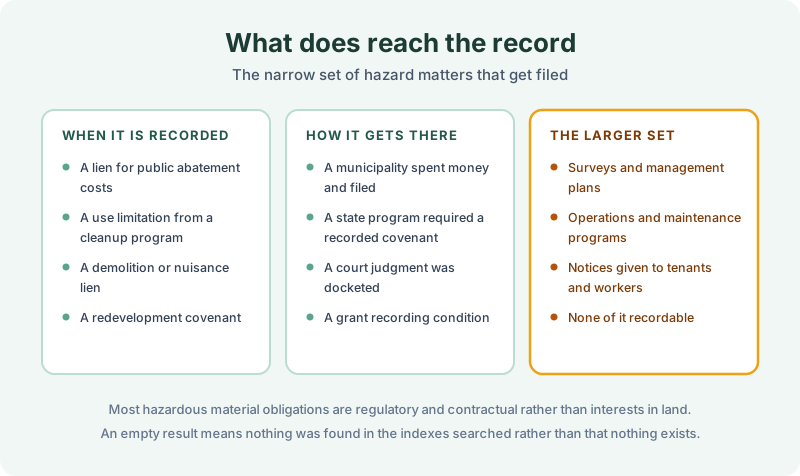
Four situations, and they are narrower than people expect. A municipality that spent public money abating a hazard and filed a lien to recover it, which is the territory of nuisance abatement and demolition liens. A use limitation imposed by a state cleanup program where the material formed part of a site-wide remedy. A judgment docketed after litigation. Or a covenant recorded as a condition of a redevelopment grant or loan.
Everything else stays unrecorded. Asbestos surveys, operations and maintenance plans, clearance reports after abatement, and notices given to tenants and workers are all documents rather than interests in land, and none of them is recordable.
The lien cases deserve a closer look because they behave like any other lien once filed. They are indexed against the parcel, they have a priority position, and they can be foreclosed. A searcher will find one in the ordinary course, and it will say nothing about whether material remains in the building today.
What to ask for instead
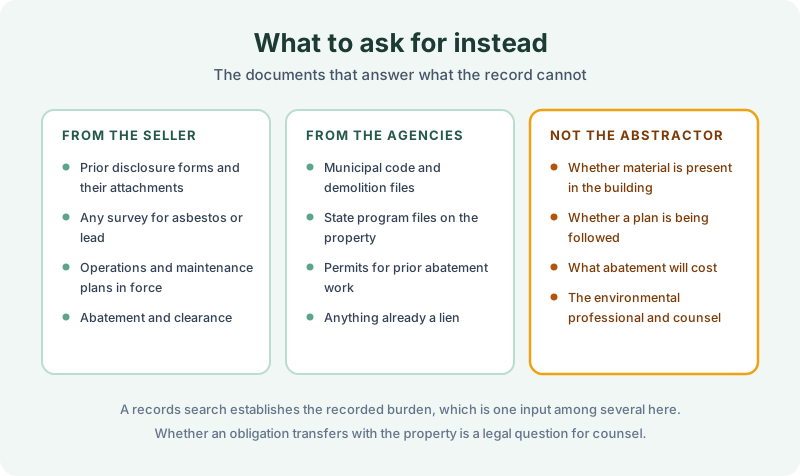
From the seller, prior disclosure forms with their attachments, any survey for asbestos or lead, any operations and maintenance plan currently in force, and abatement records with clearance reports. An O and M plan is worth particular attention, because it imposes ongoing obligations that a new owner will inherit in practice even though nothing binds them through the land record.
From the agencies, municipal code and demolition files, state program files on the property, permits for prior abatement work, and anything that was reduced to a recorded lien. That last one is the piece a records search does cover, and it is worth ordering precisely because it is the only part of this subject the record can settle.
What none of it is, is abstractor work. Whether material is present in the building, whether a management plan is being followed, and what abatement would cost are questions for an environmental professional and, where obligations are in dispute, for counsel.
What to tell a client
That the search establishes the recorded burden on the land, which on this subject is a small part of the picture, and that the absence of a finding is not evidence the building is clean. A clean result means nothing was found in the indexes searched over the term searched, and recording practice is local.
Where a site has been through a formal cleanup, the recorded instruments become genuinely informative, which is the situation described in voluntary cleanup programs and what gets recorded.
The 1980 Environmental Lien & AUL report covers the recorded half properly. Certified title abstractors review land title and judicial records from 1980 to the present and document every environmental lien, encumbrance, and AUL found, with the recorded instruments attached. It’s $425, delivered by email in 3–5 business days. Order online, and treat the building materials question as separate diligence running alongside it.
Get an E1527-21 compliant lien & AUL report
Our 1980 Environmental Lien & AUL reports are researched by certified title abstractors, cover judicial records, and are guaranteed accurate. Delivered in 3–5 business days.
or call 877-848-5337