Published
A lien search on a vacant industrial parcel comes back with a filing from the city, and the description says something about removal of debris and abatement of a nuisance. It is money owed, it is attached to the land, and it is not an environmental lien. Confusing the two is easy, because they arrive through the same recorder and sit in the same index, and the consequences of mislabeling either one are real. Anyone who has read our note on what an environmental lien actually is will recognize the difference once it is spelled out, but the first encounter is genuinely ambiguous.
Why a city ends up with a lien on private land
Local governments have ordinance authority to fix things owners will not, and then to bill the property for the work.
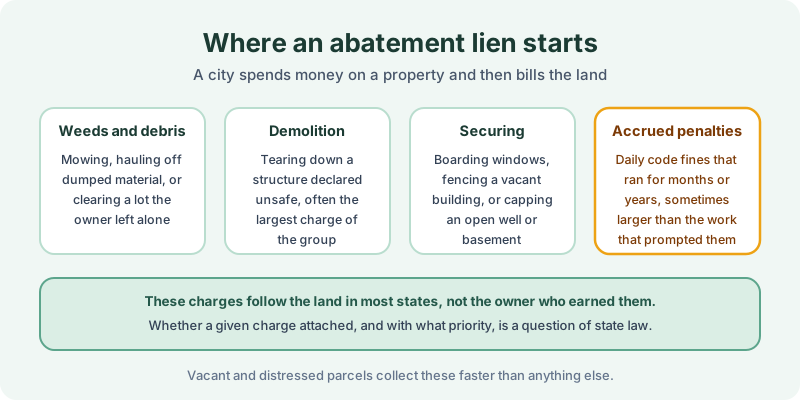
The work is ordinary municipal housekeeping. Crews mow an overgrown lot, haul off dumped tires and appliances, board up a building that neighborhood kids have been getting into, fence an open excavation, or in the largest cases demolish a structure a building official has declared unsafe. Each of those costs money, and the ordinance typically lets the city recover it by recording a claim against the parcel or certifying the charge to the tax roll.
Accrued code enforcement penalties are the item that surprises people most. A daily fine that ran for two years can exceed the cost of the work that triggered it, and on a parcel that has been sitting vacant through a stalled redevelopment, exactly that has often happened. These charges generally follow the land rather than the owner who earned them, which is why they turn up as a closing problem for a buyer who had nothing to do with the history.
What separates it from an environmental lien
Both instruments recover a cleanup cost. What differs is who filed, under what authority, and what the filing tells you about the property.
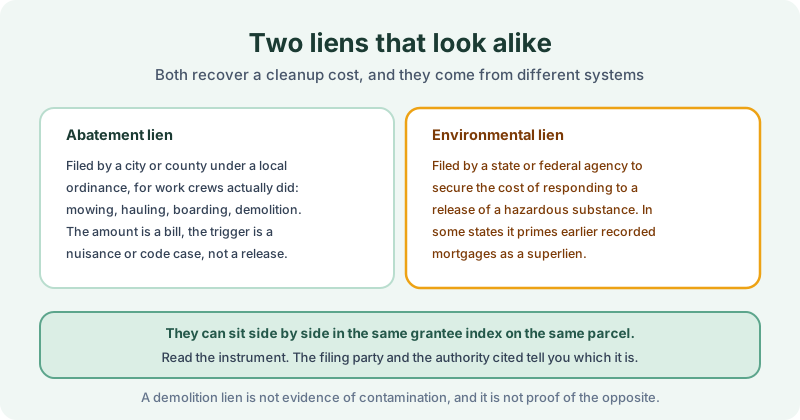
An abatement lien is filed by a city or county under a local ordinance, for physical work already performed. An environmental lien is filed by a state or federal agency to secure the cost of responding to a release of a hazardous substance, and in a superlien state it can take priority over a mortgage recorded long before it.
Read the instrument rather than the index entry. The filing party, the authority cited, and the description of the work distinguish them in almost every case. Two cautions run in opposite directions here. A demolition lien is not evidence of contamination, so do not report it as an environmental finding. And a demolition lien is not evidence of the absence of contamination either, because a building official condemning a structure is not making a determination about soil or groundwater.
Where a municipal charge can hide
This is the practical problem, and it is a scope problem more than a research problem.
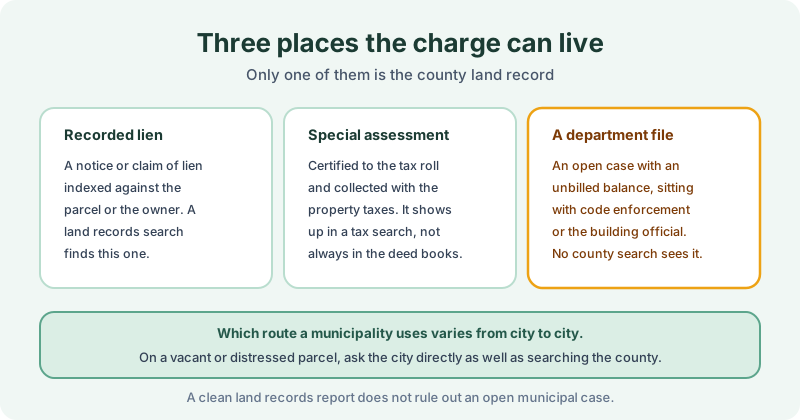
Some cities record a notice or claim of lien in the county land records, where a title or lien search finds it in the ordinary course. Others certify the charge to the tax roll as a special assessment, so it appears in a tax search and may never touch the deed books. And some charges are simply an open balance in a code enforcement or building department file, unrecorded and uncertified, waiting for someone to ask.
Practice varies from municipality to municipality inside a single county, which means the honest thing to say about a clean land records report is that it found no recorded charge. It does not establish that no open case exists. On a vacant, distressed, or tax foreclosed parcel, calling the city is worth the phone time alongside the records work.
Why it belongs in the file anyway
Even though these liens are not environmental, they belong in the diligence file for two reasons. They are dollars that have to be resolved before or at closing, and they are a signal about how the property has been treated and how attentive the local government has been to it. A parcel with a demolition lien and three abatement charges has a history that is worth chasing further, which is often the redevelopment record rather than the environmental one.
Our 1980 Environmental Lien & AUL report is the tool for the environmental half: certified title abstractors review land title and judicial records from 1980 to the present and document every environmental lien, encumbrance, and AUL found, with the recorded instruments attached, so the wording can be read rather than paraphrased. It’s $425, delivered by email in 3–5 business days. Order online, or read what to do when a lien is found next.
Get an E1527-21 compliant lien & AUL report
Our 1980 Environmental Lien & AUL reports are researched by certified title abstractors, cover judicial records, and are guaranteed accurate. Delivered in 3–5 business days.
or call 877-848-5337