Published
Sellers of former industrial property tend to arrive with a letter. It is on agency letterhead, it says the work is complete, and it is offered as the end of the conversation. The letter is genuinely good news and it is not the document that governs the parcel. What governs the parcel is whatever was recorded against it, which is a separate piece of paper that somebody had to take to the recorder. Understanding the difference is most of what a buyer needs from this subject, and it is the same distinction that makes institutional control registries useful but not sufficient.
Two routes to a closed file
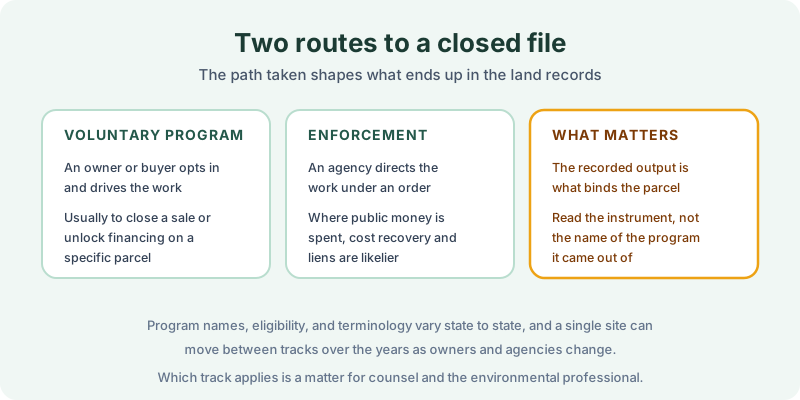
Broadly, sites reach closure two ways. In a voluntary program, an owner or a prospective buyer opts in and drives the work, usually because a sale or a loan depends on it. Under enforcement, an agency directs the work through an order, and because public money is more often spent there, cost recovery and recorded liens are more likely to appear.
Program names, eligibility rules, and terminology differ substantially from state to state, and a single site can move between tracks across thirty years as owners and agencies change. Which track applies to a given parcel is a question for counsel and the environmental professional.
For records purposes the distinction matters less than people expect, because the output is what binds the land. Read the instrument rather than the name of the program it came out of.
A letter is not an instrument
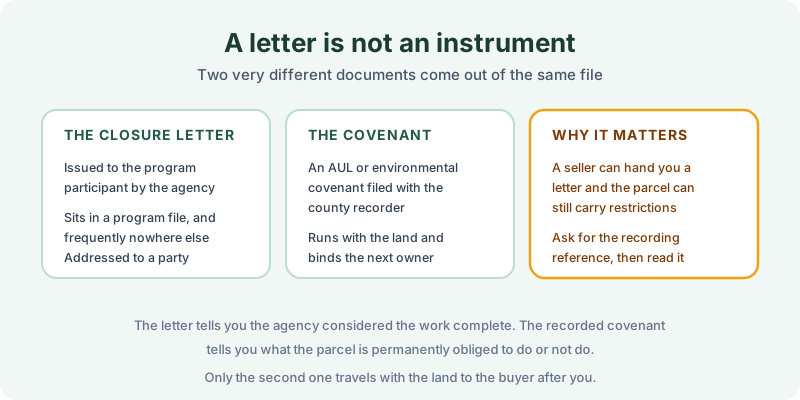
Here is the division that catches buyers.
A closure letter, no further action letter, or certificate of completion is issued to the program participant. It is addressed to a party, it reflects the agency’s view of the work at that time, and it typically sits in a program file rather than in the county index.
An environmental covenant or activity and use limitation is recorded with the county recorder. It runs with the land, and it binds whoever buys next regardless of who negotiated it or whether they were told about it.
So a seller can hand over a perfectly valid letter while the parcel carries recorded obligations the letter never mentions. Ask for the recording reference, then read the instrument. A summary of a restriction tells you it exists; the recorded document tells you what the parcel must do, must not do, and who has to be notified.
Recording is a step somebody takes
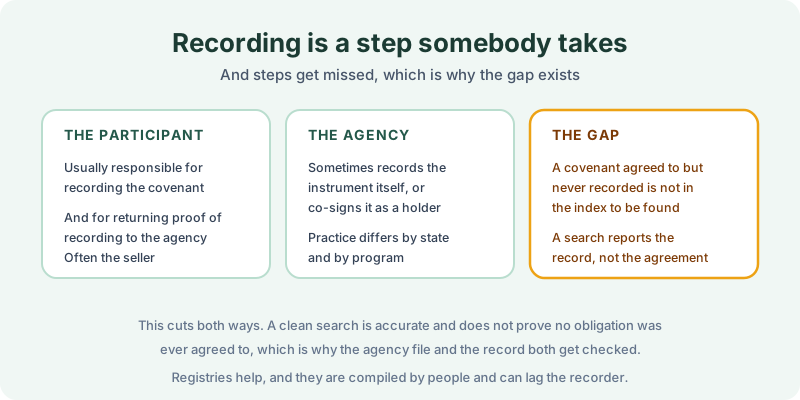
Because recording is an action rather than an automatic consequence, it can be done late, done wrong, or not done at all.
The participant is usually responsible for recording the covenant and returning proof of recording to the agency, and the participant is frequently the seller. Some agencies record instruments themselves or co-sign as a holder. Practice differs by state and by program, and it has changed over time within the same state.
The consequence cuts both ways, and both directions are worth stating plainly. A covenant that was agreed to but never recorded is not in the index for anyone to find, so a clean search is accurate and does not prove no obligation was ever accepted. Equally, a restriction that was recorded stays recorded whether or not a database reflects it, which is why we search the record itself rather than relying on a compiled list.
What to ask for before closing
Three requests cover most of it. The recording reference for any covenant or restriction affecting the parcel, so it can be pulled and read. The closure documentation itself, which the environmental professional will want in any event. And a search that covers the parent tract as well as the parcel, since restrictions on formerly larger holdings are a routine source of surprise.
Then read the search result for what it is. It reports what was found of record for the parcel and term searched, on the date searched. It is not an inventory of every obligation a prior owner may have accepted somewhere, and what to do about anything found is a separate conversation with counsel.
Order the records half
If a parcel went through a state program, the recorded output is the part that follows the land to you. Our 1980 Environmental Lien & AUL report locates it: certified title abstractors review land title and judicial records from 1980 to the present and document every environmental lien, encumbrance, and AUL found, with the recorded instruments attached. It’s $425, delivered by email in 3–5 business days. Order online, or see a sample report first.
Get an E1527-21 compliant lien & AUL report
Our 1980 Environmental Lien & AUL reports are researched by certified title abstractors, cover judicial records, and are guaranteed accurate. Delivered in 3–5 business days.
or call 877-848-5337