Published
CERCLA’s blunt starting point is that the current owner of a contaminated property can be held liable for cleanup, even for contamination it had nothing to do with. Congress built exits: the innocent landowner, the contiguous property owner, and the workhorse of modern deals, the bona fide prospective purchaser (BFPP), added by the 2002 Brownfields amendments. The BFPP protection is what lets a buyer purchase with eyes open (even knowing about contamination) without inheriting CERCLA cleanup liability, provided its conditions hold.
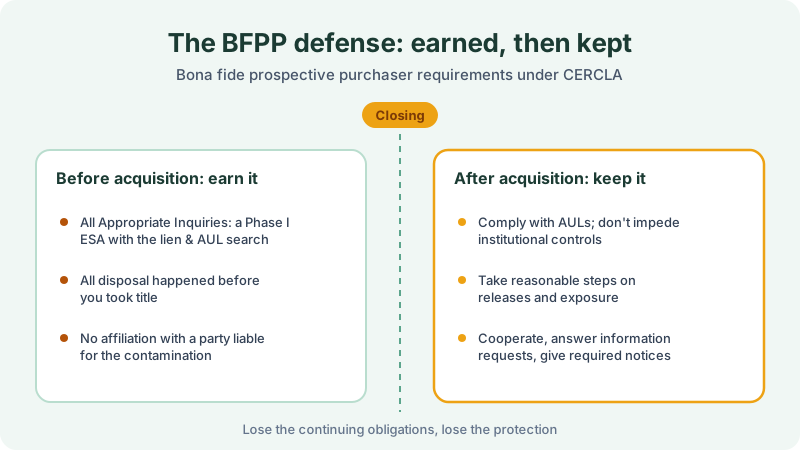
Most of the attention goes to the conditions you satisfy before closing, and fairly so: All Appropriate Inquiries must be complete before you acquire. But the defense isn’t a certificate you frame at closing. It’s a course of conduct: earned before the deal, kept alive after it.
What a BFPP shows at acquisition
Three things have to be true on the day you take title:
- All Appropriate Inquiries were performed: in practice, a Phase I ESA under ASTM E1527-21, including the environmental lien and AUL records review
- All disposal of hazardous substances happened before you acquired the property
- You’re not affiliated with any party liable for the contamination
The continuing obligations
From closing day forward, the statute expects the owner to keep holding up its end. The core obligations:
- Comply with land-use restrictions and don’t impede institutional controls. The Activity and Use Limitations recorded against the property aren’t someone else’s problem; honoring them is a condition of your protection.
- Take reasonable steps to stop continuing releases, prevent threatened future releases, and prevent or limit exposure to earlier ones.
- Cooperate with response actions, including providing access to the people carrying them out.
- Comply with CERCLA information requests and subpoenas.
- Provide any legally required notices about releases at the property.
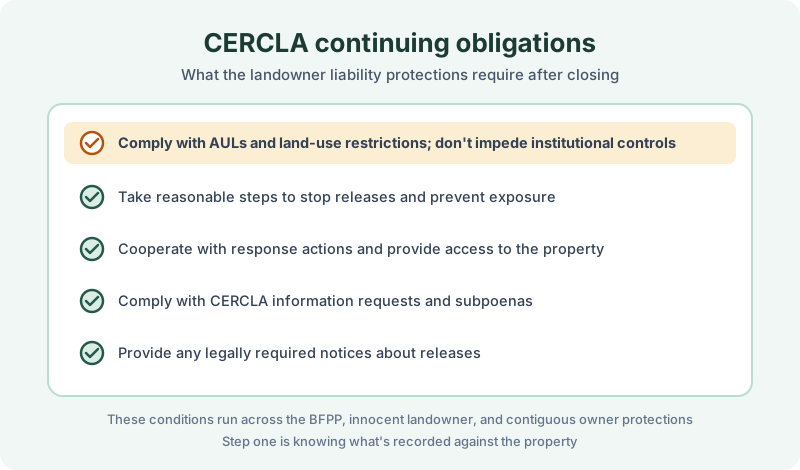
The innocent landowner and contiguous property owner protections carry their own, closely parallel obligations. This isn’t a BFPP quirk. And courts treat the list as real: federal courts have stripped a buyer of BFPP status for falling short on post-closing care of the property. The Phase I was done; the follow-through wasn’t.
You can’t comply with a restriction you’ve never seen
Look back at the first obligation. Complying with AULs and institutional controls assumes you know what’s recorded against the property: the covenant from a 1990s cleanup, the deed notice requiring a soil management plan, the cap you’re obligated to maintain. Those instruments live in the land records, and finding them is what the lien and AUL search is for.
That gives the pre-closing search a second job. It’s an All Appropriate Inquiries component going in. Coming out, it’s the operating manual for the restrictions you’ve just agreed to live with. A buyer who closes without it isn’t just risking the defense on the front end; they’re guessing at the obligations that keep it alive.
The windfall lien: protected doesn’t mean unencumbered
One more wrinkle worth knowing. Under CERCLA Section 107(r), when EPA incurs unrecovered response costs cleaning up a property and the cleanup increases the property’s fair market value, the United States can hold a lien on that property, capped at the increase in value attributable to the cleanup, even though its BFPP owner isn’t liable for the costs themselves. This windfall lien is rarely asserted, but it’s a real encumbrance on real property, perfected by filing notice in the records.
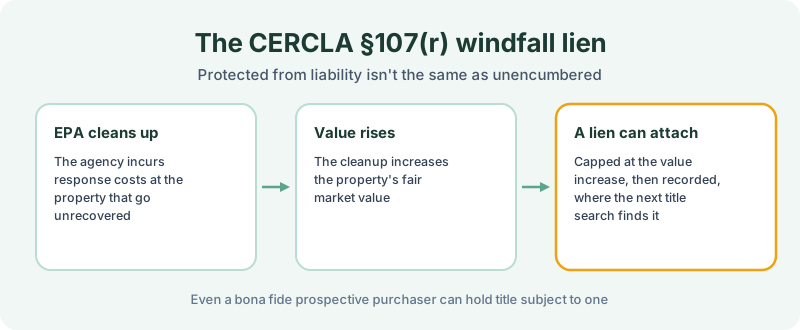
Which closes the loop: even a property whose owner did everything right can carry a recorded environmental lien for the next buyer’s search to find. Add the states that give their own cleanup liens superpriority over earlier mortgages, and the case for searching the record (every transaction, every time) makes itself.
The takeaway
The BFPP defense rewards buyers who do the work: full inquiries before closing, honest follow-through after. Our 1980 Environmental Lien & AUL report covers the records half of that bargain: certified title abstractors review title and judicial records from 1980 to the present and document every environmental lien, encumbrance, and AUL found. It’s $425, delivered by email in 3–5 business days: order online in a few minutes. And if the search does turn something up, here’s what happens next.
Get an E1527-21 compliant lien & AUL report
Our 1980 Environmental Lien & AUL reports are researched by certified title abstractors, cover judicial records, and are guaranteed accurate. Delivered in 3–5 business days.
or call 877-848-5337