Published
The environmental lien and AUL search is one of the cheapest and fastest items in a commercial due diligence budget, and it is routinely one of the last things ordered. That sequencing is backwards, and it has very little to do with the search itself. A report that arrives on the last day of a contingency period tells you exactly as much as one that arrives on day eight. What it does not give you is time to do anything about what it says, which is the whole reason the standard assigns it to you rather than treating it as paperwork.
The window you are actually working inside
Most commercial purchase agreements give a buyer somewhere between two weeks and 60 days of diligence, with 30 days as a common middle. Inside that window sit the property condition assessment, the survey, zoning and entitlement review, the title commitment, financing, and the Phase I ESA with its supporting inquiries. The lien and AUL search is a small line item competing with much louder ones.
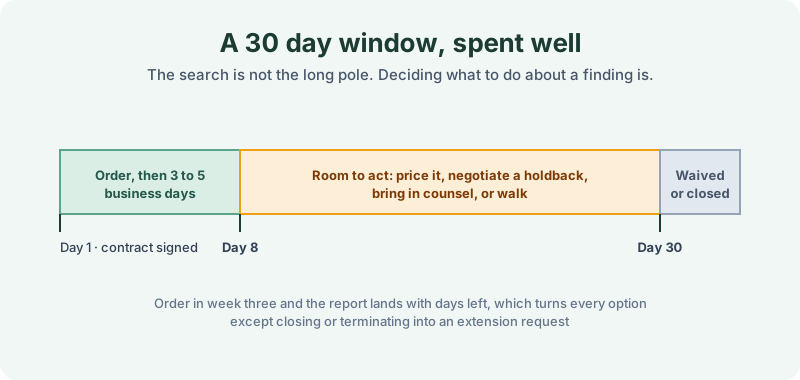
Order in week one and a 3–5 business day turnaround puts the report in hand around day eight, leaving three full weeks to absorb a finding. Order in week three and the same report arrives with days to spare, at which point most of your options have quietly expired.
Why early ordering pays for itself
A recorded environmental instrument is rarely a simple yes or no. An Activity and Use Limitation has to be read to know whether it restricts the buyer’s intended use, whether it imposes continuing obligations, and who is responsible for them. A cleanup lien raises questions about the amount claimed, whether the underlying matter is closed, and whether a release should have been recorded. None of that is a same-afternoon determination.
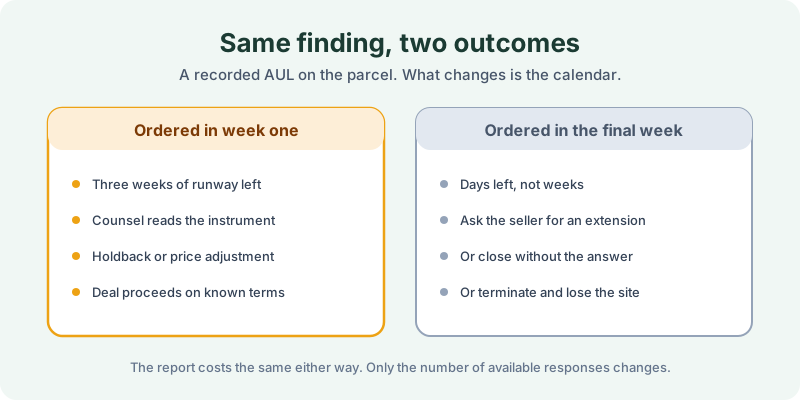
Found early, a recorded restriction becomes a negotiation: a price adjustment, an escrow holdback, a seller obligation to pursue a release, or a documented decision to accept it. Found late, the same restriction forces a choice between asking the seller for an extension, closing without understanding it, and walking away from a site you wanted. The report costs the same in both scenarios. Only the number of available responses changes.
There is a second reason to go early. The search result often shapes the rest of the diligence scope. A recorded covenant restricting groundwater use or requiring vapor controls is information your environmental professional will want while the Phase I is still open, not after it has been issued. The REC and CREC determinations remain theirs to make, and giving them the recorded documents early makes those calls better informed.
What can stretch the turnaround
Three to five business days is the normal case, not a guarantee. A handful of conditions reliably add time, and knowing them in advance is the difference between a schedule and a hope.
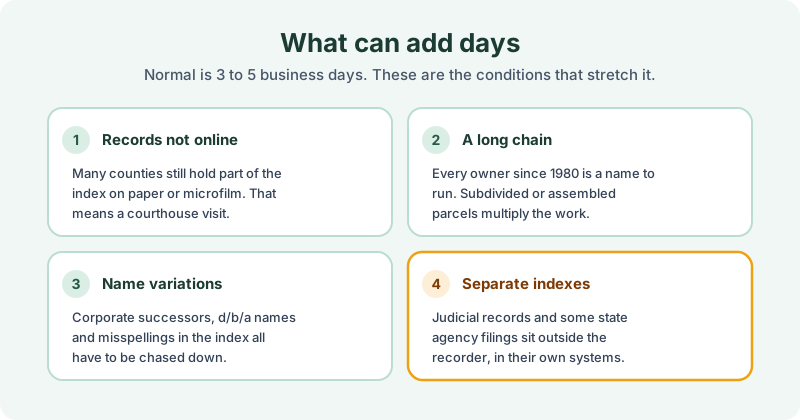
Recording and indexing practice varies considerably between counties, and plenty of jurisdictions still keep part of the index off line. Long ownership chains mean more names to run since 1980. Corporate successors, assumed names, and index misspellings each have to be chased. Judicial records and certain state agency filings live in systems separate from the recorder’s office. If a property has several of these features at once, build in the extra days rather than discovering them in the final week.
When the closing slips
Closings move, and a search is only current through the day it was run. If your date moves materially, treat a refresh as routine rather than optional: a lien can be recorded on any business day, and a seller can record a covenant mid-transaction as a cleanup wraps up. The shelf-life rules put hard edges on this, but the practical rule is simpler. A report reflects the records searched as of its date, and an empty result is not a warranty that nothing exists or will exist tomorrow.
Two habits keep this from becoming a scramble. Schedule the refresh against the funding date rather than the original closing date, so a second slip does not strand you again. And tell us early if the deal is one where the date is likely to move, because a property whose records need a courthouse visit is one you would rather order twice with time to spare than once in a hurry. Lenders in particular tend to want the search current at funding, not current at contract, and that expectation is easier to meet when it is on the schedule from the start.
Our 1980 Environmental Lien & AUL report is researched by certified title abstractors who review land title and judicial records from 1980 to the present and document every environmental lien, encumbrance, and AUL found, with the recorded instruments attached. It is $425, delivered by email in 3–5 business days, which is why it belongs in week one instead of week four. Order online when the contract is signed, review a sample report beforehand, or see what happens when a search comes back with a hit.
Get an E1527-21 compliant lien & AUL report
Our 1980 Environmental Lien & AUL reports are researched by certified title abstractors, cover judicial records, and are guaranteed accurate. Delivered in 3–5 business days.
or call 877-848-5337