
Published
Food processing sites get underestimated more consistently than any other category in this work. The product was peas or milk or fruit, the buildings are tidy, and nobody associates a cannery with contamination. The chemistry was never in the product. It was in the refrigeration, the cleaning and the wastewater, and the wastewater is usually where the finding is. Scoping the records half follows how an environmental lien and AUL search is performed, widened to include ground the plant never occupied.
What a food plant leaves
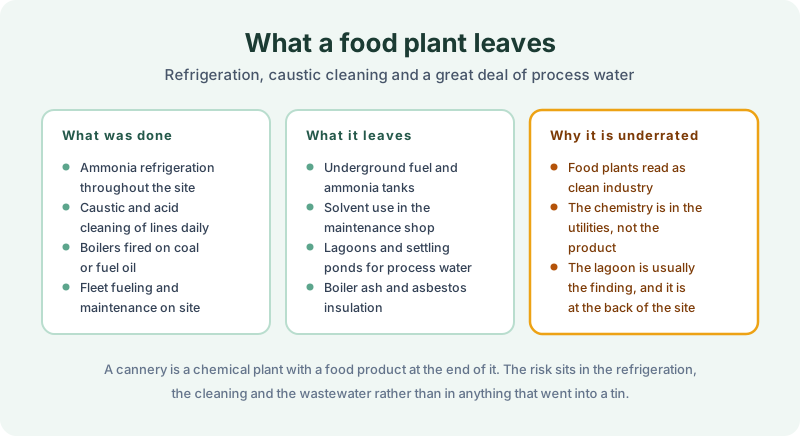
Four operations account for nearly all of it. Ammonia refrigeration ran throughout these plants, in quantity, with the associated piping and storage. Caustic and acid cleaning of lines and tanks happened daily, in volume, and had to be neutralized and discharged somewhere. Boilers fired on coal or heavy fuel oil supplied the process heat. And most plants of any size fueled and maintained their own fleet on site.
What that leaves is a familiar industrial set. Underground fuel and ammonia tanks, frequently abandoned in place. Solvent use in the maintenance shop. Boiler ash and asbestos pipe insulation. And the defining feature, lagoons and settling ponds built to hold process water before discharge or land application.
The reason these sites are underrated is that the risk is in the utilities rather than in the product, and the lagoon is at the back of the property rather than under the building anybody is buying. A site walk focused on the plant can miss it entirely.
Two further features are worth knowing. Many of these plants ran seasonally, which meant idle equipment, drained lines and tanks left part full for months at a time, and the corrosion that follows. And a great many sat on the edge of a town precisely because they needed water and discharge capacity, so the surrounding ground is frequently agricultural and frequently the same ground the wastewater went to.
What reaches the land record
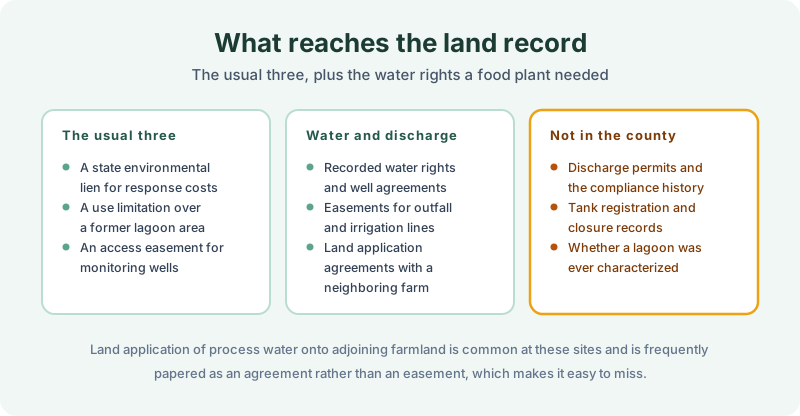
The three familiar instruments appear here as anywhere. A state environmental lien where public money has been spent on response costs. An activity and use limitation, which on these sites typically covers a former lagoon area and bars disturbance. An access easement for monitoring wells.
Food plants add a category of their own, because they needed water and had to get rid of it. Recorded water rights and well agreements, easements for outfall and irrigation lines, and land application agreements with a neighboring farm. That last one matters and is easy to miss, because process water sprayed onto adjoining farmland for years is frequently papered as a contract rather than as an easement, so it may be indexed under names rather than against the parcel.
Refrigeration deserves a line of its own. Ammonia systems were regulated and inspected, and where a release occurred the response may have been handled entirely by a state agency with nothing recorded in the county at all. A clean land record is not evidence the system never failed.
What stays with the agencies is the operating history. Discharge permits and their compliance record, tank registration and closure documentation, and whether a lagoon was ever characterized at all. That is the boundary of what recording captures rather than a shortfall in the search, which is the same point as in data gaps in an environmental lien search.
Scoping the records work
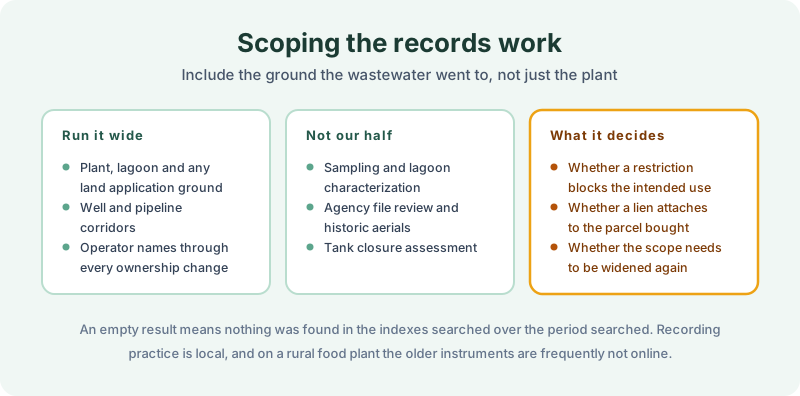
Run the plant, the lagoon and any ground that took land applied wastewater, which is regularly not the parcel anybody is buying. Well and pipeline corridors, since those were commonly conveyed separately. And operator names through every ownership change, because the food industry consolidated repeatedly and the company named on a lien may be several names back.
Land title and judicial records from 1980 forward, on every parcel, with the instruments attached in full. Where a use limitation covers a former lagoon, the recorded exhibit describing that area is the document that decides whether a redevelopment plan survives.
Run it alongside the environmental professional. Sampling, lagoon characterization, agency file review, historic aerials and tank closure assessment are theirs, and the REC call belongs to the consultant. The buyer’s own user responsibilities stay with the buyer.
Order early. Recording practice is local, rural food plants sit in counties where the older instruments are frequently not online, and an empty result means nothing was found in the indexes searched over the period searched rather than that a parcel is clean.
The 1980 Environmental Lien & AUL report is where that records work gets done. Certified title abstractors review land title and judicial records from 1980 to the present and document every environmental lien, encumbrance, and AUL found, with the recorded instruments attached. It’s $425, delivered by email in 3–5 business days. Order online, or read what an environmental lien means once one turns up first.
Get an E1527-21 compliant lien & AUL report
Our 1980 Environmental Lien & AUL reports are researched by certified title abstractors, cover judicial records, and are guaranteed accurate. Delivered in 3–5 business days.
or call 877-848-5337