
Published
Most of what goes wrong with a lien and AUL report happens after it is delivered. The document itself is usually fine. Somebody reads the finding without reading the scope, or reads a clean result as a clean site, or hands a recorded covenant to a client with an interpretation the abstractor never offered. None of those are drafting problems. They are reading problems, and they are worth heading off, because the report is evidence in a file that other people will rely on.
Three parts, in the order that matters
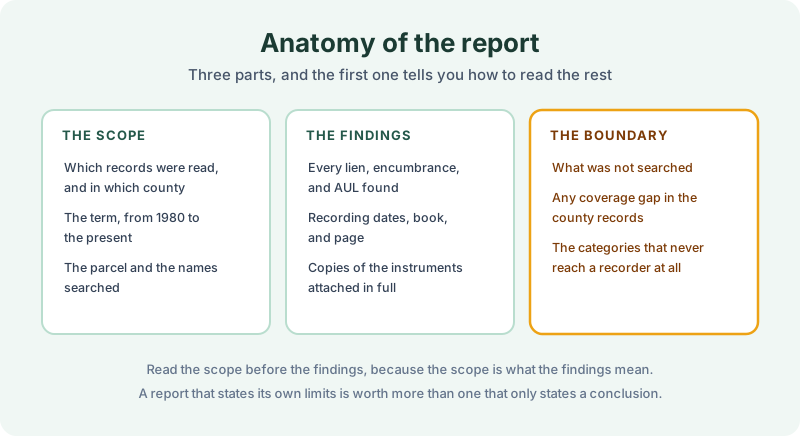
The scope names which records were read, in which county, over what term, and against which parcel and names. It comes first for a reason. Everything in the findings section means what it means only in relation to this paragraph, and a finding read without it is a sentence with no subject.
The findings list every lien, encumbrance, and AUL found, with recording dates, book and page, and copies of the instruments attached in full. Attached matters. A summary is somebody’s reading of a document, and the document is the thing that binds the land.
The boundary describes what was not searched. Coverage gaps in the county records, categories that never reach a recorder, and anything outside the term. Our note on data gaps covers how those get recorded honestly.
Read them in that order and the report behaves as intended. Read the middle section alone and it will mislead you.
Reading one finding
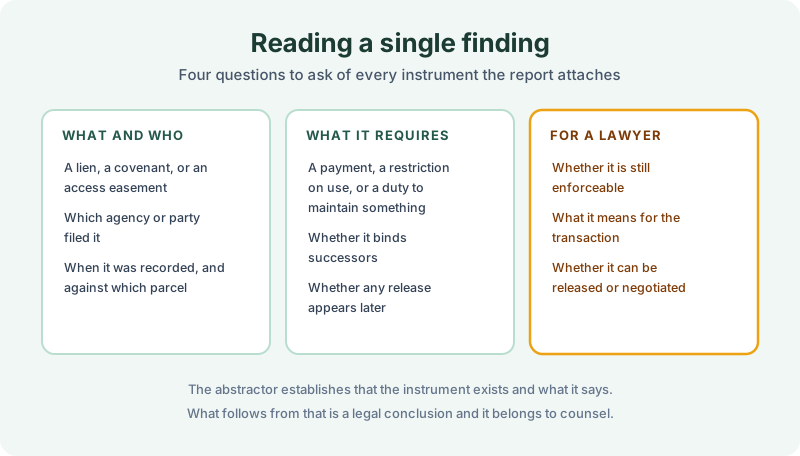
Ask four things of each instrument. What kind is it, a lien, a covenant, or an access easement, since the three behave completely differently. Who filed it, meaning which agency or party, and when, and against which parcel.
Then, what does it actually require. A payment, a restriction on use, or a duty to maintain a cap or a monitoring system. Whether it binds successors, which most do. Whether any release or amendment appears later in the chain, since a covenant recorded in 1998 may have been modified in 2011, as terminating or modifying an AUL describes.
What the report does not tell you is whether the instrument is still enforceable, what it means for the transaction, or whether it can be released or negotiated. Those are legal conclusions. The abstractor establishes that the instrument exists and reproduces what it says, and counsel takes it from there.
Reading a report that found nothing
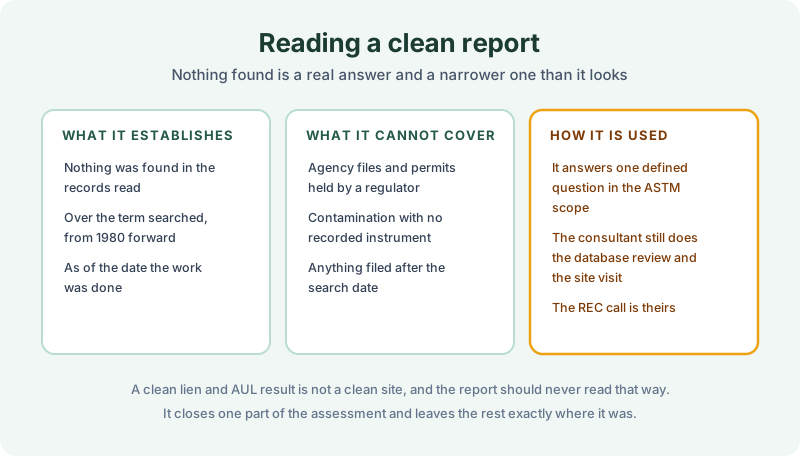
A clean result establishes that nothing was found in the records read, over the term searched, as of the date the work was done. That is a genuine and useful statement.
It cannot cover agency files and permits held by a regulator, contamination that produced no recorded instrument, or anything filed after the search date. Those are structural limits rather than shortcomings, and they are the reason the search is one component of an assessment rather than the whole of it.
Which brings the point home. A clean lien and AUL result is not a clean site. The search answers one defined question inside the ASTM scope, and the consultant still does the database review, the interviews, and the site reconnaissance. The recognized environmental condition call is theirs, as user responsibilities under the Phase I standard sets out, and no report from us should ever read as though it settles that. Recording and indexing practice varies by county, so what an index could even contain is a local fact.
There is a timing point inside that last limit worth stating separately. The report speaks as of the day the work was done, and a Phase I has its own shelf life, so a search performed early in a long transaction is describing a record that has had months to change. Our note on the 180 day rule covers how those two clocks interact.
What to do with it
File it whole, including the scope and boundary sections, because a finding extracted into an email loses the context that makes it accurate. Where a finding matters, read the attached instrument rather than the summary line. Where a question is legal, send it to counsel. And where the report is clean, record that the recorded question was answered and leave the rest of the assessment doing its own work.
A 1980 Environmental Lien & AUL report is built to be read this way. Certified title abstractors review land title and judicial records from 1980 to the present and document every environmental lien, encumbrance, and AUL found, with the recorded instruments attached. It’s $425, delivered by email in 3–5 business days. Order online, or see the FAQ for how scope gets confirmed before the work starts.
Get an E1527-21 compliant lien & AUL report
Our 1980 Environmental Lien & AUL reports are researched by certified title abstractors, cover judicial records, and are guaranteed accurate. Delivered in 3–5 business days.
or call 877-848-5337