
Published
Most writing about activity and use limitations treats them as permanent. In practice they change. Sites get cleaned up further, uses shift, parcels are subdivided, and the covenant recorded in 1998 stops describing anything that exists. So a search sometimes turns up not just an AUL but an amendment to one, or a termination, and reading that correctly is a different job from reading the original. It builds on what an AUL actually requires, which covers the obligations while they are live.
Why one gets revisited
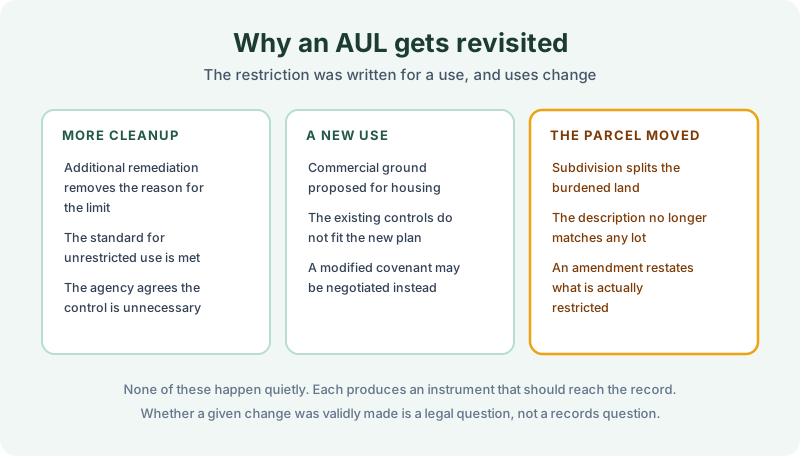
Additional cleanup. Somebody remediated further, the standard for unrestricted use was met, and the agency agreed the control was no longer necessary. This is the cleanest route and the least common, because it usually costs more than living with the restriction.
A change of use. Commercial ground is proposed for housing, or an industrial site becomes a park, and the existing controls do not fit the plan. Frequently the outcome is a modified covenant with different terms rather than an outright release.
The parcel moved. Subdivision splits the burdened land, boundaries are adjusted, and the recorded description no longer matches any lot on the ground. An amendment restates what is actually restricted, and our note on an AUL when a parcel is subdivided covers that situation directly.
None of these happen quietly. Each should produce an instrument that reaches the county record.
Who has to sign
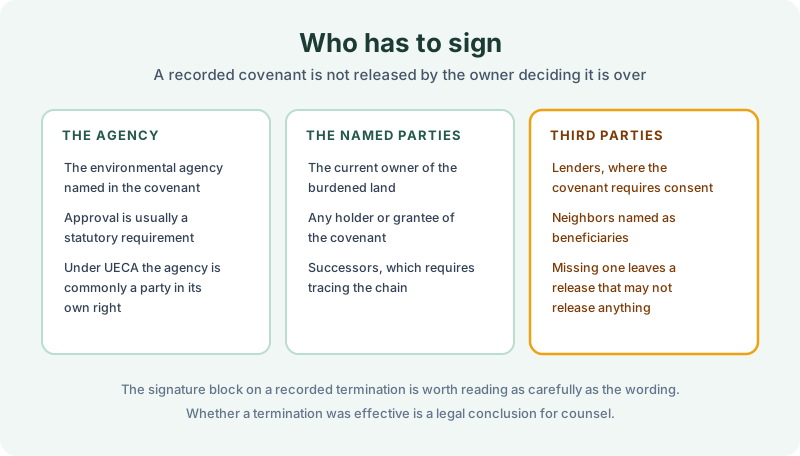
An environmental covenant is not released by the owner deciding it is over. Under the UECA framework adopted in many states, the environmental agency is commonly a party in its own right and its approval is a statutory requirement rather than a courtesy.
Beyond the agency, the current owner of the burdened land and any holder or grantee named in the original instrument have to join, which means tracing successors through the chain rather than accepting the names on the 1998 document. Some covenants also require lender consent or name neighbors as beneficiaries. Missing a required signature leaves a recorded release that may not have released anything, so the signature block deserves as much attention as the operative wording.
This is also where the older restrictions get awkward. Deed notices and covenants recorded before the UECA framework was adopted in a given state were sometimes drafted with no termination mechanism at all, or with one that named an agency or a corporate holder that no longer exists. Releasing those can require a court proceeding rather than a signature, and the search will simply show a covenant with no release, which is an accurate report of an unresolved situation rather than a gap in the work.
Reading a termination you have found
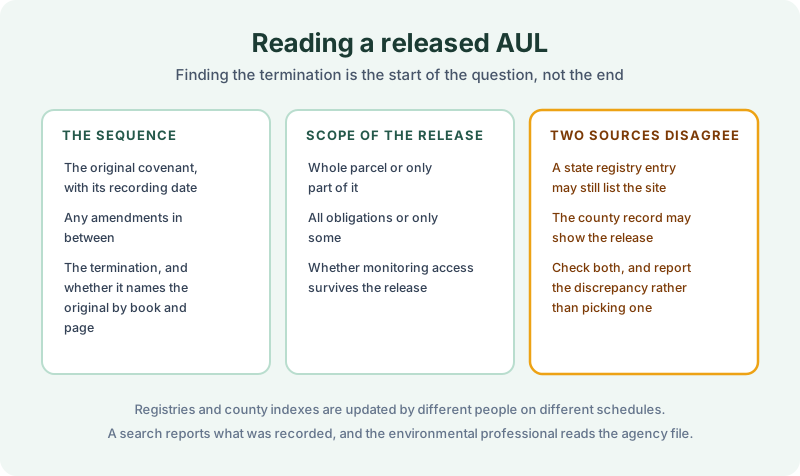
Read the sequence rather than the last document. The original covenant with its recording date, any amendments in between, and then the termination, which should name the original by book and page. A termination that does not identify what it is terminating is worth flagging.
Then check the scope. Whole parcel or only part of it. All obligations or only some. Whether monitoring and access rights survive the release, because they often do and they are the ones that will affect a buyer.
Partial releases are the ones that cause trouble later. A covenant burdening ten acres gets released as to the two acres somebody wants to build on, and the instrument describes those two acres in terms that made sense against the 1998 legal description and make very little sense against today’s lots. Working out which ground is still restricted then becomes a description problem rather than an environmental one, and it is worth resolving before it is inherited by the next purchaser.
Finally, expect the two sources to disagree sometimes. A state institutional control registry entry may still list the site while the county record shows the release, or the reverse. They are maintained by different people on different schedules. The right answer is to check both and report the discrepancy rather than quietly picking whichever one is more convenient, which is the same discipline described in data gaps in an environmental lien search.
What the search settles
We report the instruments, their recording dates, their wording, and the sequence, with copies attached. Whether a termination was validly made, whether every required party joined, and whether the release actually reaches the obligation someone is worried about are legal conclusions. Recording practice varies by county, and the agency file is the environmental professional’s territory rather than the abstractor’s.
A 1980 Environmental Lien & AUL report covers the recorded side. Certified title abstractors review land title and judicial records from 1980 to the present and document every environmental lien, encumbrance, and AUL found, with the recorded instruments attached. It’s $425, delivered by email in 3–5 business days. Order online, or see the FAQ for how scope is confirmed before the work starts.
Get an E1527-21 compliant lien & AUL report
Our 1980 Environmental Lien & AUL reports are researched by certified title abstractors, cover judicial records, and are guaranteed accurate. Delivered in 3–5 business days.
or call 877-848-5337