Published
Most states now publish some kind of registry of sites carrying institutional or engineering controls, and they are genuinely useful. They are free, searchable, and often the fastest way to learn that a cleanup program touched a property. They also get treated, fairly often, as though checking one closes out the AUL question in a Phase I. It does not, and the reasons are structural rather than a matter of any particular state doing a poor job.
Two lists built for different jobs
A state registry is an agency’s record of its own programs. The county land record is the record of what binds a parcel.
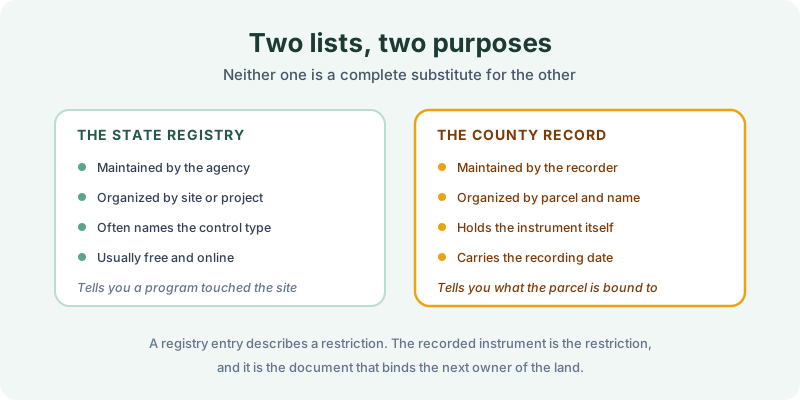
That difference in purpose drives everything else. Registries are organized around sites and projects, because that is how a cleanup program thinks. They typically name the control type, sometimes the program, sometimes a contact. Land records are organized around parcels and names, because that is how conveyancing works, and they hold the instrument itself with a recording date, a book and page, and the operative language.
The distinction worth holding onto is this: a registry entry describes a restriction. The recorded instrument is the restriction. When an owner asks what they may and may not do with the property, the answer comes out of the document, not the summary. Under UECA and its state analogues, recording against the parcel is generally what makes an environmental covenant run with the land and bind whoever buys next.
Where the two lists disagree
If registries and land records were mirror images, checking either would do. They are not, and the gaps run in both directions.
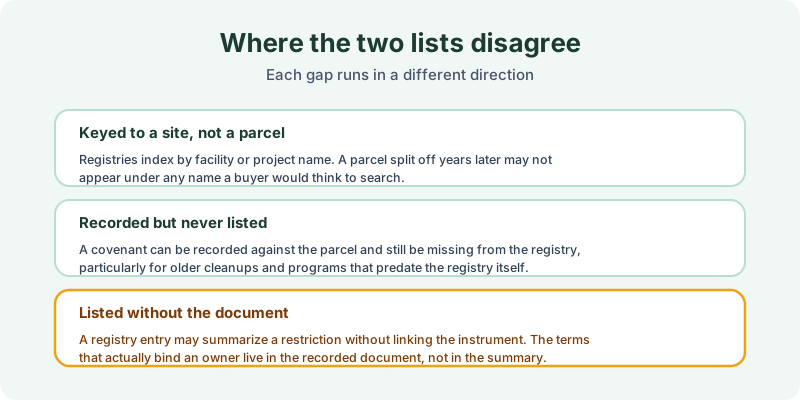
Keyed to a site, not a parcel. A registry indexed by facility or project name works well if you know the facility name. A parcel that was split off a larger industrial tract years later, renumbered and readdressed, may not appear under anything a buyer would think to type.
Recorded but never listed. A covenant can sit properly recorded against a parcel and still be absent from the registry, which happens most with older cleanups and with programs that predate the registry’s creation. Coverage generally starts when the registry does.
Listed without the document. Plenty of entries summarize a restriction without linking the recorded instrument. You learn a control exists. You do not learn its depth limits, its reporting obligations, or which portion of the parcel it covers.
There is a timing dimension as well. Registry entries are updated on the agency’s schedule, so a control terminated after remediation goals were met, or one modified by an amended covenant, can lag on the public list. The recorded chain shows the amendment and the date it took effect.
None of these are arguments against using registries. They are arguments against treating one as the whole answer, and they map onto the user responsibilities that sit with the party commissioning the assessment rather than with the consultant.
Running both
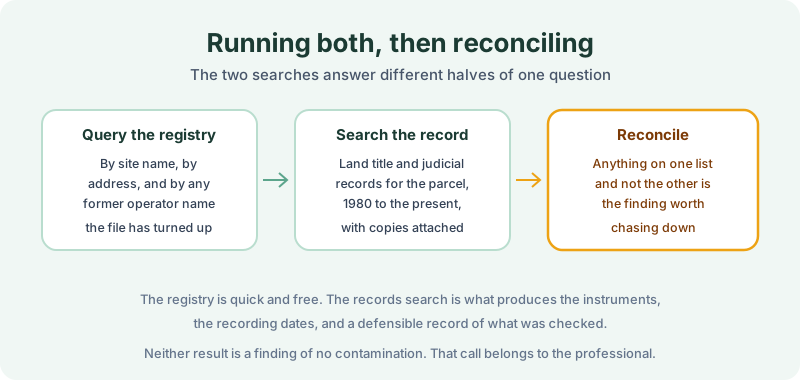
The practical sequence is not complicated. Query the registry by site name, by address, and by every former operator name the file has developed. Order a search of the land title and judicial records for the parcel itself. Then reconcile: anything appearing on one list and not the other is the finding worth chasing, and it usually resolves into either a control the registry missed or a site whose restriction was recorded against a differently numbered parcel. On a multi-state portfolio the variation between registries is itself a reason to standardize on the records search, since the county record behaves the same way everywhere.
Doing both also produces something a single check does not, which is a documented record of what was searched and when. Where an AUL turns up in the chain, the recording date frequently matters as much as the existence of the instrument.
One boundary is worth restating. Neither a clean registry result nor a clean records search is a finding that a property is uncontaminated. Both report what was found in a defined source. The REC, CREC, or HREC determination belongs to the environmental professional, and our FAQ covers where the records work stops.
Order the records half
Registries are the free half of this and worth running on every deal. The recorded half is what produces documents you can hand to a lender, an insurer, or a buyer’s counsel. Our 1980 Environmental Lien & AUL report is exactly that: certified title abstractors review land title and judicial records from 1980 to the present and document every environmental lien, encumbrance, and AUL found, with the recorded instruments attached. It’s $425, delivered by email in 3–5 business days. Order online, or see a sample report first.
Get an E1527-21 compliant lien & AUL report
Our 1980 Environmental Lien & AUL reports are researched by certified title abstractors, cover judicial records, and are guaranteed accurate. Delivered in 3–5 business days.
or call 877-848-5337