
Published
The phrase “land title and judicial records” appears in almost every description of an environmental lien search, including ours, and the second half of it gets far less attention than the first. It is not filler. Cleanup obligations are frequently created, allocated, and settled in litigation, and the resulting documents sit in court files that no deed index will ever show you. Understanding what that half of the search covers changes what you can expect from the report you receive.
Four judicial sources
Environmental disputes generate a predictable set of filings, spread across two court systems.
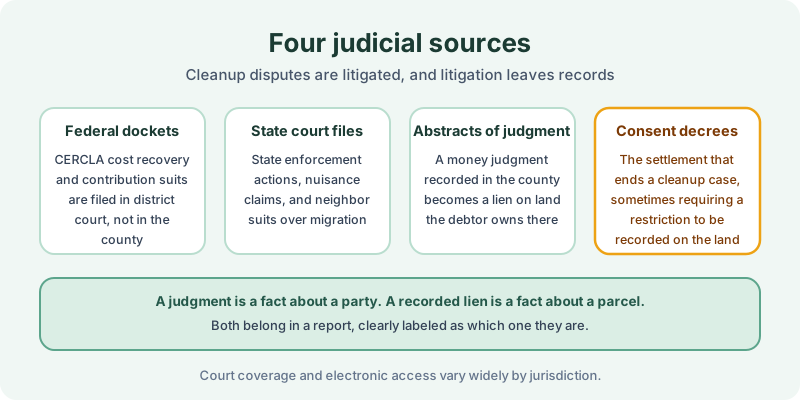
Federal dockets carry the CERCLA cost recovery and contribution actions, which is where an agency or a private party pursues someone for money already spent. State court files hold state enforcement actions, nuisance claims, and neighbor suits over migrating contamination. Abstracts of judgment are the bridge between the two systems: a money judgment recorded in the county becomes a lien on land the debtor owns there, which is how a lawsuit turns into an encumbrance.
Consent decrees are the ones worth the most attention. A decree settling a cleanup case commonly requires a party to record a restriction on the property, which means the court file and the land record are two halves of one obligation. Finding the decree without the recorded instrument, or the instrument without the decree, leaves you guessing about the other half.
Two indexes, two logics
The reason this is a separate search rather than an extension of the first is structural.
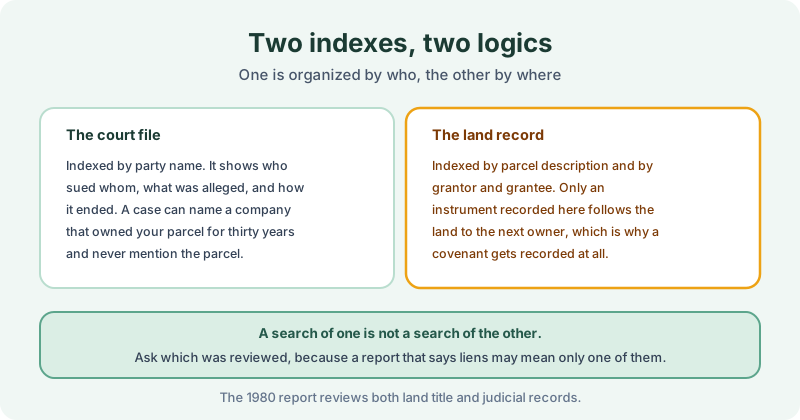
A court index is organized around parties. It answers who sued whom, what was alleged, and how the case ended. A case can name a company that owned your parcel for thirty years without ever mentioning the parcel, because the property was incidental to the dispute.
A land record is organized around the parcel and around grantors and grantees. Only an instrument recorded there follows the land to the next owner, which is the entire reason a covenant gets recorded rather than merely agreed to. That distinction is worth keeping in front of you when reading any report: a judgment against a former operator is a fact about a party, and a recorded lien is a fact about a parcel. Both belong in a file, clearly labeled as which one they are, and conflating them produces either false alarm or false comfort.
What the judicial search needs from you
This search has a hard dependency that the land records search does not.
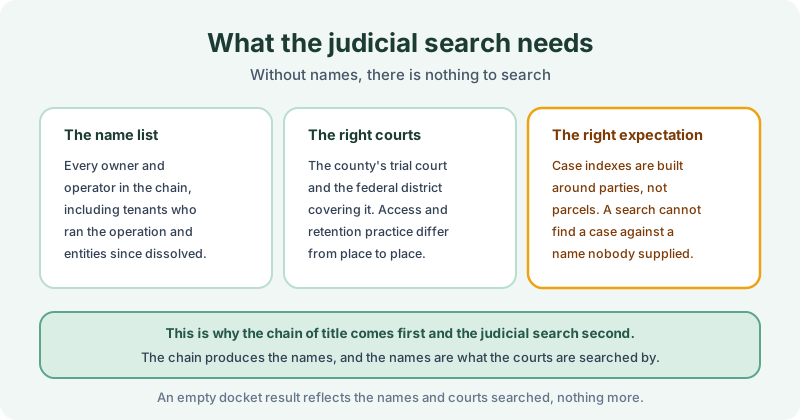
It needs names. Every owner and operator in the chain, including the tenants who actually ran the operation and the entities that have since dissolved, and ideally the variant spellings each one used. This is why the chain of title is not a separate product bolted on beside a lien search but the input that makes the judicial half possible at all, and it is why supplying an operator name you happen to know is one of the most valuable things a client can do.
It also needs the right courts, which means the trial court for that county and the federal district covering it. Electronic access, retention practice, and index quality all vary by jurisdiction, and older cases in particular may exist only as paper.
How to read a docket result
Three cautions, and they cut in both directions.
A docket hit is not a lien. Litigation naming a former owner may have ended in a defense verdict, a dismissal, or a settlement that never touched the property, and treating a case caption as an encumbrance is a misreading that has cost deals. What the abstractor can do is find the case, identify the parties and the disposition where it is available, and supply the documents so the significance can be evaluated by the people qualified to evaluate it.
An empty docket result is not proof either. It reflects the names searched and the courts searched, as of the search date, and a case against a name nobody supplied cannot be found. Recording and indexing practice varies by county, and court coverage varies at least as much. And whether a judgment or decree binds the land or a future owner is a legal question for counsel rather than a records conclusion, which is the same line that governs what to do when something is found.
Our 1980 Environmental Lien & AUL report covers both halves: certified title abstractors review land title and judicial records from 1980 to the present and document every environmental lien, encumbrance, and AUL found, with the recorded instruments attached. It’s $425, delivered by email in 3–5 business days. Order online, or read how the search is performed first.
Get an E1527-21 compliant lien & AUL report
Our 1980 Environmental Lien & AUL reports are researched by certified title abstractors, cover judicial records, and are guaranteed accurate. Delivered in 3–5 business days.
or call 877-848-5337