
Published
Every Phase I ESA your firm signs has an environmental lien and AUL component in it somewhere. ASTM E1527-21 assigns the check for recorded environmental liens and AULs to the User by default, and in practice the environmental professional often ends up arranging it anyway: clients don’t know a grantor index from a tract index, and the finding has to land in your report either way. That leaves a practice-level question worth deciding deliberately rather than deal by deal: who actually performs your records reviews, and to what standard?
Why this isn’t a job for a browser tab
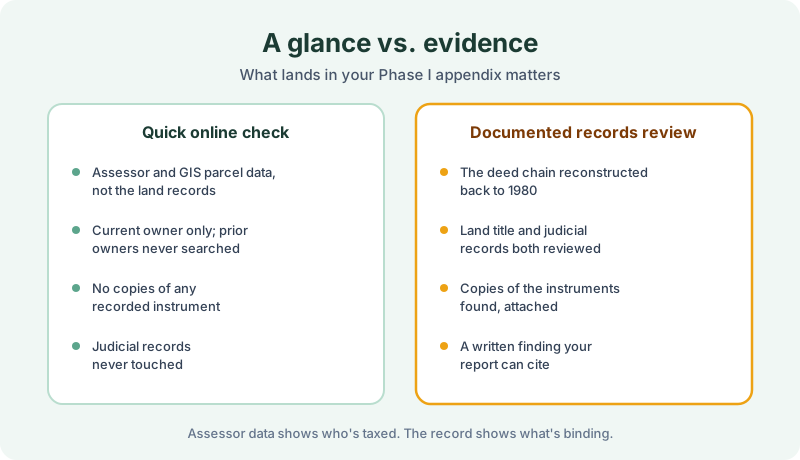
The temptation is to treat the records review as a quick online check: pull the parcel on the county assessor or GIS site, eyeball the current owner, move on. The problem is that assessor data isn’t the land records. It shows who’s taxed, not what’s recorded. It won’t surface the environmental covenant indexed under an owner three transfers back, the deed notice titled something unhelpful like “Declaration of Restrictions,” or the lien filed in the courthouse rather than the recorder’s office.
Actual title research is a specialized trade for reasons that compound across a national practice:
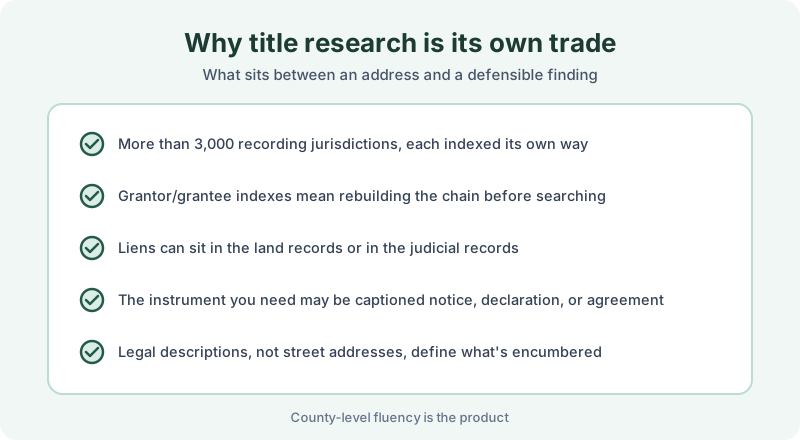
- More than 3,000 recording jurisdictions, each with its own indexing system, digitization depth, and quirks
- Grantor/grantee indexes that require reconstructing the ownership chain to search at all; you can’t look up most records by address
- Two record sets: environmental liens can be recorded in the land records or filed in judicial records, and E1527-21 contemplates both
- Nonstandard instrument names: the AUL you need may be captioned as a notice, declaration, covenant, or agreement
- Legal descriptions, not street addresses, define what’s actually encumbered
This is why the common answer, for solo EPs and national consultancies alike, is to subcontract the component to certified title abstractors and drop the deliverable into the report appendix.
What to require from whoever does it
If you outsource the search (or audit how it’s being done in-house), the deliverable should stand up to the same scrutiny as the rest of your Phase I:
- Scope stated plainly: land title and judicial records, 1980 to the present, consistent with the standard’s window
- The deed chain reconstructed, so the search covers prior owners, not just the current one
- Copies of the instruments found, not just a yes/no: you’ll want to read the actual covenant before characterizing a CREC
- A clear written finding you can cite, including documentation when a jurisdiction’s records were unavailable, which supports your data-gap discussion
- Consistent methodology across states, so report number 400 reads like report number 4
- Turnaround that fits your deadlines: the lien search is one of the components with a shelf life, and a stalled title vendor shouldn’t be the reason a report misses its window
One more practice note: when the client insists on handling it themselves under the User responsibilities, make sure what comes back meets the list above before it goes in your appendix. A title commitment or an assessor printout isn’t a records review, a gap the title insurance post walks through in detail.
Where we fit
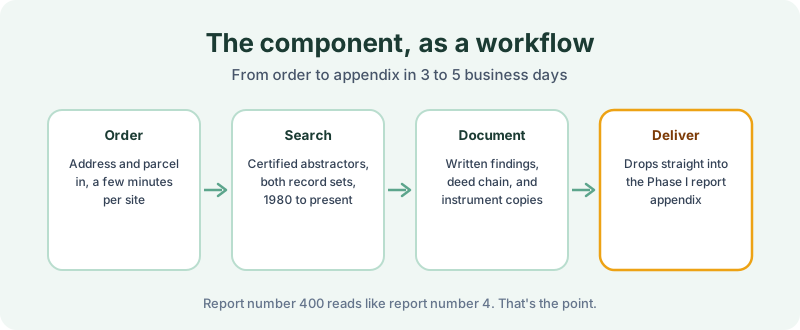
This component is our entire business. Our 1980 Environmental Lien & AUL report is built to drop into a Phase I appendix: certified title abstractors review land title and judicial records from 1980 to the present, reconstruct the deed chain, and document every environmental lien, encumbrance, and AUL found, with the recorded instruments attached. Flat $425 per parcel, nationwide, delivered by email in 3–5 business days. See a sample report or order online in a few minutes per site.
Get an E1527-21 compliant lien & AUL report
Our 1980 Environmental Lien & AUL reports are researched by certified title abstractors, cover judicial records, and are guaranteed accurate. Delivered in 3–5 business days.
or call 877-848-5337