Published
It’s a fair question, and buyers ask it all the time: the deal already includes a title commitment and a title insurance policy, so why order a separate environmental lien and AUL search? The short answer is that the two products do different jobs, and the overlap between them is much narrower than it looks.
What a title policy actually promises
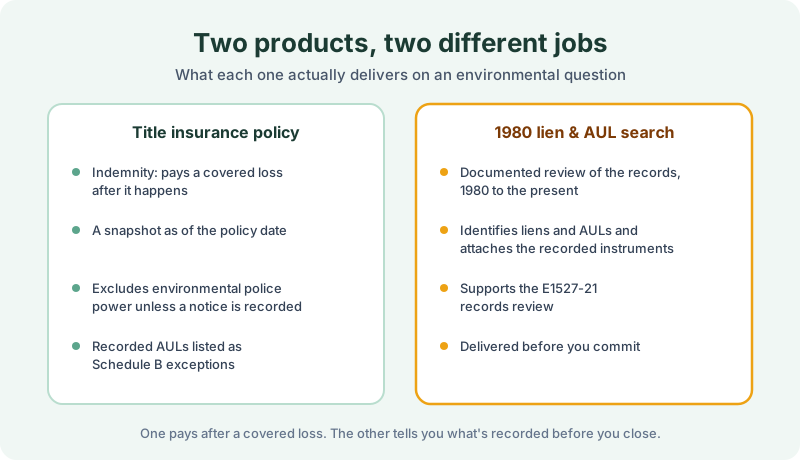
Title insurance is an indemnity contract. It pays a covered loss if a covered title defect surfaces later, measured as of the policy’s effective date. It is not a due-diligence report. The insurer searches the records for its own underwriting, and much of what that search turns up lands in Schedule B as an exception: a thing the policy expressly does not cover. What you receive at closing is a promise about certain risks, not a documented review of what sits in the record.
If a recorded environmental lien slips past the insurer entirely and isn’t excepted, the policy can respond. But that’s compensation after a loss has already happened, which is a very different service from knowing about the lien before you sign.
The environmental carve-outs
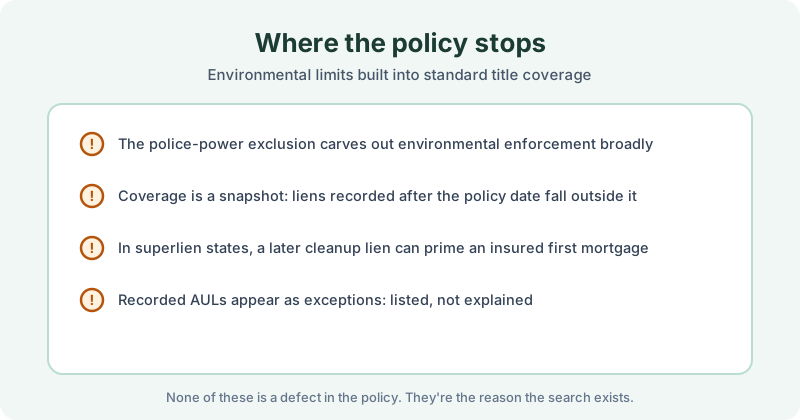
Standard ALTA policies broadly exclude losses arising from governmental police power and environmental regulation, generally except to the extent a notice of enforcement or a lien already appears in the public records at the date of policy. Endorsements (the ALTA 8 series) restore a slice of environmental-lien coverage. The commercial version is a true snapshot, reaching only liens already recorded when the policy issues; the residential loan version goes further, picking up certain later-arising state statutory liens, but it sets the superlien statutes aside by name.
That carve-out is the tell. In the handful of superlien states, a lien arising from a later cleanup can step ahead of an insured first mortgage no matter what the policy said on closing day.
AULs: excepted, not explained
Activity and Use Limitations make the point sharply. When a recorded environmental covenant or deed notice shows up in the insurer’s search, it gets listed as a Schedule B exception, meaning the policy insures around it, not against it. And a one-line exception won’t tell you that the covenant bars residential use, or that the deed notice requires an agency-approved plan before anyone digs. The lien and AUL search exists to find those instruments and deliver the recorded documents behind them, so you can read what you’re agreeing to live with.
The standard asks for a search, not a policy
There’s also the compliance angle. ASTM E1527-21 makes checking for environmental liens and AULs part of every Phase I ESA, with a records review reaching back to 1980, and it puts responsibility for the lien search on the User of the report, who typically delegates it to a title research firm. A title commitment answers a different question: what the insurer is willing to insure around today. The standard wants a documented review of what has been recorded against the land since 1980, delivered as a finding the environmental professional can rely on. A policy isn’t designed to be that document.
Both, in the right order
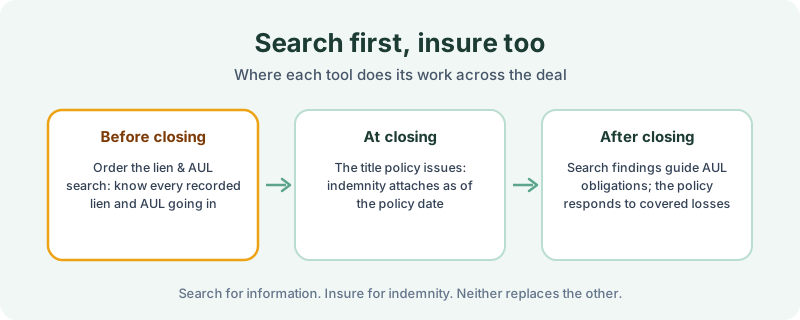
None of this is a knock on title insurance. Keep the policy; it protects against a real set of risks. Just don’t ask it to do the environmental search’s job. Our 1980 Environmental Lien & AUL report is the other half: certified title abstractors review land title and judicial records from 1980 to the present and document every environmental lien, encumbrance, and AUL found, with the supporting instruments attached. It’s $425, delivered by email in 3–5 business days. Order online before the commitment arrives, and if the search turns something up, here’s how to read it.
Get an E1527-21 compliant lien & AUL report
Our 1980 Environmental Lien & AUL reports are researched by certified title abstractors, cover judicial records, and are guaranteed accurate. Delivered in 3–5 business days.
or call 877-848-5337