Published
Our flagship report has a year in its name, and people ask about it. Why does an environmental lien and AUL search run from 1980 to the present, not 1970, not 1990, not “as far back as the records go”? The short answer is a statute. The longer answer is the story of how environmental liability became something you can find in a county recorder’s office at all.
Before 1980: contamination without a paper trail
American industry spent a century releasing things into soil and groundwater, but for most of that century the land records had nothing to say about it. A title search would surface deeds, mortgages, and easements, but never a cleanup lien, because there was no cleanup liability to secure. A few states were experimenting with cleanup statutes in the late 1970s, but there was no national scheme for making polluters, or landowners, pay.
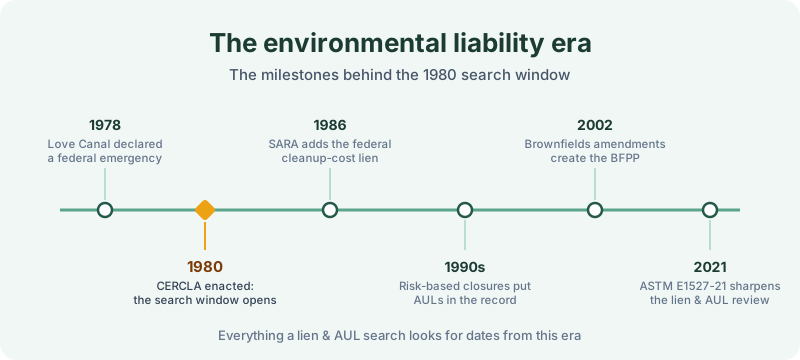
What changed the politics was Love Canal: a Niagara Falls neighborhood built over a buried chemical landfill, declared a federal emergency in 1978. Together with sites like it, Love Canal made the gap in the law impossible to ignore: hazardous waste sites existed by the thousands, and no one could be forced to clean them up.
December 1980: CERCLA rewrites the rules
Congress answered in December 1980 with the Comprehensive Environmental Response, Compensation, and Liability Act, or CERCLA, better known as Superfund. It built three things at once:
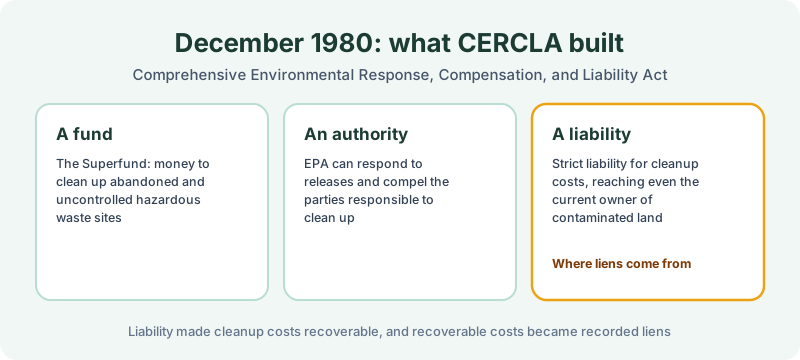
- A fund: the Superfund itself, money to clean up abandoned and uncontrolled hazardous waste sites when no responsible party steps up.
- An authority: EPA’s power to respond to releases and to compel the parties responsible to do the cleanup.
- A liability: strict liability for cleanup costs, reaching even the current owner of contaminated land regardless of fault. This is the piece that made environmental due diligence a permanent part of buying property.
Liens follow liability
Once governments could spend money cleaning up private property and recover the costs, they needed security for those debts, and security on real property means recorded liens. The Superfund Amendments and Reauthorization Act of 1986 gave the federal government an explicit lien on a liable party’s property for unrecovered cleanup costs. Most states built their own cleanup programs through the 1980s, many with lien provisions of their own, including a handful with superliens that can outrank a mortgage.
The record grew a second kind of environmental instrument as those programs matured. Regulators increasingly closed sites on a risk basis (contamination managed in place rather than removed), and the restrictions that make those closures safe are recorded against title as Activity and Use Limitations: environmental covenants, deed notices, groundwater restrictions.
Why the standard draws its line at 1980
ASTM E1527-21 requires the review of land title records (and judicial records, where liens are court-filed) for the period from 1980 to the present. The logic is the history above. With only scattered state precursors in the late 1970s, the environmental lien is a post-CERCLA instrument, and AULs came later still. Open the search window at 1980 and it covers the entire era in which the instruments you’re looking for could have been recorded.
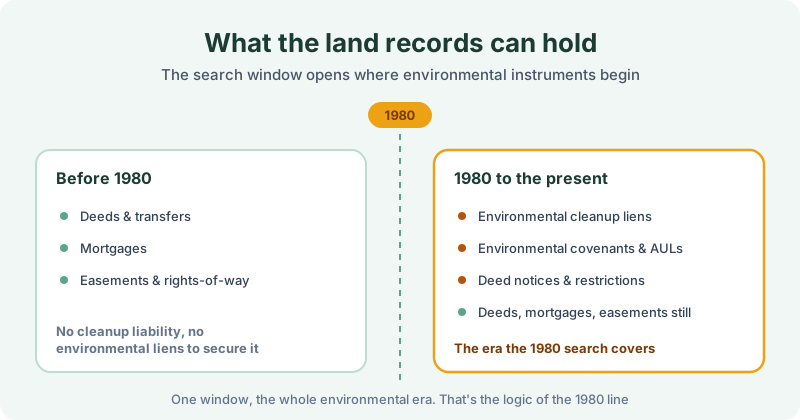
That’s also why the window doesn’t flex with the deal. A search limited to the current owner can miss a lien recorded against a 1980s owner that still encumbers the land; a search pushed deeper than 1980 adds cost without adding environmental findings. When a transaction does need deeper ownership history for the historical-use side of a Phase I, that’s the job of a supplemental chain of title search going back 50 years or to 1940.
The name on the report
So the year in our product name is the year the modern environmental era opened. The 1980 Environmental Lien & AUL report is a review of that full era: certified title abstractors reconstruct the deed chain back to 1980, review the recorded instruments and judicial records, and document every environmental lien, encumbrance, and AUL found. It’s $425, delivered by email in 3–5 business days: order online, or see how the search is performed.
Get an E1527-21 compliant lien & AUL report
Our 1980 Environmental Lien & AUL reports are researched by certified title abstractors, cover judicial records, and are guaranteed accurate. Delivered in 3–5 business days.
or call 877-848-5337