Published
Most buyers meet All Appropriate Inquiries through a single line on a closing checklist that says “Phase I ordered.” That is the largest component of the inquiry and it is not the whole of it. The federal rule splits the work between the environmental professional and the party acquiring the property, and the items on the buyer’s side are the ones that get missed, which is the same gap described in our note on user responsibilities in a Phase I ESA.
What the rule asks for
All Appropriate Inquiries is the standard of pre-purchase investigation a buyer has to satisfy to be eligible for the landowner liability protections under federal law, including the bona fide prospective purchaser defense. ASTM E1527-21 is the practice used to satisfy it.
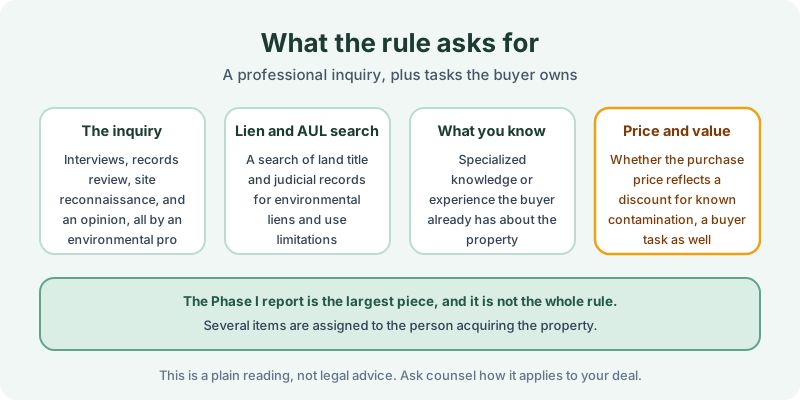
The inquiry itself is professional work: interviews with owners, occupants, and neighbors, historical and regulatory records review, site reconnaissance, and an opinion on conditions, all performed under the direction of an environmental professional who signs the report.
Alongside that sit the user tasks. A search for environmental liens and activity and use limitations affecting the property. The specialized knowledge or experience the buyer already has. Whether the purchase price reflects a discount for known contamination. Commonly overlooked information, and the reason for acquiring the property. None of these are things a consultant can supply out of their own file, because they are facts about the buyer and about the county record rather than about the site.
Why the lien and AUL search sits on the buyer’s side
The assignment matters more than it sounds like it should.
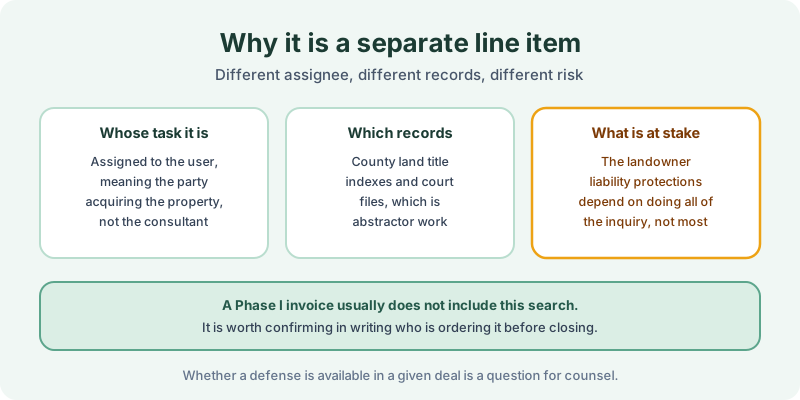
The search runs on county land title indexes and court files, which is abstractor work rather than consultant work. Many Phase I proposals say plainly that the environmental lien and AUL search is excluded, or that it will be performed only if the client provides a title commitment. A title commitment is not the same product: it reports matters affecting insurability from the insurer’s perspective, and the point is covered in our note on title insurance and environmental liens. A commitment also stops at the land records. The judicial half of the inquiry, where a cost recovery action or a consent decree lives, runs on party names in a court index rather than on the parcel, and nothing in a commitment reaches it.
The consequence of leaving it undone is not a formatting problem. The landowner protections depend on having conducted all appropriate inquiries, and an incomplete inquiry is a poor position to be in years later when an agency asks what was done before closing. Whether a defense is actually available in a given transaction is a legal question for counsel, and that is the right person to ask, before closing rather than after.
Who performs each part
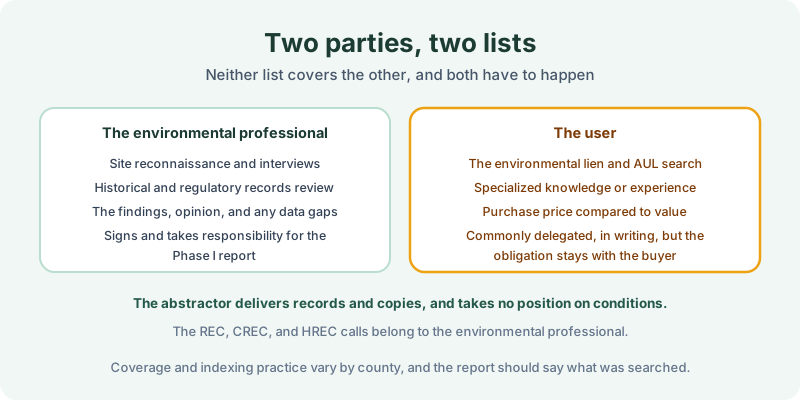
The clean way to handle this is to write the division down. Confirm in the consultant’s scope which user tasks they are performing and which they are not, then assign the remainder explicitly. The lien and AUL search can be delegated to an abstractor, and usually should be, but delegation does not move the obligation off the buyer.
Two practical notes follow from the split. First, timing: the user tasks and several components of the inquiry carry their own freshness expectations, which is the subject of the 180 day shelf life rule. A lien and AUL search completed months before closing may need updating. Second, scope: the record conclusions and the site conclusions are different products. An abstractor reports what was recorded and supplies copies, and takes no position on conditions. The REC, CREC, and HREC calls belong to the environmental professional, and our guide to the ASTM E1527-21 rule walks through how the two fit together.
After closing, the obligations continue
One more piece of the picture belongs here even though it is not part of the inquiry. Satisfying All Appropriate Inquiries at closing is the entry ticket; keeping the protections requires continuing obligations afterward, including cooperation, care, and compliance with any land use restrictions on the property. Our note on continuing obligations after closing covers that side. A recorded covenant found in the search is not merely a diligence finding, it is an instruction the new owner has to follow, which is why what an AUL actually requires is worth reading alongside the report.
Our 1980 Environmental Lien & AUL report is built to close this specific gap: certified title abstractors review land title and judicial records from 1980 to the present and document every environmental lien, encumbrance, and AUL found, with the recorded instruments attached. It’s $425, delivered by email in 3–5 business days. Order online, or review a sample report to see the format your file will receive.
Get an E1527-21 compliant lien & AUL report
Our 1980 Environmental Lien & AUL reports are researched by certified title abstractors, cover judicial records, and are guaranteed accurate. Delivered in 3–5 business days.
or call 877-848-5337