Published
Most explanations of an activity and use limitation stop at the definition: a recorded instrument restricting how a parcel may be used, running with the land. True, and it leaves out the part that costs money. Many of these instruments impose ongoing duties on whoever owns the property, and those duties transfer at closing whether or not anyone at the table mentioned them. Our definition of an AUL covers the concept. This is the operating manual.
Three kinds of obligation
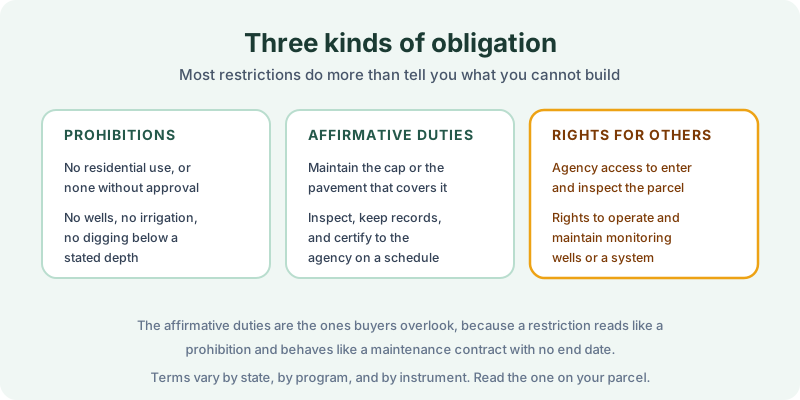
Prohibitions are the familiar part. No residential occupancy, or none without approval. No water wells, no irrigation from groundwater, no excavation below a stated depth without a plan.
Affirmative duties are the ones buyers overlook, because the document reads like a restriction and behaves like a maintenance contract with no end date. Maintain the cap, the pavement, or the vegetative cover that keeps the exposure pathway closed. Inspect on a schedule. Keep records. Certify compliance to the agency annually or biennially, in some states on a form with a filing deadline.
Rights for others round it out. Agency access to enter and inspect, and in some cases rights to operate and maintain monitoring wells or a vapor system on the parcel. These read as minor until a tenant asks who the people in the parking lot are.
Terms vary by state, by program, and by instrument, and the UECA framework standardized some of this without making the documents interchangeable. Read the one on your parcel.
The duties that arrive with a sale
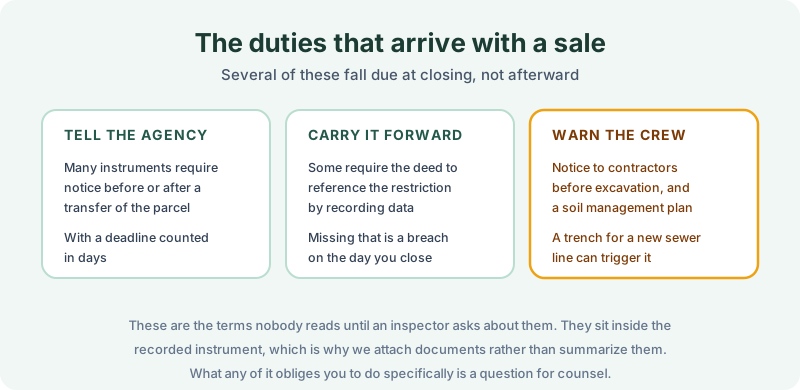
Several obligations fall due at closing rather than afterward, which is why they matter to whoever is reading the title work.
Many instruments require notice to the agency before or shortly after a transfer, with a deadline counted in days. Many require the deed to reference the restriction by its recording data, so a conveyance drafted without that reference can breach the instrument on the day it records. And most require notice to contractors before excavation, along with a soil management plan, which means a trench for a new sewer lateral can trigger obligations nobody planned for.
None of this is exotic. It is simply inside the recorded document, which is the argument for pulling the instrument rather than accepting a summary. What a given restriction obliges a particular owner to do is a question for counsel reading the full text.
The obligation, not the performance
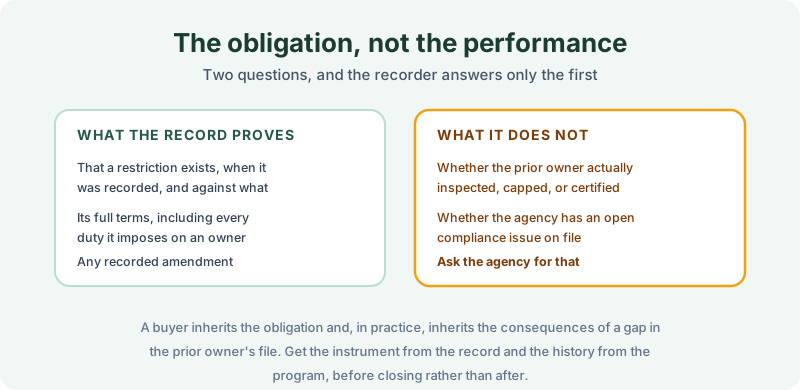
This is the honest limit of the records half, and it matters more here than on most subjects.
The record proves that a restriction exists, when it was recorded, against which parcel, and exactly what it requires, along with any recorded amendment. What it does not show is whether the prior owner ever did any of it. Inspections, certifications, and any open compliance issue sit in the agency’s program file, and registries are compiled by people and can lag.
A buyer inherits the obligation and, in practice, inherits the consequences of a gap in the seller’s file. Worse, failing to comply with a recorded restriction can put liability protections at risk, since continuing obligations generally include complying with land use controls. So get the instrument from the record and the compliance history from the program, before closing rather than after.
What to ask for
Three things. The recording reference for every restriction affecting the parcel, so each can be pulled and read in full. Any recorded amendments, because terms do get modified and an amendment can either tighten a duty or relieve one. And the seller’s compliance file, including the most recent certification, which is a request to make in the purchase agreement rather than a hope.
It is also worth pricing the duties before closing rather than discovering them in the first year of ownership. A cap that has to be maintained is a capital item on a schedule, an annual certification is a small recurring professional cost, and a restriction against excavation below a stated depth can change what a site plan is allowed to look like. None of those are reasons to walk away from a parcel. They are reasons to know the number.
If a search turns something up, our note on what to do next covers the sequence.
Order the records half
The obligations that travel with a parcel are in the recorded instruments, and finding them is the job. Our 1980 Environmental Lien & AUL report does that: certified title abstractors review land title and judicial records from 1980 to the present and document every environmental lien, encumbrance, and AUL found, with the recorded instruments attached, so you are reading terms rather than summaries. It’s $425, delivered by email in 3–5 business days. Order online, or see a sample report first.
Get an E1527-21 compliant lien & AUL report
Our 1980 Environmental Lien & AUL reports are researched by certified title abstractors, cover judicial records, and are guaranteed accurate. Delivered in 3–5 business days.
or call 877-848-5337