Published
Much of the Phase I ESA market runs on lender requirements: the buyer orders the report because the bank won’t close without it. But the lender’s own exposure to a contaminated property is different from the buyer’s, and it’s worth understanding on its own terms, because it explains why environmental lien and AUL searches belong in the loan file at more moments than origination.
The secured creditor exemption
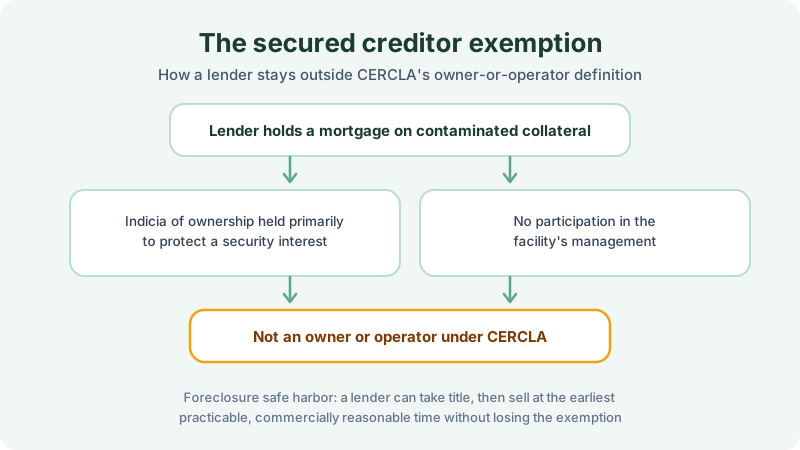
Start with the good news. CERCLA’s definition of “owner or operator” excludes a lender that holds indicia of ownership primarily to protect its security interest, so a bank doesn’t take on cleanup liability just by holding a mortgage on contaminated land. The catch is the condition attached: the lender must not participate in the management of the property.
That phrase has history. After a 1990 appellate decision suggested that merely having the capacity to influence a borrower’s waste handling might cost a lender the exemption, Congress stepped in. The 1996 lender liability amendments nailed the standard down: participation in management means actually exercising control over environmental compliance or exercising day-to-day managerial control over the facility. Having the power to foreclose, imposing loan covenants, monitoring the collateral, even requiring a cleanup as a condition of the loan: none of that, by itself, forfeits the exemption.
Foreclosure without falling in
The exemption even survives foreclosure. A lender can foreclose, take title, wind up operations, and market the property while staying outside CERCLA’s owner definition, provided it seeks to sell at the earliest practicable, commercially reasonable time on commercially reasonable terms. Sit on the REO as a long-term investment and the protection erodes; move it responsibly and the safe harbor holds. One caveat worth flagging to counsel: state cleanup statutes have their own lender provisions, and they don’t always track the federal one.
Exempt from liability, exposed to loss
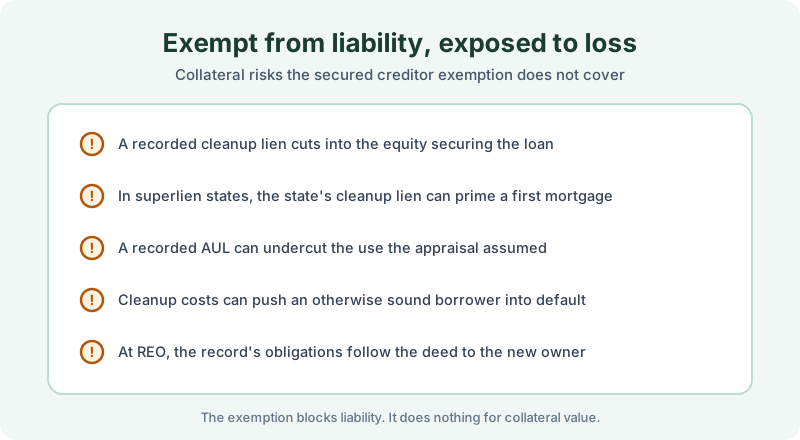
Here’s the part the exemption doesn’t touch: nothing in CERCLA protects the economics of the loan. A lender can be perfectly safe from cleanup liability and still watch the collateral behind a loan deteriorate:
- A recorded cleanup lien cuts directly into the equity securing the loan
- In superlien states, the state’s cleanup lien can prime a first mortgage
- A recorded AUL can undercut the use the appraisal assumed
- Cleanup costs can push an otherwise sound borrower into default
- At REO, the record’s obligations follow the deed to the new owner
That’s why the lien and AUL search matters to the lender directly, not just as a box in the borrower’s Phase I. The liens and restrictions that threaten collateral value are recorded instruments, findable in the land records before they become surprises on a troubled credit.
Where the search fits in a loan file
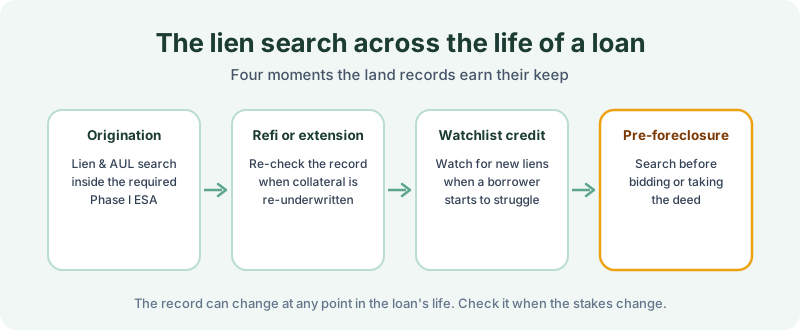
- Origination. The lien and AUL search arrives as a component of the Phase I the lender required. Worth confirming it’s actually in there: a records review back to 1980 is what ASTM E1527-21 calls for.
- Refinance, extension, or modification. Collateral gets re-underwritten; the record should be re-checked. Findings go stale as deals age, and a standalone lien search is a fast, inexpensive way to refresh the records picture without commissioning a full Phase I where one isn’t otherwise needed.
- Watchlist credits. A borrower in trouble at an environmentally interesting property is exactly when a new lien is most likely to show up against the collateral.
- Pre-foreclosure. Before bidding at its own sale, a lender should know what’s recorded: a superlien changes the payoff math, and an AUL shapes what the REO can be sold for. If the search turns something up, better to read it before taking the deed than after.
The takeaway
The secured creditor exemption answers the liability question and leaves the collateral question wide open. Our 1980 Environmental Lien & AUL report answers the second one: certified title abstractors review land title and judicial records from 1980 to the present and document every environmental lien, encumbrance, and AUL found. It’s $425, delivered by email in 3–5 business days, nationwide. Order online at origination, at renewal, or before the foreclosure sale.
Get an E1527-21 compliant lien & AUL report
Our 1980 Environmental Lien & AUL reports are researched by certified title abstractors, cover judicial records, and are guaranteed accurate. Delivered in 3–5 business days.
or call 877-848-5337