
Published
Among the harder sites to diligence are the ones that look like nothing at all. A machine shop in a river town, a warehouse on a rail spur, a vacant lot behind a plating works. Some of these handled uranium or thorium for the government in the 1940s and 1950s, the work stopped, the buildings were sold, and the residues stayed. Scoping the records half of that is a variation on how an environmental lien and AUL search is performed, widened to account for material that moved off the parcel.
What the work left behind
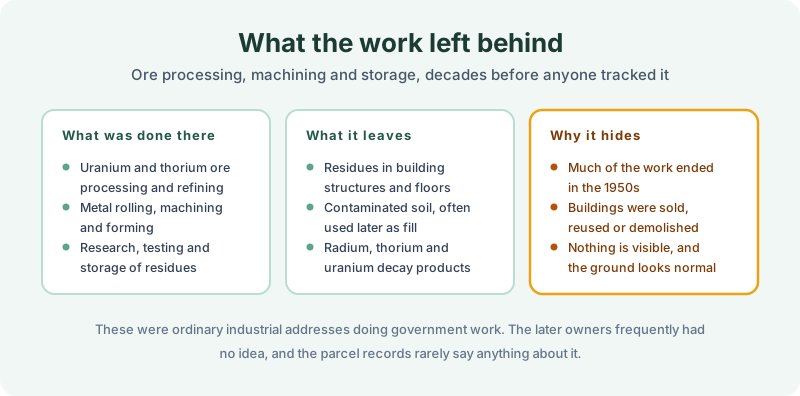
The activities were industrial rather than exotic. Ore was received and processed, uranium and thorium metal was rolled, machined and formed, samples were tested, and residues were stored in drums or piles until somebody decided what to do with them. Much of it happened at private plants under contract, at addresses that already had another business before and after.
What that leaves is residual contamination in three forms. Material worked into building structures, particularly floors, drains and roof members. Contaminated soil, which on a number of sites was later excavated and used as fill somewhere else entirely. And the decay products of radium, thorium and uranium, which persist on timescales that make the 1950s recent.
The reason these sites surprise people is that nothing shows. There is no odor, no staining, no distressed vegetation, and the ground reads as ordinary. A property can pass every visual cue a site walk offers and still carry a designated area at the back of the lot.
What reaches the land record
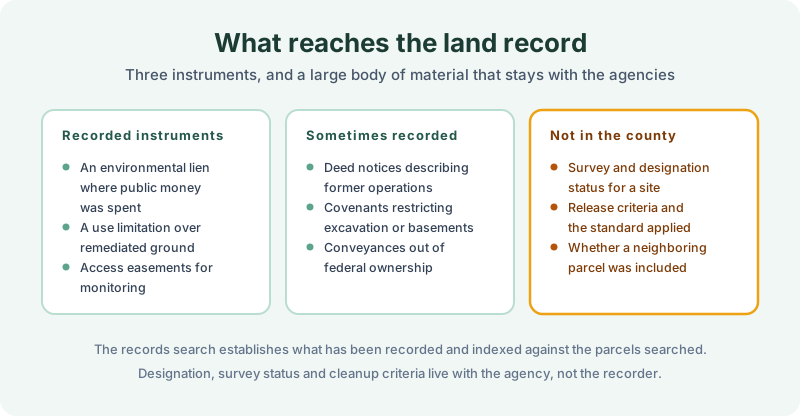
The same instruments as anywhere else in this work. A state environmental lien where public money has been spent on response costs and the state has filed to recover it. An activity and use limitation restricting excavation, groundwater use or construction over a remediated or capped area. An access easement allowing an agency or its contractor onto the parcel to monitor.
Some sites carry more. Deed notices describing the former operations, covenants barring basements or subsurface work, and the deeds conveying the property out of federal ownership, which occasionally carry restrictions of their own. Those are ordinary recorded instruments and a search over an adequate period reaches them. The same logic drives former military base property deed restrictions, where the recorded conveyance is frequently the most informative document in the file.
What stays outside the county is most of the substance. Whether a site has been surveyed, whether it was designated for federal remediation, which release criteria were applied, and whether the adjacent parcel was included in the same action are all agency records. That is a boundary of what recording captures rather than a shortfall in the search, and the same point made in data gaps in an environmental lien search applies with force here.
Scoping the records work
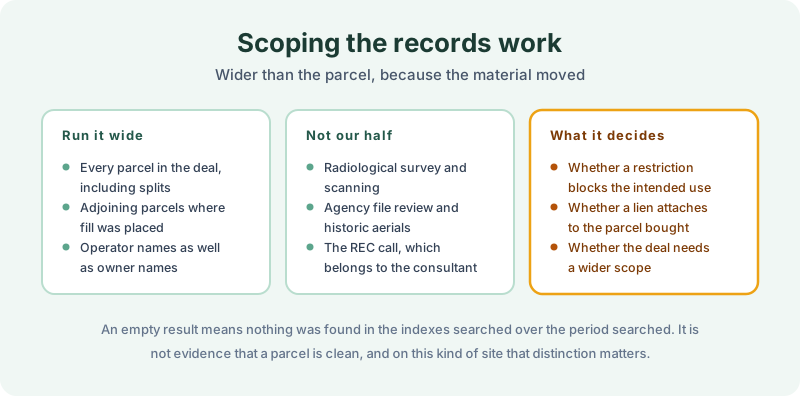
Run it wider than the transaction parcel. Every parcel in the deal, including any created by a later split, because a designated area can sit entirely within one of them. Adjoining parcels where fill may have been placed, since off site disposal is the defining feature of this category. Operator names as well as owner names, because the contractor who did the work was frequently a tenant and the instrument may name them.
Run land title and judicial records from 1980 forward with the instruments attached in full. An index line reporting a restriction is not the restriction, and on a site where the whole question is what area is covered and what activity is barred, the recorded exhibit is the document that answers it.
Run it alongside the environmental professional rather than in place of them. Radiological scanning, agency file review and the historic aerial work are theirs, and the REC call belongs to the consultant rather than to the abstractor. The buyer’s own user responsibilities remain obligations no consultant discharges on their behalf.
Order early. A recorded restriction barring excavation ends a redevelopment that needs foundations, and knowing that in week one is worth more than knowing it in week six. Recording practice is local, and an empty result means nothing was found in the indexes searched over the period searched rather than that nothing exists.
The 1980 Environmental Lien & AUL report is where that records work gets done. Certified title abstractors review land title and judicial records from 1980 to the present and document every environmental lien, encumbrance, and AUL found, with the recorded instruments attached. It’s $425, delivered by email in 3–5 business days. Order online, or read what an environmental lien means once one turns up first.
Get an E1527-21 compliant lien & AUL report
Our 1980 Environmental Lien & AUL reports are researched by certified title abstractors, cover judicial records, and are guaranteed accurate. Delivered in 3–5 business days.
or call 877-848-5337