Published
Tanneries are among the oldest industrial uses in the country, and they left behind a distinctive combination: a riverfront parcel in the middle of a small city, a long operating history under several owners, and a disposal area that nobody drew on a map. The building may be gone and the site may have been a municipal lot for thirty years. The records question is the same one that governs any wood treating site or plating shop, with a chain of title that is usually messier.
Four waste streams
Leather making is a sequence of chemical baths, and each stage generated something different.
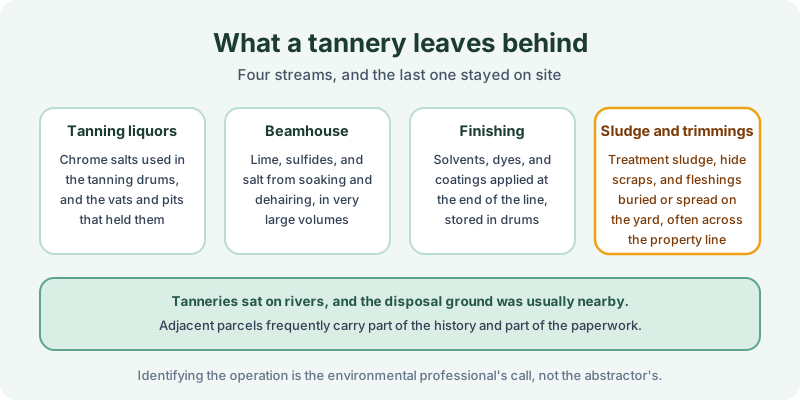
Tanning liquors carried the chrome salts that most people associate with tanneries, along with the vats and in ground pits that held them. The beamhouse produced lime, sulfides, and salt from soaking and dehairing, in volumes large enough to define the site’s drainage. Finishing added solvents, dyes, and coatings at the end of the line, typically stored in drums near a loading area. Sludge and trimmings are the fourth stream and the one that matters most for a records search, because treatment sludge, fleshings, and hide scraps were commonly buried or spread on nearby ground rather than hauled away.
That last point has a parcel consequence. The disposal ground is often not the parcel with the building on it, and it may have been sold, taken for taxes, or subdivided since. Which of these streams matters on a given site is a determination for the environmental professional; what the abstractor contributes is the record trail each of them can leave.
One more feature of these sites is worth naming. Tanneries needed water, so they sat on rivers and mill races, and the parcels around them were often carved for raceways, dams, and discharge channels that later got filled. Those old descriptions persist in the index long after the physical features are gone, and a conveyance describing a raceway or a mill privilege is a signal that the parcel boundaries in the chain do not match what is on the ground today.
Signals in the land record
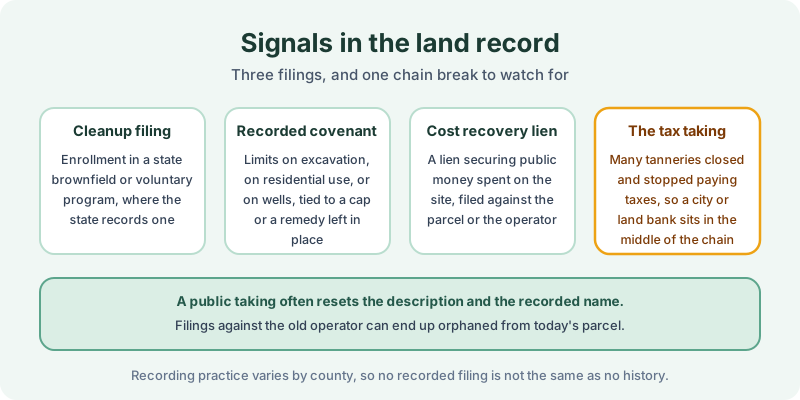
Three filings are worth looking for. Cleanup program enrollment shows up where a state records it, and tannery sites are frequent brownfield candidates because they sit on desirable urban land. Recorded covenants are the operative documents on a redeveloped site: restrictions on excavation below a cap, on residential use, or on installing a well, as described in our note on environmental covenants and UECA. Cost recovery liens secure public money already spent and may be filed against the parcel, the operator, or both.
The fourth item on that diagram is not a filing but a chain break. A great many tanneries closed, stopped paying taxes, and were taken by a city or transferred to a land bank, which is the pattern our note on tax foreclosed parcels covers. A public taking frequently resets both the recorded name and the description, which can orphan an earlier filing from the parcel a buyer is looking at today.
Names deserve particular attention on tannery files. Ownership frequently ran through a family partnership, then a corporation, then a holding company that dissolved decades ago, and a judgment or cost recovery action naming one of those entities sits in a court index organized by party rather than by parcel. Supplying every operator name you have, including the tenant who ran the finishing line after the original company left, is one of the most useful things a client can do for the judicial half of the search.
Scoping the search
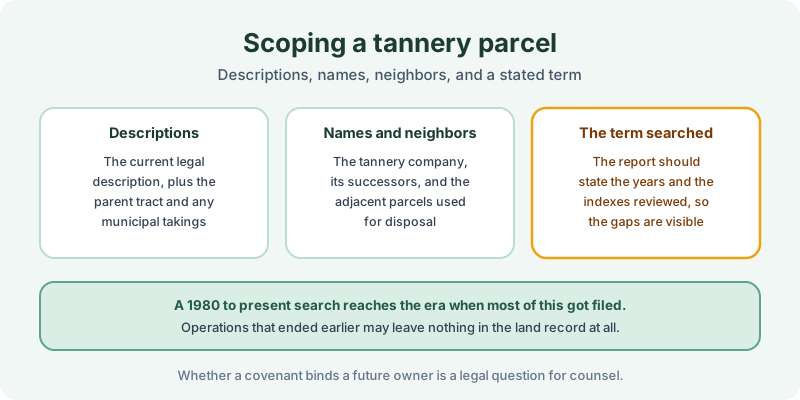
Send the current legal description and, where you have them, the parent tract and any municipal taking documents. Send names: the tannery company, its successors, and the entities that held the land in between, since the judicial half of the search runs on names rather than on the parcel. And flag the adjacent parcels if the consultant has identified a disposal area off site, because a filing recorded against the neighbor will not appear on a search of your parcel alone.
Then read the report for its stated scope. It should name the years searched and the indexes reviewed so that a gap is visible rather than implied. Tannery operations that ended before the modern regulatory era may leave nothing recorded at all, even where the contamination is well documented in an agency file, which is why this search sits beside the consultant’s records review rather than substituting for it. Our FAQ covers what a standard term includes, and the ASTM E1527-21 guide explains how the two halves fit together.
Our 1980 Environmental Lien & AUL report is built for exactly this: certified title abstractors review land title and judicial records from 1980 to the present and document every environmental lien, encumbrance, and AUL found, with the recorded instruments attached. It’s $425, delivered by email in 3–5 business days. Order online, or see how the search is performed first.
Get an E1527-21 compliant lien & AUL report
Our 1980 Environmental Lien & AUL reports are researched by certified title abstractors, cover judicial records, and are guaranteed accurate. Delivered in 3–5 business days.
or call 877-848-5337