
Published
Most of the archetypes in this series are compact. A gas station is a canopy and some tanks, a plating shop is one bay in a building. A wood treating plant is neither. It occupied acreage, it used most of that acreage as part of the process, and when it closed it frequently left a restriction covering the whole footprint. Parcels carved out of former treating yards now hold subdivisions, parks, and schools across the country, which is why the records half of the diligence matters here more than the modest size of the industry would suggest.
How a treating yard uses its ground
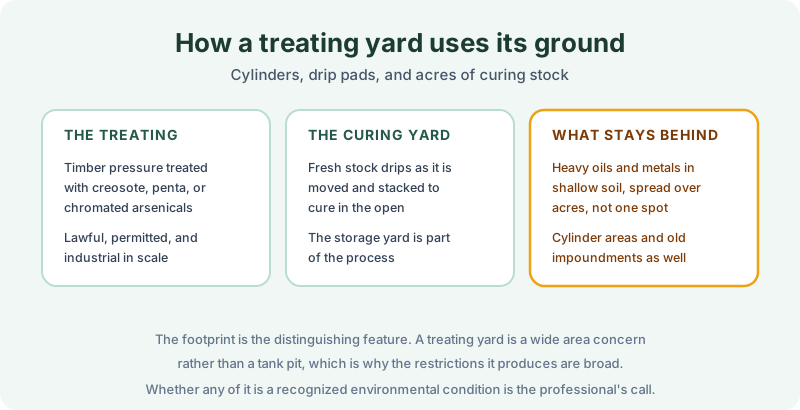
The process is straightforward and it is messy. Timber went into pressure cylinders with a preservative: creosote for ties and poles, pentachlorophenol for utility poles, and chromated arsenicals such as CCA for dimensional lumber. All of it lawful, permitted, and industrial in scale.
The part that shapes the diligence is what happened after the cylinder. Freshly treated stock drips, and it was moved by forklift and stacked in the open to cure, sometimes for weeks. The storage yard was therefore part of the process rather than a place things merely sat. Add the cylinder areas, the tank farms, and the surface impoundments many older sites used, and the result is heavy oils and metals in shallow soil spread across acres.
That footprint is the distinguishing feature. Whether any of it constitutes a recognized environmental condition is a determination for the environmental professional working from sampling and screening levels. It is not something the record answers.
Reading a treating yard in the chain
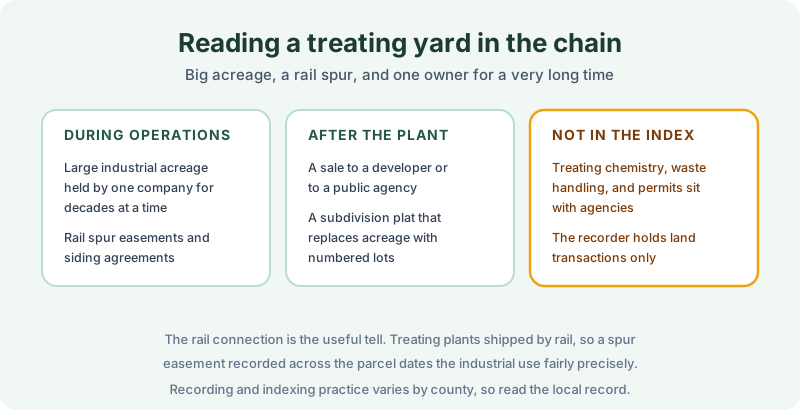
The records contribution is historical use evidence, and this lane leaves a distinctive pattern. Large acreage held by a single company for decades, with very few conveyances. Then a sale to a developer or a public agency, followed by a subdivision plat that turns acreage into numbered lots.
The useful specific is rail. Treating plants shipped by rail almost without exception, so a recorded spur easement or siding agreement across the parcel dates the industrial use fairly precisely, the same way a rail corridor search does. A chain of title search surfaces all of it.
What the recorder does not hold is the operating story. Waste handling, discharge permits, and inspection reports live with agencies, and no search of land records produces them. Recording and indexing practice varies by county as well, so a local pattern is never a national rule.
What a closure records here
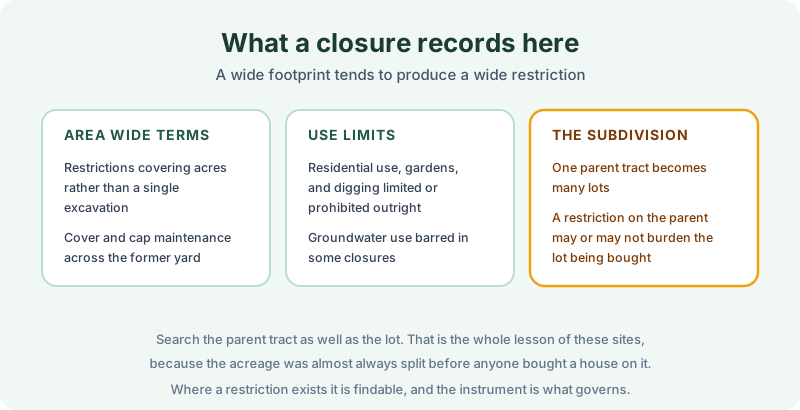
Where a treating site went through a cleanup, the instruments tend to be broad rather than surgical.
- Area wide restrictions covering acres rather than a single excavation footprint.
- Cover and cap maintenance obligations across the former yard, which bind whoever owns the surface.
- Use limits on residential occupancy, gardening, or digging, sometimes with depth thresholds.
- Groundwater use prohibitions, where a preservative or its carrier oil reached an aquifer.
- An activity and use limitation or environmental covenant, plus occasionally a cost recovery lien.
Then there is the wrinkle that belongs to large sites specifically. One parent tract became many lots, and a restriction recorded against the parent may or may not burden the individual lot on the closing table. That is the subdivision problem, and it is the reason the parent tract belongs in the search rather than the lot alone.
Where the records half stops
A search reports what was found of record for the parcel and term searched, on the date searched. On a former treating yard that contribution is real: it establishes the ownership and use timeline, surfaces the rail and industrial instruments, and finds any restriction or lien a closure actually produced.
It cannot tell you what was in the cylinders, how long stock cured on that particular acre, or what remains in the soil today. Sampling answers that, and a parcel that was never investigated carries nothing on this subject at all, which settles nothing about the ground.
Order the records half
Former treating yards are redeveloped routinely, and the exposure that travels with the land is whatever the closure recorded. Our 1980 Environmental Lien & AUL report covers exactly that: certified title abstractors review land title and judicial records from 1980 to the present and document every environmental lien, encumbrance, and AUL found, with the recorded instruments attached. It’s $425, delivered by email in 3–5 business days. Order online, or see a sample report first. The REC determination remains your environmental professional’s call.
Get an E1527-21 compliant lien & AUL report
Our 1980 Environmental Lien & AUL reports are researched by certified title abstractors, cover judicial records, and are guaranteed accurate. Delivered in 3–5 business days.
or call 877-848-5337