
Published
Tax-delinquent property and environmental risk overlap far more than coincidence would explain. A site stops earning, the operator walks away, the taxes go unpaid, and the parcel ends up with a taxing authority or a land bank holding a deed to something nobody wants to touch. Buyers are drawn to these parcels because they are cheap, and they are cheap for reasons that a records search can partly explain. Our guide to brownfield redevelopment searches covers the redevelopment side; this one is about what the tax foreclosure itself did and did not do to the record.
A tax sale does not clear the environmental record
The most common assumption we hear about these parcels is the most expensive one: that foreclosure wiped the slate. It is worth separating two very different things that both show up in a search.
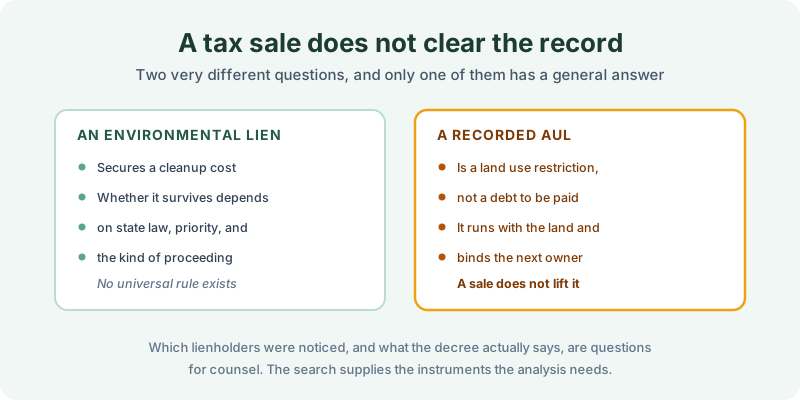
An environmental lien secures a government’s cleanup costs, and whether it survives a particular tax foreclosure depends on state law, on the lien’s priority, on the type of proceeding, and on who received notice. There is no national rule, and the answer differs between states and sometimes between proceedings in the same state. That analysis belongs to counsel.
An Activity and Use Limitation is a different animal. It is not a debt waiting to be paid off, it is a restriction on how the land may be used, recorded to run with the parcel. A conveyance does not lift it. Whoever takes title takes the restriction, and the continuing obligations that come with it attach to the new owner rather than staying behind with the old one.
So the useful question is not “was it cleared” but “what is on the record, and what does each instrument say.” The search answers the second one and hands the documents to the person who has to answer the first.
The contaminating owner is not the seller
Search scope is where these deals quietly go wrong, and the reason is structural.
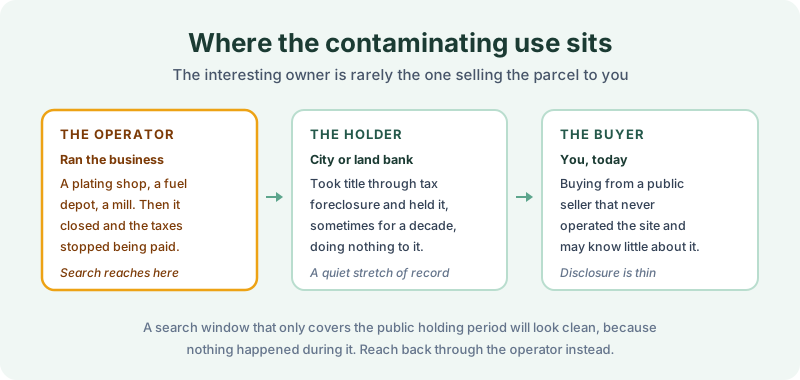
The chain on one of these parcels typically has three segments. A business operated the site and eventually stopped paying taxes. A city, county, or land bank took title and then held the parcel, often for years, doing essentially nothing to it. Then it is offered to you.
The middle segment is a quiet stretch of record. Nothing was built, nothing was spilled, nothing was recorded. A search scoped to the public holding period will therefore come back clean, and it will be accurate and useless at the same time. Everything that matters sits in the first segment, which is exactly the part a short search window misses. This is the same reasoning behind searching from 1980 forward rather than from the most recent transfer.
Public sellers also disclose less than private ones, and not out of bad faith. A land bank that never operated the site frequently has no institutional knowledge of what happened there, and many convey by quitclaim with no representations at all. The record is the disclosure.
Three sets of instruments to pull
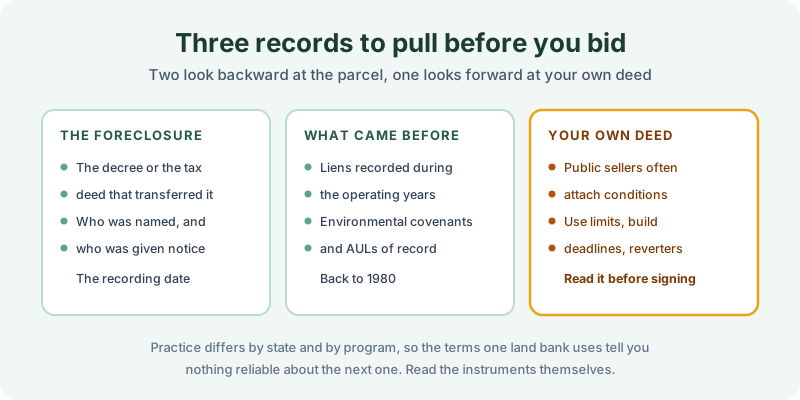
Two look backward at the parcel and one looks forward at your own transaction:
- The foreclosure itself, meaning the decree or tax deed that moved title, who was named in it, and who was given notice. Whether a lienholder was noticed bears directly on what the proceeding could have affected.
- Everything recorded before it, back through the operating years: environmental liens, environmental covenants, AULs, and the ordinary encumbrances that came and went.
- The deed you are about to accept. Public and land bank conveyances frequently attach conditions of their own, such as use limitations, construction deadlines, or a reverter if a development commitment is not met. These are new restrictions, created at your closing, not inherited ones.
That last category surprises people, and it is worth reading the draft deed rather than assuming a standard form.
What the record will not settle
A search documents what has been recorded and indexed in the offices searched, as of its date. It does not establish whether a lien survived the foreclosure, whether notice was adequate, or whether a restriction is enforceable against you. Those are legal conclusions.
It also cannot tell you whether the site is contaminated. Nothing of record is not evidence of a clean site, and plenty of contaminated parcels carry no recorded environmental instrument at all, particularly where no agency ever spent money there. The REC determination belongs to the environmental professional working from a Phase I ESA, and the lien and AUL records review is one input to that work rather than a substitute for it. Common scope and turnaround questions are answered on our FAQ page, and the sample report shows the format.
The 1980 Environmental Lien & AUL report is built for exactly this fact pattern: certified title abstractors review land title and judicial records from 1980 to the present and document every environmental lien, encumbrance, and AUL found, with the recorded instruments attached. It’s $425, delivered by email in 3–5 business days. Order online, and if you are acquiring several of these at once, our guide to multi-site portfolio searches covers how to scope the batch.
Get an E1527-21 compliant lien & AUL report
Our 1980 Environmental Lien & AUL reports are researched by certified title abstractors, cover judicial records, and are guaranteed accurate. Delivered in 3–5 business days.
or call 877-848-5337