Published
A brownfield is, in the federal definition, real property whose expansion, redevelopment, or reuse may be complicated by the presence, or potential presence, of a hazardous substance, pollutant, or contaminant. EPA has estimated the country holds more than 450,000 of them: the shuttered plating shop, the former gas station on the corner lot, the mill site a city wants turned into housing. Redeveloping them is good policy and, often, good business. It is also the corner of real estate where the land records carry the most environmental freight, which makes the lien and AUL search less a formality and more a site-planning document.
Why brownfields and the land records are inseparable
Brownfields are, by definition, properties with a suspected environmental past. Each chapter of that past tends to leave something recorded. A government-funded cleanup can leave a cost-recovery lien. A regulatory closure can leave an environmental covenant. A risk-based remedy can leave obligations that run with the land for decades. A clean, never-touched suburban parcel might sail through a lien search with nothing found; a brownfield is precisely the property where you should expect the record to talk.
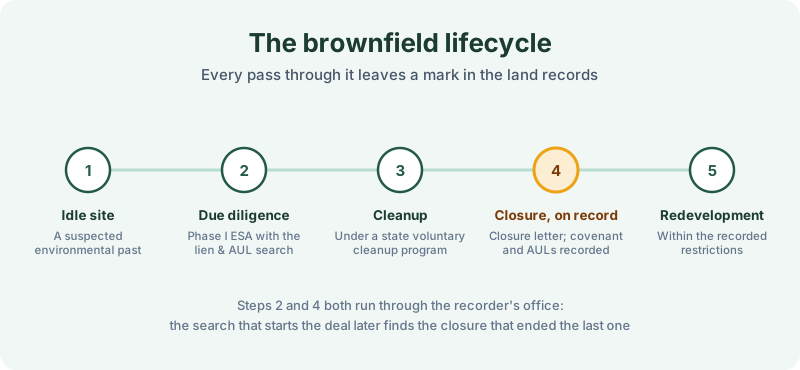
The modern brownfield pipeline reinforces this. Nearly every state runs a voluntary cleanup or brownfield program: an owner or developer enrolls, investigates, cleans the site to a risk-based standard, and receives a closure letter (a “no further action” determination or certificate of completion; the name varies by state). Those closures routinely leave some contamination managed in place, and the restrictions that make that safe, the Activity and Use Limitations, get recorded against the title. In the next buyer’s Phase I, that history typically reads as a controlled recognized environmental condition: addressed, but controlled.
What the record can hold on a brownfield
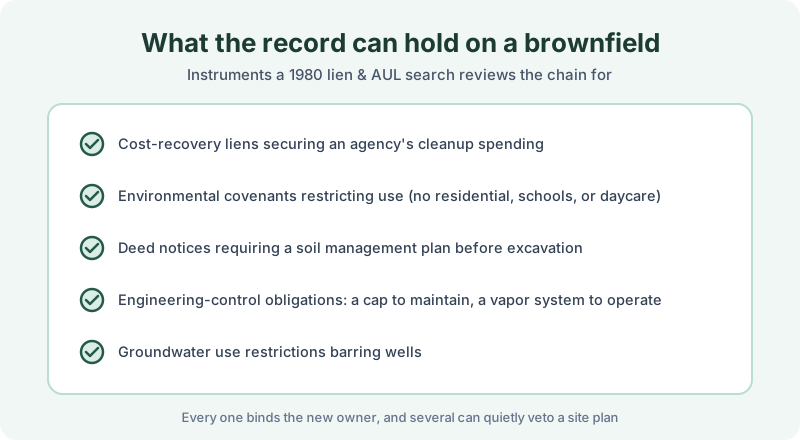
- Cost-recovery liens securing what an agency spent cleaning the site or its neighbors
- Environmental covenants restricting use: no residential, no schools or daycare
- Deed notices requiring a soil management plan before excavation
- Engineering-control obligations such as a cap to maintain or a vapor mitigation system to operate
- Groundwater use restrictions barring wells
None of this is necessarily a reason to walk away. Managed contamination under a well-drafted covenant is how thousands of sites return to productive use. But every one of those instruments binds the new owner, and several of them can quietly veto a site plan.
The plan meets the record
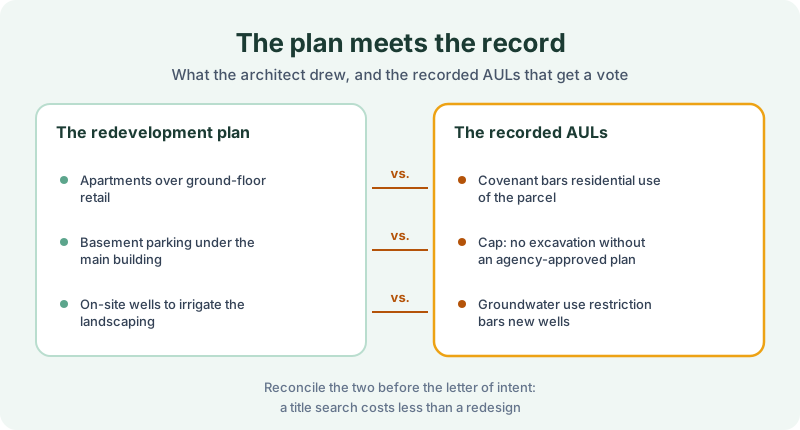
This is the step redevelopers skip at their peril. A covenant that bars residential use decides whether the upper floors can be apartments. A cap that can’t be breached without an agency-approved plan decides whether there’s basement parking. A groundwater restriction decides how the landscaping gets watered. Finding these after the architect has drawn the building is an expensive way to learn what a title search would have said before the letter of intent.
There’s a liability dimension too. Buying a property with known or suspected contamination is exactly what the bona fide prospective purchaser protection exists for. It’s conditioned on completing All Appropriate Inquiries before closing and meeting continuing obligations after, among them honoring the recorded restrictions. On a brownfield, the lien and AUL search is pulling double duty: it helps establish the protection, and it identifies the recorded restrictions that are among the obligations that keep it.
Search first, design second
Our 1980 Environmental Lien & AUL report gives a brownfield deal its records baseline: certified title abstractors review land title and judicial records from 1980 to the present and document every environmental lien, encumbrance, and AUL found, with the deed chain, legal description, and current-owner documentation to support it. It’s $425, delivered by email in 3–5 business days. Order online before the site plan gets expensive, and if the search turns something up, here’s how to read it.
Get an E1527-21 compliant lien & AUL report
Our 1980 Environmental Lien & AUL reports are researched by certified title abstractors, cover judicial records, and are guaranteed accurate. Delivered in 3–5 business days.
or call 877-848-5337