Published
Most environmental diligence is written for an acquisition, where the question is what the buyer is taking on. A construction loan is a different shape. The borrower may have owned the parcel for years, the lender is advancing money in stages against work that has not happened yet, and the project itself is the thing that will disturb whatever is down there. That combination puts the search earlier in the schedule than people expect, and it makes the timing in the environmental due diligence timeline tighter rather than looser.
Why construction changes the picture
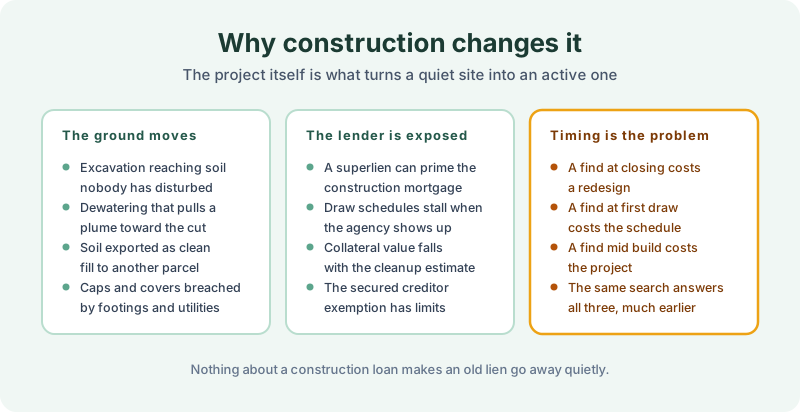
The ground moves, which is the whole point of a build. Excavation reaches soil nobody has touched since the site was last graded. Dewatering a foundation pulls groundwater toward the cut, and with it anything dissolved in that groundwater. Soil leaves the site as clean fill and arrives somewhere else. And on any parcel carrying an engineered cap or a cover system, footings and utility trenches are precisely the things a recorded restriction was written to prevent.
The lender’s exposure follows from that. In the superlien states a state environmental lien can take priority over a previously recorded mortgage, which is set out in environmental superlien states. Draw schedules stall when an agency takes an interest. Collateral value falls by the size of a cleanup estimate. And the secured creditor exemption protects a lender who stays a lender, which is a narrower position than it sounds, as discussed in the secured creditor exemption.
Timing is the actual problem. A finding at closing costs a redesign. A finding at the first draw costs the schedule. A finding halfway through the build can cost the project. The same search answers all three questions, and it is cheapest by an order of magnitude at the first one.
When to run it
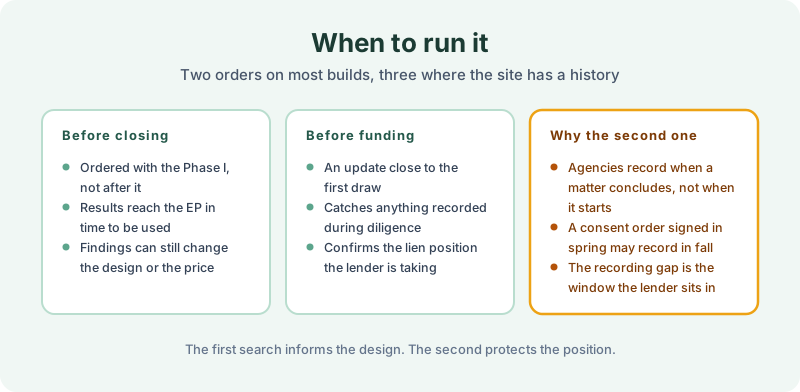
Two orders cover most builds. The first goes in with the Phase I rather than after it, so the results reach the environmental professional while the report is still being written and while a finding can still change the design or the price. The second is an update close to the first draw, which catches anything recorded during diligence and confirms the lien position the lender is actually taking.
The second one is not belt and braces. Agencies record when a matter concludes rather than when it begins, so a consent order negotiated in the spring may not reach the county until the fall. That recording gap is exactly the window a construction lender sits inside, and it is the same lag described in how an environmental lien and AUL search is performed.
On a site with a known industrial history a third order before substantial completion is worth considering, particularly where remediation was ongoing anywhere nearby.
The recorded restriction problem specifically
Activity and use limitations deserve separate attention on a build, because they are the instrument most likely to conflict directly with a set of drawings. A limitation may prohibit excavation below a stated depth, require a vapor barrier under any occupied structure, restrict the parcel to commercial use, or require agency approval before any soil is moved.
None of those stops a project. All of them change one, and they change it far more cheaply at the schematic stage than after the foundation is poured. Where a limitation is found, the obligations it imposes are set out in what an AUL actually requires, and a modification is possible but slow.
What the report gives a lender
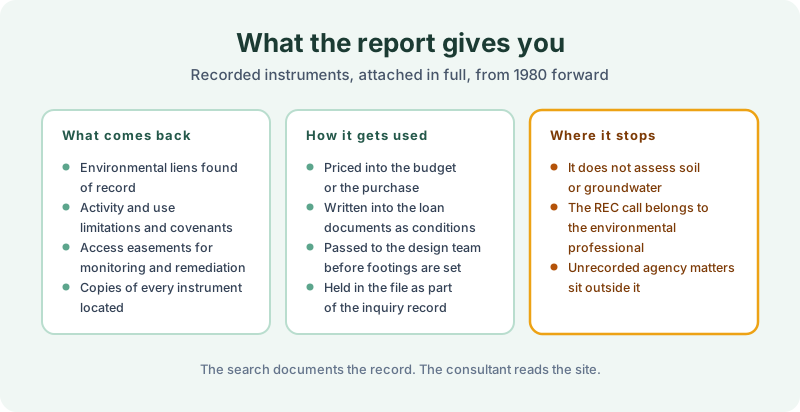
What comes back is the recorded picture from 1980 forward. Environmental liens found of record, activity and use limitations and environmental covenants, access easements for monitoring and remediation, and copies of every instrument located rather than a summary of them.
How it gets used is straightforward. Findings are priced into the budget or the purchase, written into the loan documents as conditions and covenants, passed to the design team before footings are set, and held in the file as part of the inquiry record.
Where it stops is equally clear. The search does not assess soil or groundwater and makes no determination about a recognized environmental condition, which belongs to the environmental professional. Agency matters that were never recorded sit outside it entirely, so nothing found of record is a statement about the record rather than about the site.
The takeaway
On a construction loan the search is not a closing formality, it is a design input, and it is only useful while the design can still absorb it. Order it with the Phase I and update it before the first draw, and the lien position you think you have is the one you actually have.
The 1980 Environmental Lien & AUL report is built for exactly this. Certified title abstractors review land title and judicial records from 1980 to the present and document every environmental lien, encumbrance, and AUL found, with the recorded instruments attached. It’s $425, delivered by email in 3–5 business days. Order online, or see a sample report first.
Get an E1527-21 compliant lien & AUL report
Our 1980 Environmental Lien & AUL reports are researched by certified title abstractors, cover judicial records, and are guaranteed accurate. Delivered in 3–5 business days.
or call 877-848-5337