Published
Distressed industrial property reaches the market through bankruptcy constantly, and it arrives with a story attached: the operator failed, the case closed, everything got wiped out. That story is about a person or a company. The parcel has its own record, kept somewhere else, and the two do not always agree. Anyone buying out of a distressed chain, or lending against one, is asking a narrower question than the case file answers, and it is the same question a tax foreclosure raises: what is still recorded against this land.
Discharge and the lien are separate questions
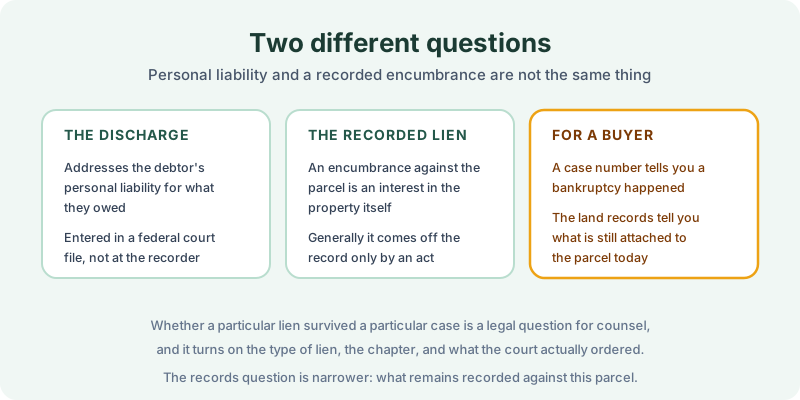
A discharge deals with personal liability, meaning what the debtor owed. A recorded lien is an interest in the property, and property interests are generally handled differently from unsecured claims. That distinction is why “the bankruptcy took care of it” is not an answer a lender should accept on its own.
Whether a specific lien survived a specific case turns on the type of lien, the chapter, what the court actually ordered, and in some states on the superlien statutes that put certain environmental claims ahead of earlier interests. Those are legal questions, and they belong to counsel rather than to an abstractor. The records question is narrower and answerable: as of today, what does the recorder show against this parcel, and is there a recorded release for it.
An activity and use limitation sits even further outside the argument. A use restriction is not a debt at all. It runs with the land, and a bankruptcy that resolved money claims has no obvious mechanism for removing a covenant that limits how the parcel can be used.
Two indexes that do not cross reference
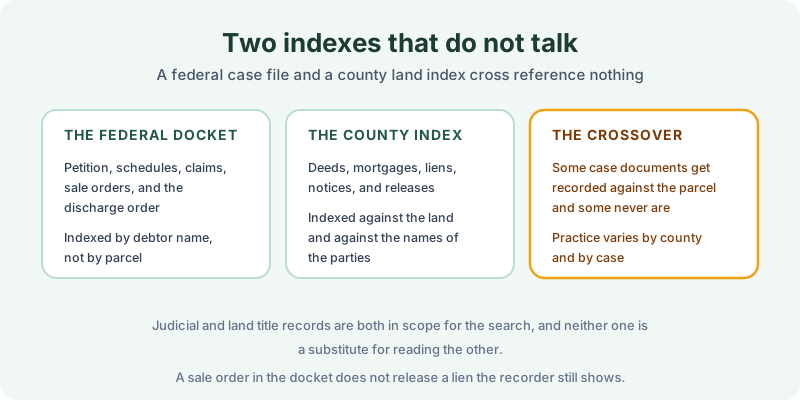
The petition, the schedules, the claims, any sale order, and the discharge all sit in a federal court file indexed by debtor name. Deeds, mortgages, liens, notices, and releases sit in a county index organized around the land and the names of the parties to each instrument. Neither one updates the other.
Some case documents do get recorded against the parcel, because a party thought to record them. Many never are, and whether that happens varies by county and by case. This is why our search covers judicial records as well as land title records rather than only one of them. A sale order in a docket does not release an instrument the recorder still shows, and a recorded release is what actually clears a line item.
Who and what to search in a distressed chain
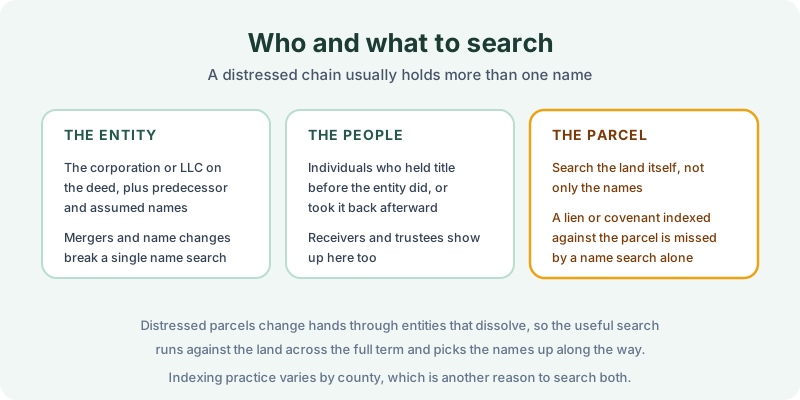
Distressed chains are messy in a predictable way, and the scope has to account for it.
The entity, plus its predecessors. Operating companies merge, change names, and reorganize, and a search run against only the name on the current deed can walk straight past the years that matter.
The individuals. Owners often hold title personally before an entity is formed and take it back when the entity dissolves. Receivers and trustees appear in the chain too, with deeds of their own.
The parcel itself. This is the one that gets missed. A lien or covenant indexed against the land is invisible to a name search, and on a parcel that has passed through several failed owners the land is the only continuous thread there is.
What a clean report on this parcel means
A report states what was found of record for the parcel and term searched, on the date searched. On a distressed chain that result is genuinely useful, because recorded liens and covenants are the kind of thing that gets recorded, so there is usually something to find where something exists.
The limits are still the limits. Recording and indexing practice varies by county. An unrecorded agency claim, an obligation that was never reduced to a recorded instrument, or a filing made after our search date will not appear, and an empty result is not proof that nothing exists. If something does turn up, our note on what to do with a lien you find covers the sequence, and lenders in particular tend to want the instrument in hand before the credit decision rather than after.
Order the records half
Buying out of a bankruptcy is a good way to acquire an industrial parcel and a poor moment to assume the record was cleaned up along the way. Our 1980 Environmental Lien & AUL report settles the parcel level question: certified title abstractors review land title and judicial records from 1980 to the present and document every environmental lien, encumbrance, and AUL found, with the recorded instruments attached. It’s $425, delivered by email in 3–5 business days. Order online, or see a sample report first.
Get an E1527-21 compliant lien & AUL report
Our 1980 Environmental Lien & AUL reports are researched by certified title abstractors, cover judicial records, and are guaranteed accurate. Delivered in 3–5 business days.
or call 877-848-5337