
Published
The search comes back four days before closing with a recorded state environmental lien nobody expected. Nobody wants to reprice the transaction and nobody wants to move the date, so the parties do what parties do, which is hold money back. That is a reasonable response to a late finding and it is a much weaker instrument than most people treat it as. The underlying situation is the one described in an environmental lien found, now what, reached at the worst possible moment.
Why a holdback exists
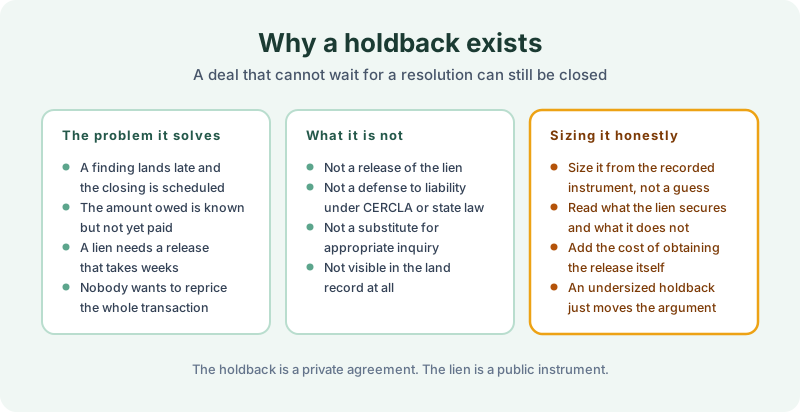
The problem it solves is narrow and real. A finding lands late, the amount is known or estimable, the release takes weeks that the calendar does not have, and everybody would rather close and settle the money than start again.
What it is not is more important. A holdback is not a release of the lien, which stays recorded until an agency files a discharge. It is not a defense to liability under CERCLA or state law, because liability attaches to owners and operators rather than to whoever holds the escrow. It is not a substitute for appropriate inquiry, which is a separate statutory exercise covered in all appropriate inquiries. And it is entirely invisible in the land record, so a future searcher sees the lien and no trace of the arrangement.
Sizing it honestly means reading the recorded instrument rather than estimating. What does the lien secure, what does it not secure, what interest is running, and what will it cost to obtain the release itself. An undersized holdback does not resolve the argument. It defers it to a point where one party has already been paid.
What it has to cover
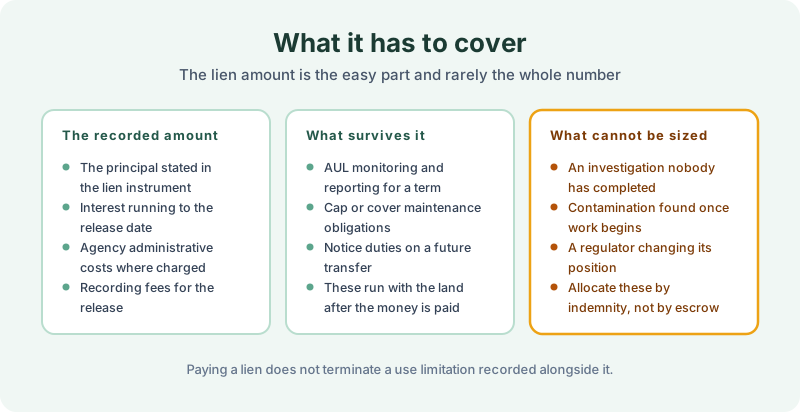
The recorded amount is the easy part. Principal as stated in the instrument, interest running to the release date, agency administrative costs where they are charged, and the recording fee for the discharge.
What survives payment is the part people get wrong. Where an activity and use limitation was recorded alongside the lien, paying the lien does nothing to it. Monitoring and reporting obligations continue for their stated term. Cap or cover maintenance continues. Notice duties on a future transfer continue. All of those run with the land and bind the buyer from the day of closing, which is set out in what an AUL actually requires.
And some costs cannot be sized at all. An investigation nobody has completed. Contamination found once work begins. A regulator revisiting its position, which is the scenario in why an AUL gets revisited. Those belong in an indemnity with a defined scope and a survival period, not in an escrow with a number on it.
What the buyer should actually ask for
Three documents, and they are all obtainable. The recorded instrument itself rather than a summary of it, so the amount and the securing language can be read. A payoff or status letter from the agency, which is the only authoritative source for the current figure. And a written statement of what the agency will require before it files a discharge, because that is frequently a process rather than a payment.
Recording practice varies by county and agency practice varies by state, so nothing about how one state handled a discharge should be assumed to apply elsewhere.
Getting the finding in time
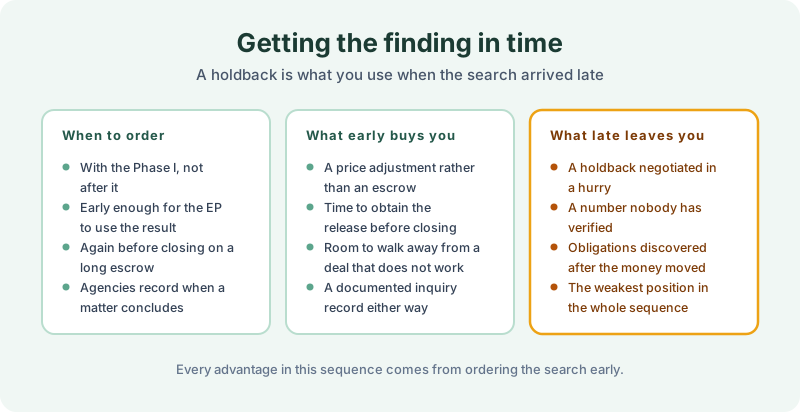
The whole holdback conversation is a symptom. It happens because the search arrived after the price was agreed, and every option available at that point is worse than the options available earlier.
Ordered with the Phase I rather than after it, the same finding produces a price adjustment, or time to obtain the release before closing, or a decision to walk away from a deal that does not work. Ordered four days out, it produces a number negotiated in a hurry against an instrument nobody has fully read. Agencies also record when a matter concludes rather than when it begins, so on a long escrow a second search before closing is worth the cost.
The takeaway
A holdback is a private agreement about money sitting alongside a public instrument about land, and the two do different things. It can cover a documented lien amount. It cannot release the lien, extinguish the obligations recorded with it, or substitute for the inquiry.
The 1980 Environmental Lien & AUL report is how the finding gets documented early enough to matter. Certified title abstractors review land title and judicial records from 1980 to the present and document every environmental lien, encumbrance, and AUL found, with the recorded instruments attached. It’s $425, delivered by email in 3–5 business days. Order online, or see a sample report first.
Get an E1527-21 compliant lien & AUL report
Our 1980 Environmental Lien & AUL reports are researched by certified title abstractors, cover judicial records, and are guaranteed accurate. Delivered in 3–5 business days.
or call 877-848-5337