Published
A paint plant is two chemistries in one building. On one side there are solvents, moving in bulk and stored in tanks. On the other there are pigments and resins, including metals that stayed in the formulation long after anybody was comfortable with them. Both sides end up in floors, drains and the ground underneath, and almost none of it is described anywhere in the chain of title. The pattern is the same one behind our note on a former printing plant and its solvents, with a heavier metals component on top.
What the plant actually handled
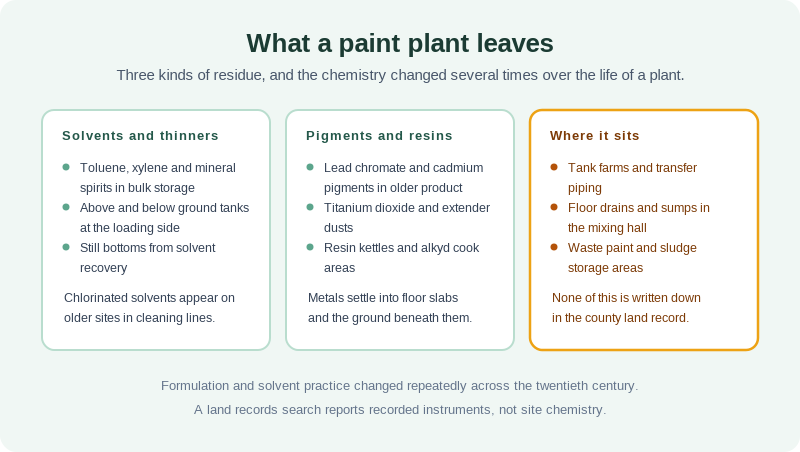
Solvents came first and in volume. Toluene, xylene and mineral spirits in bulk storage, above and below ground tanks at the loading side, and still bottoms from any solvent recovery operation. Older plants frequently ran chlorinated solvents in cleaning and degreasing lines, which behave very differently in the subsurface from the aromatics used in the product itself.
The pigment side is the part people forget. Lead chromate and cadmium pigments were standard in industrial and marine coatings for a long time. Titanium dioxide and extender dusts are far less toxic and far more pervasive. Resin kettles and alkyd cook areas added their own residues.
Where it settles is predictable. Tank farms and transfer piping, floor drains and sumps in the mixing hall, and the waste paint and sludge storage area out the back. Metals settle into the slab and into the ground beneath it, and they stay there.
What the record can actually show
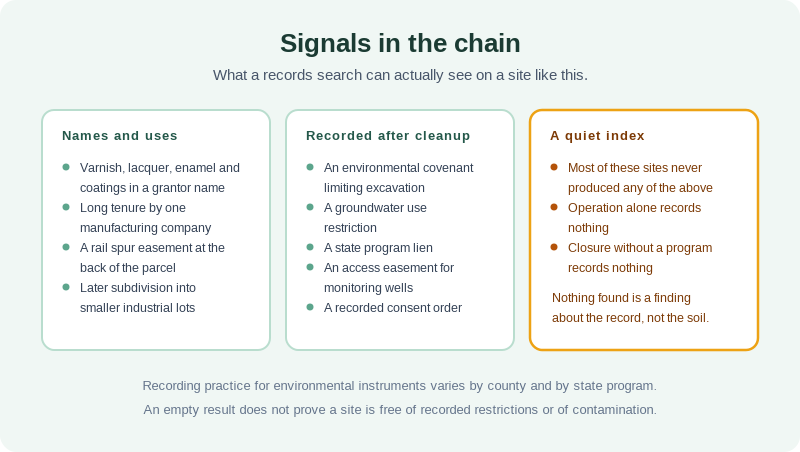
Some signals do reach the chain. A grantor name carrying varnish, lacquer, enamel or coatings. Long tenure by one manufacturing company, which is the usual pattern on these sites. A rail spur easement at the back of the parcel, because raw material arrived by rail for most of the twentieth century. A later subdivision into smaller industrial lots once the plant closed.
Instruments sometimes follow a cleanup. An environmental covenant limiting excavation, a groundwater use restriction, a state program lien, an access easement for monitoring wells, a recorded consent order. Those are findable, they are what the search exists to locate, and they come back with copies attached.
The honest part is that most of these sites produced none of them. Operating a plant records nothing. Closing one without entering a state program records nothing either. A quiet index on a parcel with sixty years of coatings manufacturing under it is the ordinary result, and reading it as reassurance is the mistake the whole report is designed to prevent.
Setting the term
A long single ownership is the defining feature here, and it cuts both ways. It makes the chain short and easy to read. It also means the instrument that matters may sit at the far end of it, in the transfer that broke up the plant site rather than in anything recent.
Run every owner name across the full term rather than only the current one, and run the successor entities, because manufacturers in this sector merged and renamed repeatedly. Use the legal description rather than the address, and where the plant site was subdivided, run each resulting parcel. A site assembled from two adjoining industrial lots behaves the way our note on a former chemical distribution warehouse describes, where the operation and the ground it stood on are indexed separately.
Where the search sits in the assessment
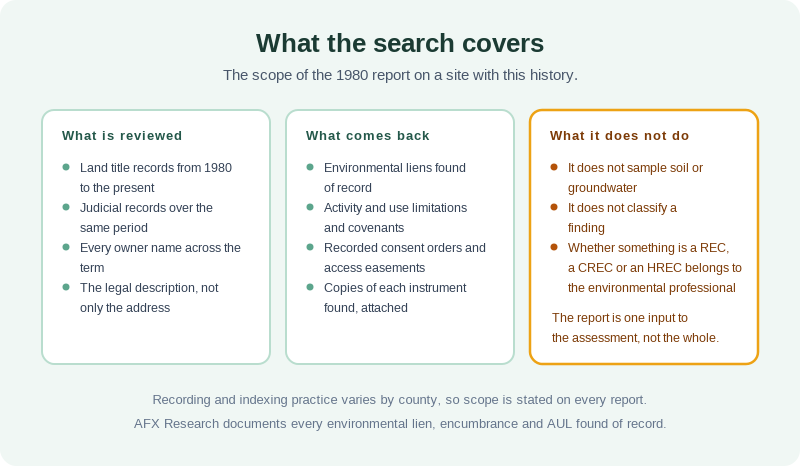
The report reviews land title and judicial records from 1980 to the present, across every owner name over the term, and returns the environmental liens, activity and use limitations, covenants, consent orders and access easements found of record, with the instruments attached.
What it does not do is sample anything or classify anything. Whether a finding amounts to a recognized environmental condition, a controlled one or a historical one is the environmental professional’s judgment, as our note on REC, CREC and HREC in a Phase I sets out. A plating line on the same site raises the same question from a different direction, covered in a former metal plating shop. Recording practice varies by county, and an empty result does not prove a parcel is free of restrictions or of contamination.
Ordering it
The 1980 Environmental Lien & AUL report is the product for this. Certified title abstractors review land title and judicial records from 1980 to the present and document every environmental lien, encumbrance, and AUL found, with the recorded instruments attached. It’s $425, delivered by email in 3–5 business days. Order online, see a sample report, or read the FAQ if you want the scope settled first.
Get an E1527-21 compliant lien & AUL report
Our 1980 Environmental Lien & AUL reports are researched by certified title abstractors, cover judicial records, and are guaranteed accurate. Delivered in 3–5 business days.
or call 877-848-5337