Published
Commercial printing is one of the most widely distributed industrial uses in the country. Almost every small city has a building that housed a print shop for forty years, usually in a mixed use block, usually leased rather than owned by the printer. The chemistry is closer to a machine shop than most buyers expect, and the records problem has a particular shape: the company that generated the waste may appear nowhere in the chain of title.
Four streams, and one path down
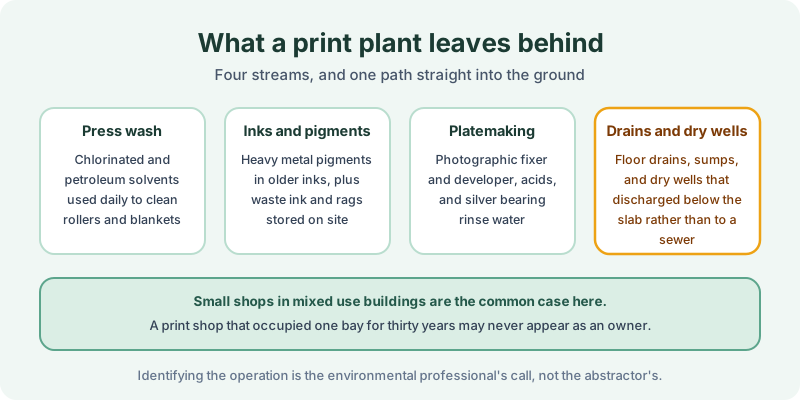
Press wash solvents ran through the shop daily, historically including chlorinated solvents used to clean rollers, blankets, and plates. Inks and pigments contributed metals in older formulations, along with waste ink, rags, and drums stored in a corner of the building. Platemaking added photographic developer and fixer, acids, and silver bearing rinse water, which is why old shops often had a small chemical room.
Floor drains, sumps, and dry wells are the fourth item and the one that turns a housekeeping issue into a subsurface one. Many older buildings discharged wash water below the slab rather than to a sewer, and in rural or unsewered areas that meant a dry well or a septic system taking industrial waste for decades. Which of these matters at a given property is a determination for the environmental professional; the abstractor’s contribution is the record trail each can leave.
Scale is worth a word here, because it cuts against intuition. A four press commercial shop is not a refinery, and the volumes involved look modest on paper. Chlorinated solvents do not behave modestly. A few gallons a week going down a floor drain over three decades is a meaningful subsurface release, which is why quiet, ordinary looking buildings turn up in cleanup programs at all.
The operator was probably a tenant
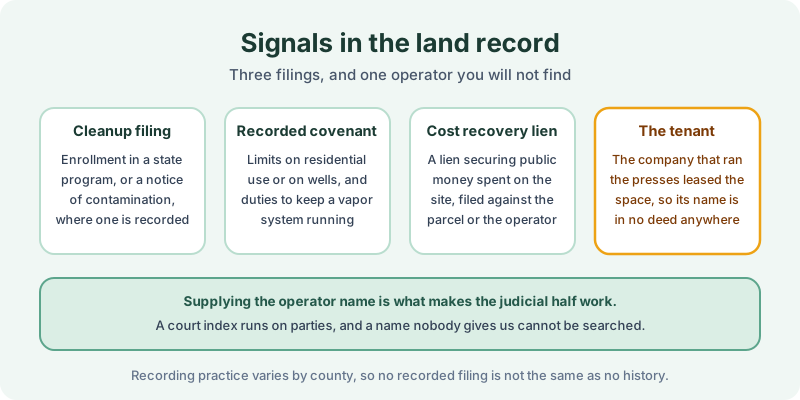
Three kinds of filings are worth looking for. Cleanup program filings appear where a state records enrollment or a notice of contamination. Recorded covenants restrict residential use, well installation, or slab penetration, and on solvent sites they increasingly carry vapor control obligations, which our note on environmental covenants and UECA describes. Cost recovery liens secure public money already spent and may be filed against the parcel, the operator, or both.
The fourth item on that diagram is the structural problem. Printers were tenants far more often than owners, so the company whose solvents are in the soil never appears as a grantor or grantee. A judgment or an enforcement action against that company sits in a court index organized by party name, and there is no way to reach it from the parcel alone. This is the same dependency described in our note on judicial records, and it is why a tenant name supplied by the client is often the single most valuable input to the search. Our note on leased property covers the same relationship from the landlord’s side.
One further wrinkle in the chain is worth anticipating. Printing buildings have been prime candidates for residential conversion in a great many downtowns, so a parcel that housed presses until 1994 may now be condominium lofts. That conversion creates a new plat, new unit descriptions, and a declaration, and a covenant recorded against the original parcel before the conversion sits under a description that no longer matches any single unit.
Scoping the search
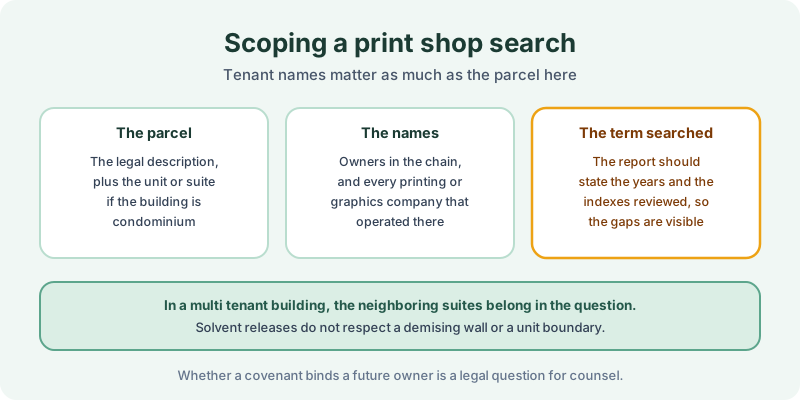
Send the legal description, and the unit or suite designation if the building is a condominium, since instruments in a commercial condominium may be indexed against a unit rather than the whole parcel. Send names: the owners in the chain, and every printing, graphics, or lithography company the consultant or the client can identify as having operated there, including variant spellings and dissolved entities.
In a multi tenant building, ask about the neighboring suites too. A solvent release does not respect a demising wall, and the vapor pathway question that follows from it is discussed in our note on vapor intrusion and recorded use restrictions.
Then read the report for its stated scope. It should name the years searched and the indexes reviewed so a gap is visible rather than implied. Shops that closed before the modern regulatory era may leave nothing recorded even where an agency file exists, which is why this search sits beside the consultant’s records review rather than replacing it. Our FAQ covers what a standard term includes.
Our 1980 Environmental Lien & AUL report covers both halves: certified title abstractors review land title and judicial records from 1980 to the present and document every environmental lien, encumbrance, and AUL found, with the recorded instruments attached. It’s $425, delivered by email in 3–5 business days. Order online, or see how the search is performed first.
Get an E1527-21 compliant lien & AUL report
Our 1980 Environmental Lien & AUL reports are researched by certified title abstractors, cover judicial records, and are guaranteed accurate. Delivered in 3–5 business days.
or call 877-848-5337