
Published
A retail bay in a 1985 strip mall is about the last place anyone expects a recorded environmental instrument. It held a one hour photo counter for eleven years, then a phone repair shop, then a nail salon. The counter ran developer, fixer and bleach every day it was open, and all of it went down a floor drain into whatever the building was connected to. These sites are small, extremely numerous, and easy to walk past, which makes them close cousins of a former auto body shop in the way they hide inside ordinary commercial property.
What a photo lab leaves
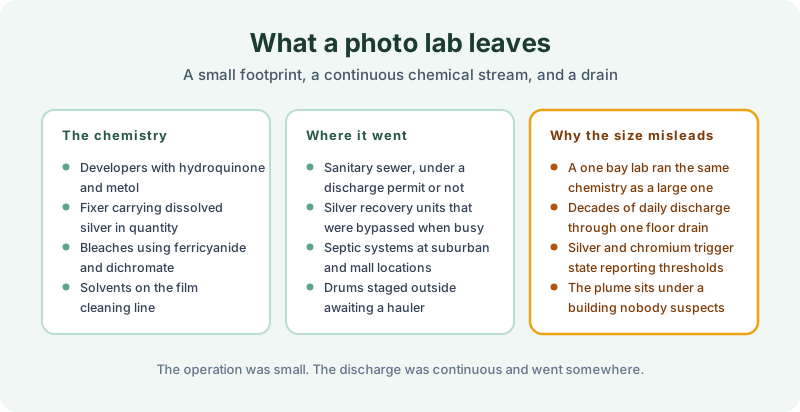
The chemistry is consistent across decades and across scales. Developers carried hydroquinone and metol. Fixer carried dissolved silver, in quantity, because that is what fixer does. Bleaches used ferricyanide and, on older color processes, dichromate. Film cleaning lines added solvents on top.
Where it went is the part that matters. Most labs discharged spent solution to the sanitary sewer, sometimes under a permit and sometimes not. Silver recovery units were required in most jurisdictions from the 1980s onward, and they were also the first thing bypassed when a lab was busy and a cartridge was full. Suburban and mall locations frequently sat on septic rather than sewer, which puts the discharge directly into the ground. Drums of spent fixer staged outside a back door waiting for a hauler are a recurring feature of enforcement files.
The size of the operation misleads people. A single bay lab ran the same chemistry as a large commercial one, just less of it, and it ran it every day for years. Silver and chromium both trigger state reporting thresholds at concentrations a retail lab reaches easily.
Reading a photo lab in the chain
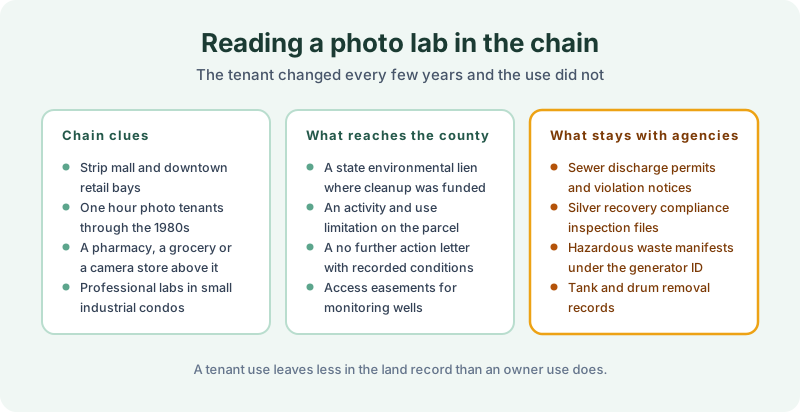
The chain of title rarely names the use directly, because the lab was almost always a tenant. What you get instead are building types. Strip mall and downtown retail bays. Pharmacies, groceries and camera stores with a counter inside them. Small industrial condominium units for professional and commercial labs serving photographers and hospitals.
What reaches the county is the familiar set of instruments. A state environmental lien where public money funded an investigation or cleanup. An activity and use limitation restricting excavation or requiring a vapor barrier. A no further action letter with recorded conditions attached. An access easement for monitoring wells, which is discussed further in remediation access easements in the land record.
A great deal stays with the agencies. Sewer discharge permits and the violation notices under them. Silver recovery compliance inspections. Hazardous waste manifests filed under a generator identification number that belonged to a tenant who left in 1997. None of that is recorded anywhere a title search reaches, which is the standing limit set out in data gaps in an environmental lien search.
Why a tenant use is harder than an owner use
An owner operator who contaminates a parcel usually ends up named in something recorded against that parcel. A tenant who does the same thing may leave the land record untouched, because enforcement runs against the operator and the operator is a dissolved corporation with no interest in the real estate.
The practical consequence is that these sites can be genuinely quiet in the county index while carrying a real condition. A search that finds nothing is reporting accurately on what was recorded and indexed, and that is not the same statement as a clean site. Historical use research, city directories and Sanborn maps are how the use is identified in the first place, and those belong to the Phase I rather than to the lien search.
Scoping the search
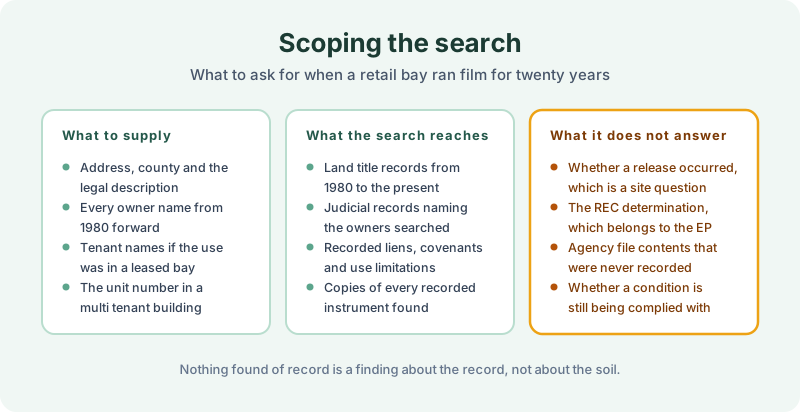
Give us the address, the county and the legal description, every owner name from 1980 forward, and the tenant names where the use sat in a leased bay. On a multi tenant building the unit number matters, because a recorded restriction may apply to one unit rather than to the whole parcel.
What comes back is the land title and judicial record picture from 1980 to the present, with copies of every recorded instrument located. What it does not answer is whether a release occurred, which is a site question, or what the finding means for the REC determination, which belongs to the environmental professional under ASTM E1527-21.
The takeaway
Photo labs are the most common industrial use nobody thinks of as industrial. They were everywhere, they ran real chemistry, and the operator was usually a tenant, so the record is thinner than the risk. Order the search with the Phase I rather than after it, so the answer arrives while it can still be used.
The 1980 Environmental Lien & AUL report is how that gets documented. Certified title abstractors review land title and judicial records from 1980 to the present and document every environmental lien, encumbrance, and AUL found, with the recorded instruments attached. It’s $425, delivered by email in 3–5 business days. Order online, or read the FAQ if you want the scope set out first.
Get an E1527-21 compliant lien & AUL report
Our 1980 Environmental Lien & AUL reports are researched by certified title abstractors, cover judicial records, and are guaranteed accurate. Delivered in 3–5 business days.
or call 877-848-5337