
Published
Most discussion of a closed cleanup focuses on what the new owner is forbidden to do. That is the restriction side, and it is the subject of our note on environmental covenants and UECA. There is a second half that gets far less attention and shows up on the same parcels: somebody else may hold a recorded right to come onto the land. Monitoring wells need sampling. A soil cap needs inspecting. A treatment system needs power, service visits, and eventually decommissioning. None of that happens unless a right of entry exists, and on a great many remediated sites that right sits in the land records alongside the covenant.
What an access easement does that a restriction cannot
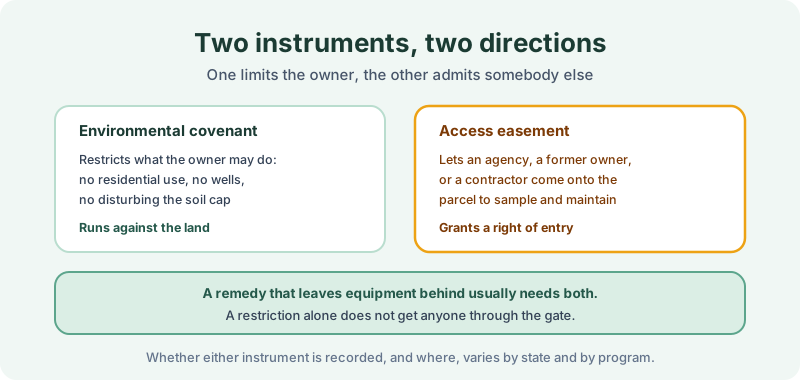
The two instruments point in opposite directions. A covenant limits the owner. No residential use, no groundwater well, no excavation below a stated depth, no removal of a cap. It runs against the land and binds successors, which is the whole point of the device.
An easement admits somebody else. It gives a named party, often a state agency, sometimes a former owner or a responsible party still carrying an obligation, the right to enter, install and replace equipment, take samples, and bring vehicles and crews across the parcel to do it.
A remedy that leaves anything behind generally needs both. A restriction with no matching right of entry produces the awkward situation where the owner is barred from disturbing a cap that nobody has the documented right to come and inspect. That mismatch is worth noticing on a report, because it is a question for counsel rather than a defect the abstractor can resolve.
Where the access right actually sits
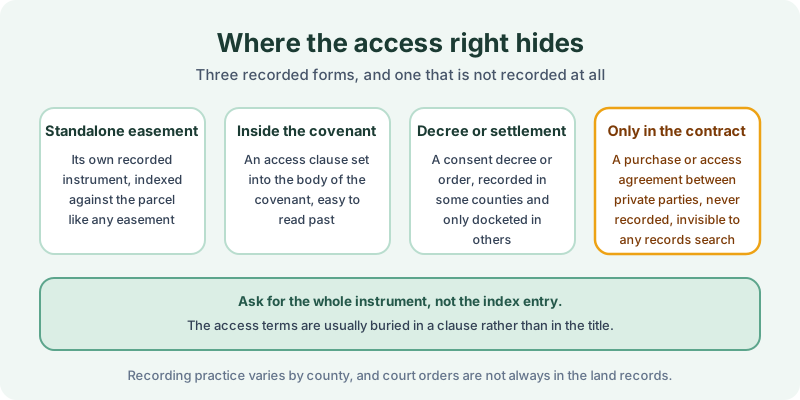
Four locations account for nearly all of them. The standalone easement is the easiest to find, because it is its own recorded instrument, indexed against the parcel the way a utility easement is.
The access clause inside the covenant is the one most often missed. The instrument is titled as a declaration of restrictions, so a reader skims it for prohibitions and stops. The right of entry is a paragraph in the middle, and it may name a party that no longer exists under that name.
A consent decree, judgment, or settlement may create the right instead. Whether it reaches the land records depends on the county and the program. Some are recorded in full, some are referenced by a short memorandum, and some live only on a court docket, which is why our note on judicial records treats the court index as a separate search from the recorder.
The fourth is the gap. Plenty of access arrangements exist purely as private contract, negotiated between a seller and a buyer at closing or between a responsible party and a landowner, and never recorded at all. A records search cannot see those. If a site has wells in the ground and the report shows no easement, the correct conclusion is that nothing was recorded, not that nobody has a right to be there.
Reading the report on a parcel with equipment on it
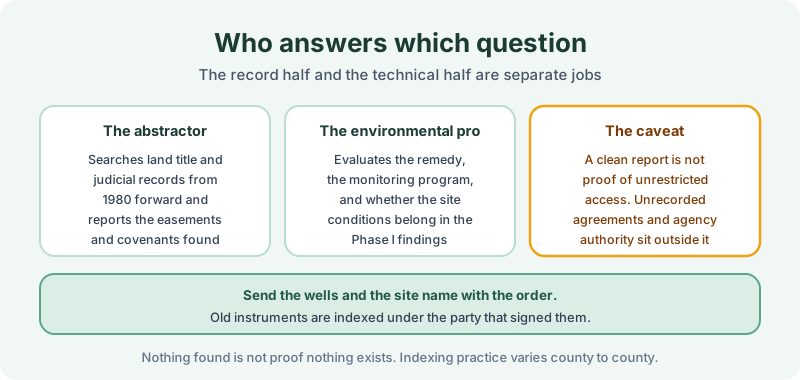
Two practical items help the search. The first is the site name or the responsible party name, since older instruments are indexed under whoever signed them rather than under a current parcel description. The second is subdivision history. An easement recorded against a large industrial tract may sit under a legal description that no longer matches the lot being sold, which is the same problem described in our note on AULs when a parcel is subdivided. Several states also track institutional controls in a database rather than only in the county books, and our note on institutional control registries treats the registry and the recorder as two separate searches for that reason.
Then read the result for what it is. The report covers what was recorded and indexed over the term searched. Whether the remedy is working, whether the wells are still being sampled, and whether an agency retains statutory authority to enter regardless of any easement are questions outside a title search. The FAQ covers how we handle thin or unindexed counties, and a sample report shows the format findings arrive in.
The 1980 Environmental Lien & AUL report is the record half of this work. Certified title abstractors review land title and judicial records from 1980 to the present and document every environmental lien, encumbrance, and AUL found, with the recorded instruments attached. It is $425, delivered by email in 3–5 business days. Order online, or start with our note on what an AUL actually requires if a restriction has already surfaced.
Get an E1527-21 compliant lien & AUL report
Our 1980 Environmental Lien & AUL reports are researched by certified title abstractors, cover judicial records, and are guaranteed accurate. Delivered in 3–5 business days.
or call 877-848-5337