Published
Vapor intrusion changed what a closed cleanup looks like. Sites that were signed off two decades ago have been reopened, and remedies that once ended with soil removal now end with a system under a slab and a covenant saying who has to keep it running. For a buyer or a lender, that shift matters in a specific way: the obligation is recorded, it transfers, and it starts on the day of closing. This is a live example of what an AUL actually requires rather than merely discloses.
The pathway, briefly
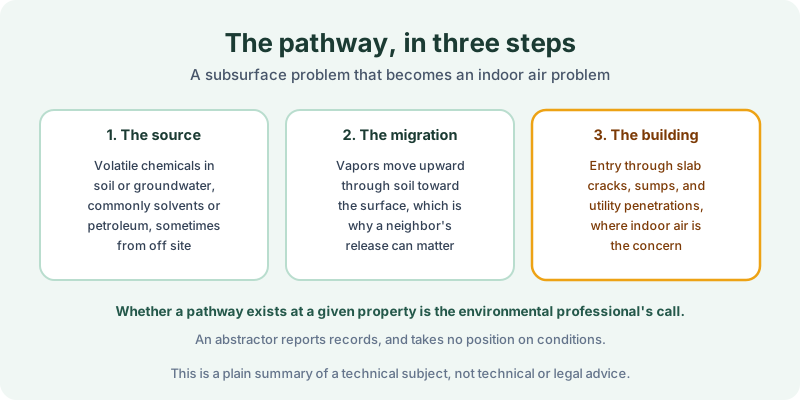
Volatile chemicals in soil or groundwater give off vapors, those vapors move upward through soil, and they can enter a building through slab cracks, sumps, elevator pits, and utility penetrations. The concern is indoor air rather than the dirt itself.
Two features make it distinctive. It is a building problem as much as a land problem, so a vacant lot and a lot with an occupied structure on it present different questions. And it travels, which means a release on a neighboring parcel can create the pathway under yours. Whether a pathway exists at a given property is entirely the environmental professional’s call, and this is a plain summary of a technical subject rather than technical advice.
There is a lending dimension too. A recorded covenant with continuing operation and maintenance duties is an encumbrance a lender’s counsel will want to read, and it can affect appraised value, insurability, and what a borrower is permitted to build. Our note on environmental liens for lenders covers the broader version of that question.
What the covenant requires
Here is why this belongs in a records search rather than only in a consultant’s report. The remedy for a vapor pathway is frequently engineering plus paperwork, and the paperwork is recorded.
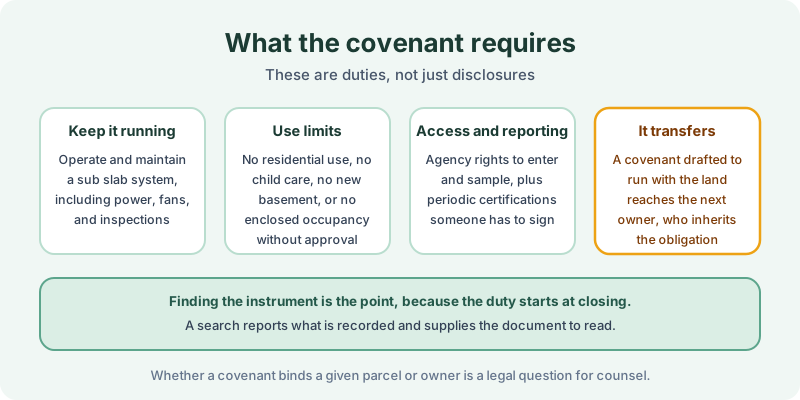
Operation and maintenance duties are the most demanding piece. A covenant may require a sub slab depressurization system to be kept running, powered, inspected on a schedule, and repaired when it fails. That is a permanent operating cost and a permanent responsibility, not a closing condition.
Use limits commonly accompany them: no residential occupancy, no child care, no new basement, no enclosed occupied space without agency approval, and restrictions on penetrating the slab or the vapor barrier.
Access and reporting rights let the agency enter and sample, and often require periodic certifications that someone has to sign. And all of it transfers, when the instrument is drafted to run with the land, which is the mechanism our note on institutional control registries describes.
The practical consequence is that a renovation plan can collide with a recorded covenant. Cutting the slab for new plumbing, adding a residential floor, or converting warehouse space to offices are exactly the activities these instruments address, and finding that out before closing is considerably cheaper than after.
Two related items show up in the same files. Where a system was installed under an agreement rather than an order, the recorded document may be an easement or an access agreement in favor of the party doing the work, with the operating terms sitting in an unrecorded side agreement. And some instruments require notice to tenants, which becomes a landlord obligation the buyer inherits along with the building.
Where the records fit
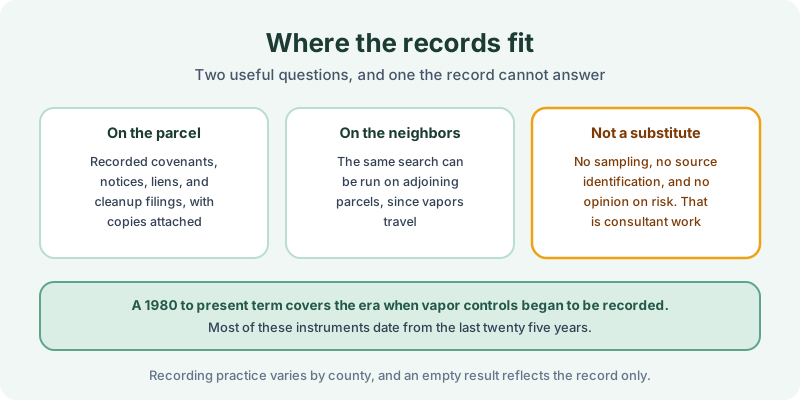
A search answers two useful questions. On the subject parcel, it reports the covenants, notices, cleanup filings, and liens found of record, with copies attached so the operating duties can be read rather than summarized. And because vapors migrate, the same search can be run on adjoining parcels, which is often the more informative order when the consultant has flagged an upgradient site.
A 1980 to present term covers this comfortably, since nearly all vapor related instruments date from the last twenty five years, and our ASTM E1527-21 guide explains how the records half fits the standard.
What the search does not do is sample air, identify a source, or opine on risk. It reports what was recorded and indexed over the term searched, as of its date, and takes no position on conditions. The REC, CREC, and HREC determinations belong to the environmental professional, whether a covenant binds a given parcel or owner is a legal question for counsel, and recording practice varies by county, so an empty result reflects the record rather than the property.
Our 1980 Environmental Lien & AUL report is built for this: certified title abstractors review land title and judicial records from 1980 to the present and document every environmental lien, encumbrance, and AUL found, with the recorded instruments attached. It’s $425, delivered by email in 3–5 business days. Order online, or review a sample report to see the format your file will receive.
Get an E1527-21 compliant lien & AUL report
Our 1980 Environmental Lien & AUL reports are researched by certified title abstractors, cover judicial records, and are guaranteed accurate. Delivered in 3–5 business days.
or call 877-848-5337