Published
A lender forecloses and becomes an owner. That sentence contains the whole problem, because owners carry environmental obligations that lenders do not, and the transition happens at a moment when nobody is usually thinking about the land record. The same distinction sits underneath environmental liens for lenders, and it gets sharper when a loan actually goes bad.
What comes with the deed
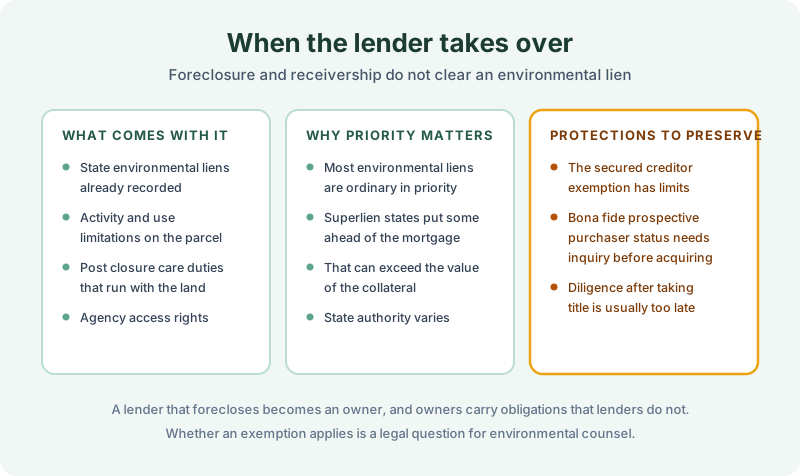
Whatever was recorded. A state environmental lien filed for response costs already spent. An activity and use limitation restricting what the parcel may be used for, which binds the land and therefore binds whoever now holds it. Post closure care obligations with monitoring, reporting and certification duties attached. Agency access rights running across the property.
None of that is extinguished by the foreclosure of a mortgage recorded earlier, unless the statute in that state says so. The restriction runs with the land, which is the point of what an AUL actually requires, and it does not care who the owner is.
The duties are the part lenders underestimate. An annual certification to the agency, a cover that has to be maintained, notice before anyone excavates, and access kept open for inspection are all obligations that attach to ownership. A servicing operation set up to collect payments is not set up to file compliance reports, and the agency will write to the owner regardless.
Priority is where the arithmetic changes
Most environmental liens take their place in the ordinary recording order, so a mortgage recorded first generally comes first. A minority of states have enacted superlien provisions that place some environmental claims ahead of prior recorded interests, and in that situation the lien can exceed the value of the collateral securing the loan.
State authority varies widely here, which is the subject of environmental superlien states. It is not something to reason out from first principles, and whether a particular claim has that status is a legal question rather than a records one. What the search establishes is that the lien exists, when it was filed, and against which parcel. That is the factual base the priority argument gets built on, and it is worth having before a credit decision rather than during a workout.
The protections depend on timing
This is the part that is easy to get wrong and impossible to fix afterwards.
The secured creditor exemption is real and it has limits, generally turning on whether the lender participated in the management of the facility and on what it does after taking title. Bona fide prospective purchaser status, the protection most buyers rely on, requires all appropriate inquiry before acquiring the property, as set out in the all appropriate inquiries rule.
Diligence run after the foreclosure sale is diligence that arrived too late to establish the defense it was meant to support. The findings would be identical. The options available afterwards are not, because price, escrow, and the decision to walk away have all gone by then.
Receivership is a different shape
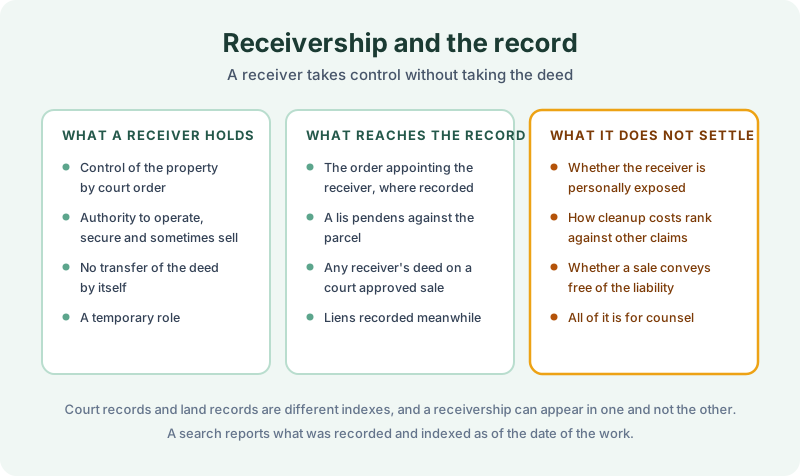
A receiver takes control of a property by court order without taking the deed. The role is defined, temporary, and usually includes authority to operate and secure the property and sometimes to sell it.
What reaches the land record is partial. The appointment order where it was recorded, a lis pendens against the parcel, a receiver’s deed on a court approved sale, and any liens recorded while the receivership ran. Court records and land records are separate indexes, and a receivership can be plainly visible in one and absent from the other, which is why judicial records in an environmental lien search are worth including in the scope rather than assuming.
What it does not settle is whether the receiver is personally exposed, how cleanup costs rank against other claims, or whether a court approved sale conveys free of the liability. Those belong to counsel.
Timing it
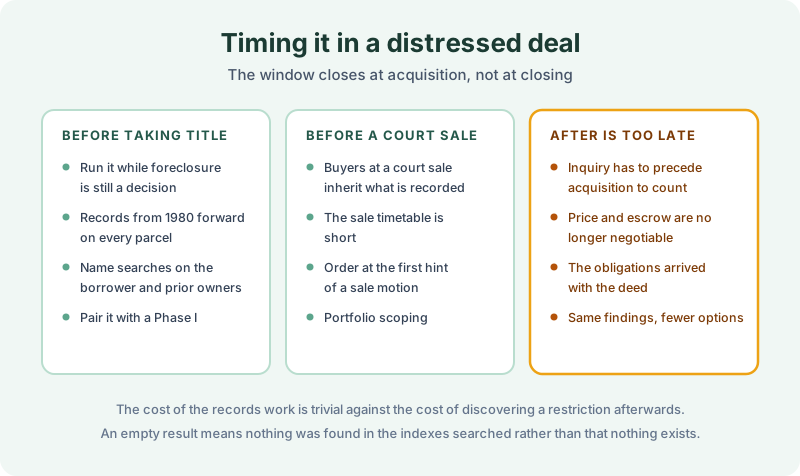
Run the records work while foreclosure is still a decision rather than an event. Land title and judicial records from 1980 forward on every parcel, name searches on the borrower and prior owners, paired with a Phase I rather than substituted for one. Buyers at a receivership sale need the same thing on a shorter timetable, so order at the first hint of a sale motion.
The 1980 Environmental Lien & AUL report covers exactly this ground. Certified title abstractors review land title and judicial records from 1980 to the present and document every environmental lien, encumbrance, and AUL found, with the recorded instruments attached. It’s $425, delivered by email in 3–5 business days. Recording practice is local, so a clean result means nothing was found in the indexes searched. Order online before the decision rather than after it.
Get an E1527-21 compliant lien & AUL report
Our 1980 Environmental Lien & AUL reports are researched by certified title abstractors, cover judicial records, and are guaranteed accurate. Delivered in 3–5 business days.
or call 877-848-5337