
Published
The corner lot on the edge of a small town with a concrete pad, a rail siding, and the footprint of a grain elevator is one of the most commonly redeveloped parcels in rural America, and one of the least understood. Farm supply businesses handled fertilizer, pesticides, herbicides, fuel, and fumigants for decades, usually before containment was standard practice and often under a series of cooperative names nobody remembers. The chemical history looks nothing like an orchard or farmland parcel, because this was the place the chemicals were stored and mixed rather than applied.
What an ag chemical site handled
Four streams turn up on nearly every one of these parcels, and they came through the gate in bulk.
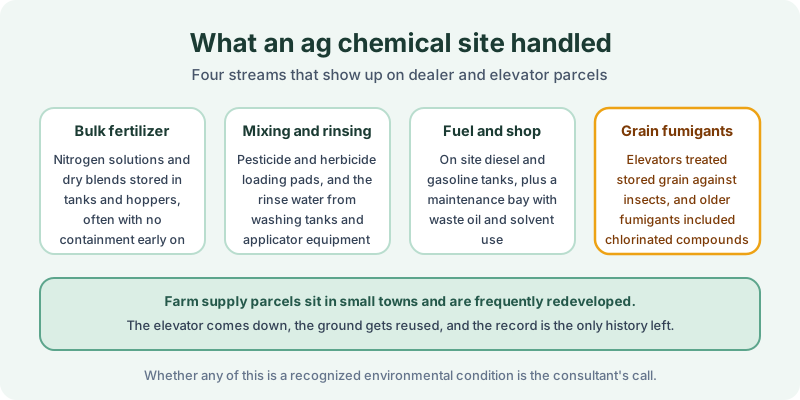
- Bulk fertilizer, meaning nitrogen solutions in tanks and dry blends in hoppers, with loading and spillage concentrated in a small area used the same way for forty years.
- Mixing and rinsing, the loading pad where pesticide and herbicide concentrates were blended and where applicator tanks were washed out afterward. Rinse water handling is the single biggest difference between a clean site and a problem one.
- Fuel and shop operations, since dealers fueled their own trucks and applicators and maintained them on site, which brings underground tanks and waste oil into the picture alongside everything else.
- Grain fumigants, on parcels with storage capacity, where stored grain was treated against insects using products whose formulations changed considerably over the decades.
None of that is a finding. It is a description of ordinary operations, and whether any of it rises to a recognized environmental condition belongs to the environmental professional rather than to the abstractor.
What lands in the county record
The recorded instruments follow the same pattern as other industrial parcels, with one wrinkle that matters more here than almost anywhere else.
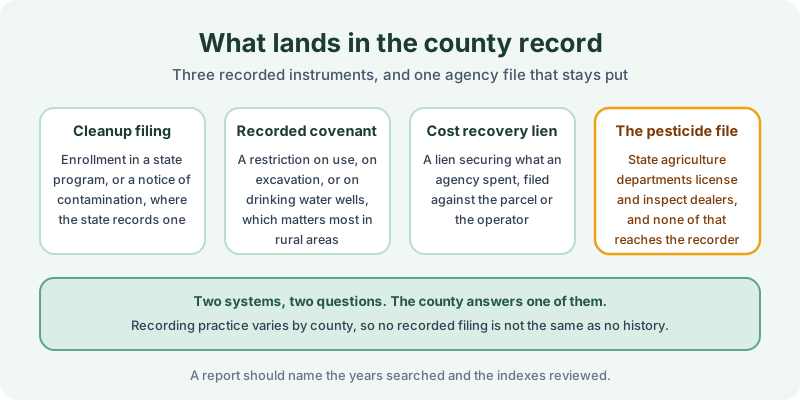
A state cleanup filing, an environmental covenant restricting use or excavation, and a cost recovery lien are all possible, and the covenant is the one to read closely. Restrictions on drinking water wells are common on these sites and carry real weight in a rural setting where the neighbors are on wells rather than a municipal system.
The wrinkle is the second regulator. State agriculture departments license, inspect, and sometimes investigate pesticide dealers and applicators, and that entire file lives with the agency rather than the recorder. Several states have also run dedicated agrichemical cleanup programs funded by fees on the industry, and participation in one may or may not have produced a recorded instrument. A county search finding nothing is a fact about the county, not a clean bill of health, and that gap is one to identify and disclose the way any other data gap is handled.
Scoping a rural commercial parcel
Two mechanical problems make these searches harder than a comparable parcel in a city, and both are solvable if they are raised before the order goes in.
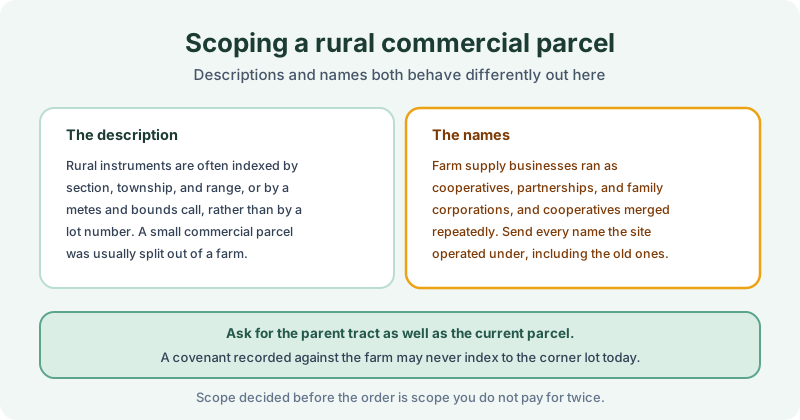
The first is the description. Rural instruments are frequently indexed by section, township, and range, or by a metes and bounds call, rather than by a subdivision lot, and a small commercial parcel was almost always split out of a farm at some point. An instrument recorded against the parent tract may not index to today’s corner lot, which makes tracing the split part of the work rather than an afterthought.
The second is names. These businesses operated as cooperatives, partnerships, and family corporations, and the cooperatives merged repeatedly across the 1980s and 1990s. Instruments and judgments indexed to a predecessor name are invisible to a search that only knows the current one, so the chain of title is what makes the rest of the search possible.
What to ask for
Ask for the current parcel and the parent tract, every operator and cooperative name the site used, and the years back to 1980 at minimum, with more depth where the elevator predates that by decades. Ask that the report state which indexes were reviewed and which years were unavailable, and ask for copies of every instrument found rather than a summary of it. Recording and indexing practice varies by county, and an empty result reflects the record rather than proving no restriction exists. The FAQ covers the mechanics and the sample report shows the format.
Our 1980 Environmental Lien & AUL report is built for parcels like this one: certified title abstractors review land title and judicial records from 1980 to the present and document every environmental lien, encumbrance, and AUL found, with the recorded instruments attached. It’s $425, delivered by email in 3–5 business days. Order online, or read how the search is performed first.
Get an E1527-21 compliant lien & AUL report
Our 1980 Environmental Lien & AUL reports are researched by certified title abstractors, cover judicial records, and are guaranteed accurate. Delivered in 3–5 business days.
or call 877-848-5337