
Published
Drum reconditioning is one of the highest impact uses that almost never looks industrial in a chain of title. The business was simple: take used steel drums, strip the residue and the paint, and resell them. The consequence is that a two acre yard in a rail district processed material from hundreds of unrelated manufacturers, and nobody kept a list of what came in. These operations were small, numerous, and often unpermitted before the 1980s, so they show up in a Phase I as a directory listing rather than as a filing. The record profile resembles our note on former salvage yards, with one difference that matters: the material was liquid.
What the yard left behind
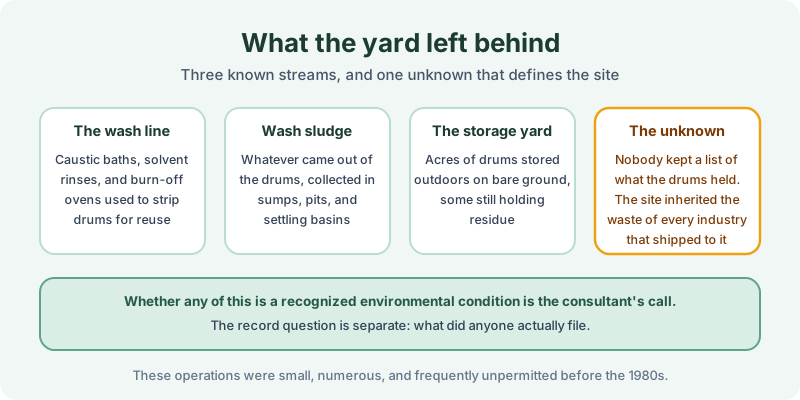
The wash line did the work. Caustic baths, solvent rinses, and in some operations burn-off ovens stripped drums for reuse, and each of those steps had its own losses to the floor and the ground beneath it.
Wash sludge is where the incoming material ended up. Whatever came out of the drums collected in sumps, pits, and settling basins, and those structures were frequently unlined and are frequently still there below grade.
The storage yard is the largest footprint. Drums waiting to be processed sat outdoors on bare ground for months, and some of them still held residue when they arrived.
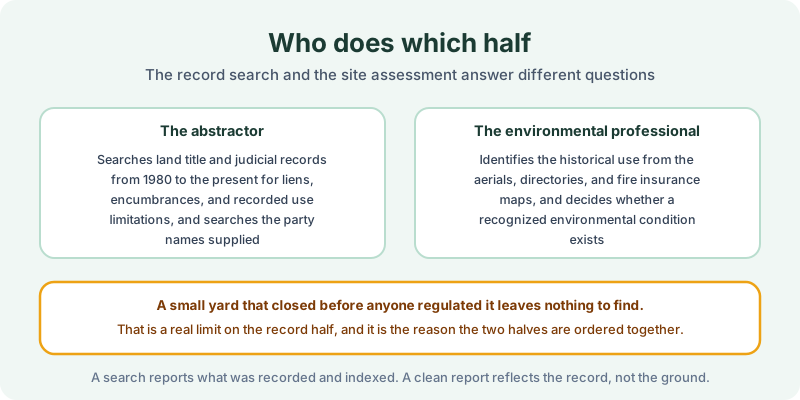
The unknown is the defining feature of the site type. There is no inventory of what the drums contained, which means the range of possible constituents is as wide as the customer list. Whether any of this amounts to a recognized environmental condition is a determination for the environmental professional, not for the abstractor. The record question is separate: what did anyone file.
What the record may carry
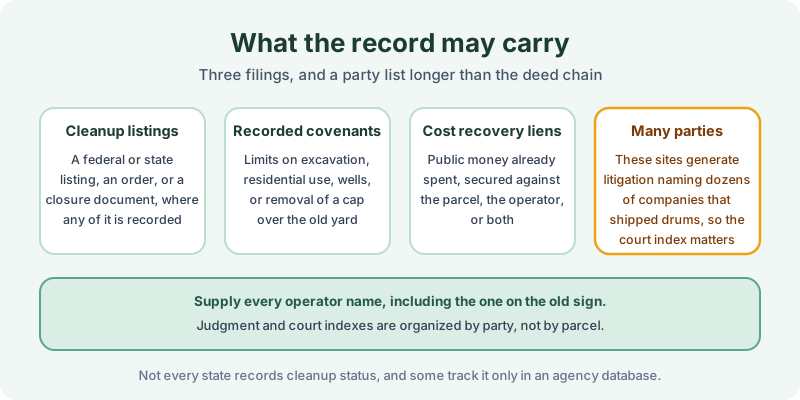
Cleanup listings appear where a state or a federal program recorded a listing, an order, or a closure document, and practice varies widely, the subject of our note on voluntary cleanup programs.
Recorded covenants are the consequential instrument on the sites that were addressed, limiting excavation, residential use, groundwater wells, or removal of a cap over the old yard. Those instruments are covered in our note on environmental covenants and UECA.
Cost recovery liens secure public money already spent and can run against the parcel, the operator, or both.
The party list is what distinguishes these files. Because so many companies shipped drums to a single yard, the litigation and settlement record can name dozens of them, and that material sits in court indexes organized by party rather than by parcel. Our note on judicial records explains why a name supplied by the client is often the most valuable input to the search, and here the name on the old sign is the one to ask for.
Scoping the search
Two practical points. First, these yards were often leased rather than owned, so the operator’s name may never appear in the chain of title at all, and a search organized only around record owners will miss the party who generated the condition. Ask for the operator separately from the owner, the same distinction our note on leased property develops.
Second, expect the possibility of a genuinely empty result. A small yard that closed in 1978, before anyone regulated it, can leave nothing in the land records or the judicial indexes. That is a real limit on the record half rather than a search failure, and it is the reason the record work and the site assessment are ordered together rather than as alternatives.
One scoping note follows from the footprint. These yards were compact, so the whole operation frequently sat on a single lot that has never been divided, which makes the description side simpler here than on a large industrial site. What is not simple is the term. A yard that ran from 1955 to 1979 sits almost entirely behind the 1980 window, and any filing that exists will have been made later, when somebody investigated. That is the usual shape of these files: an old use, and recent paperwork if there is any at all.
A search reports what was recorded and indexed over the term searched, so a clean report reflects the record rather than the ground. The FAQ covers how we handle thin or unindexed counties, and a sample report shows the format the findings arrive in.
The 1980 Environmental Lien & AUL report is the record half of this work. Certified title abstractors review land title and judicial records from 1980 to the present and document every environmental lien, encumbrance, and AUL found, with the recorded instruments attached. It is $425, delivered by email in 3–5 business days. Order online, and send us any historic operator names you have along with the address.
Get an E1527-21 compliant lien & AUL report
Our 1980 Environmental Lien & AUL reports are researched by certified title abstractors, cover judicial records, and are guaranteed accurate. Delivered in 3–5 business days.
or call 877-848-5337