Published
A salvage yard is one of the few property types whose history is visible from the road for forty years and still thinly documented on paper. Vehicles arrived, fluids were drained or were not, batteries and radiators were stacked on bare ground, and the soil took whatever dripped. A Phase I consultant recognizes the setting immediately. What the setting does not guarantee is a matching set of recorded instruments describing what happened afterward, which is why the records half of the diligence deserves separate attention on these sites. The reasoning tracks what applies to any parcel with a long industrial operating history, with a few wrinkles that belong to scrap and dismantling alone.
What accumulates on a salvage site
Auto dismantling and scrap recycling put a short, predictable list of materials in contact with the ground, usually over decades and usually before anyone built a containment pad.
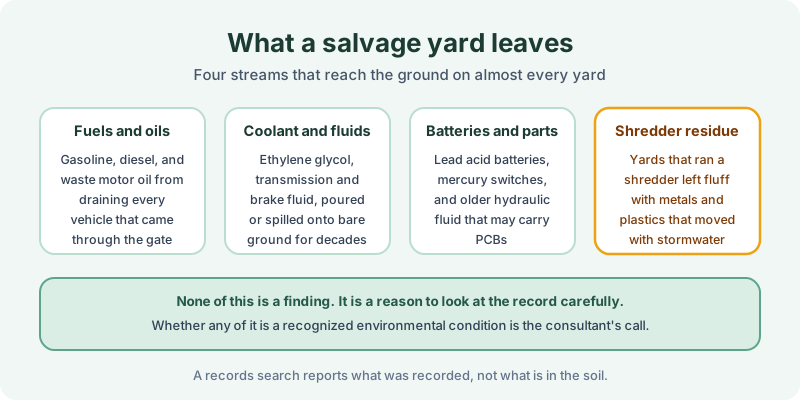
- Fluids by the drum, meaning gasoline, diesel, waste motor oil, hydraulic and transmission fluid, and ethylene glycol coolant, drained from every vehicle that came through the gate.
- Lead and mercury, from lead acid batteries stacked on soil and from the mercury switches used in trunk and hood lights on older vehicles.
- Metals across the surface, spread by decades of stacking, cutting, and crushing rather than by any single spill.
- Shredder residue, on yards that ran a shredder, which leaves a fluff of plastics and fines that migrates with stormwater.
Larger yards also ran their own fuel island, so an underground storage tank may sit under the office end of the property. The presence of any of this is a reason to look carefully. Whether it amounts to a recognized environmental condition is the environmental professional’s determination, never the abstractor’s.
What a closed yard leaves in the record
Yards that were cleaned up, or that were supposed to be, tend to generate a small family of instruments.
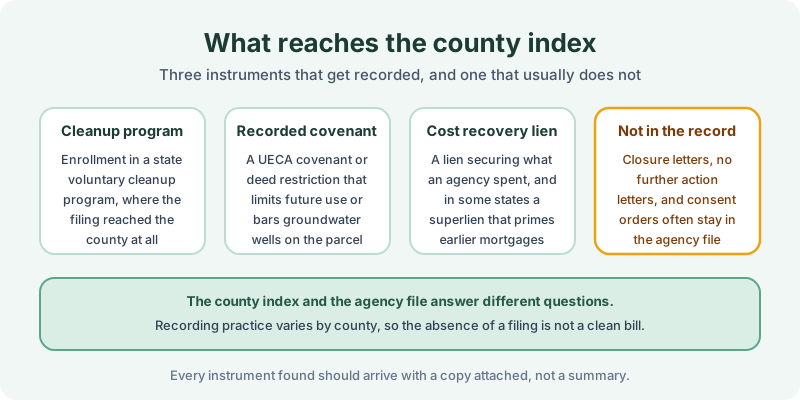
An environmental covenant or deed restriction is the most consequential of them, because it binds whoever owns the parcel next and frequently limits residential use, restricts excavation, or bars a groundwater well. A cost recovery lien may also be on file, and in a superlien state that lien can sit ahead of a mortgage recorded years earlier.
There is a second pattern worth naming, because it is common on rural yards. Nothing was ever cleaned up, nothing was ever recorded, and the operation simply stopped when the owner retired or died. A parcel like that can carry forty years of history and a completely quiet record, and the quiet is a function of whether an agency ever opened a file, not of what is in the ground.
What often stays out of the county index is the paperwork buyers most want to see. Closure letters, no further action determinations, and consent orders commonly live in the agency file rather than the recorder’s office, which means a search that finds no recorded restriction has not established that the site was never regulated. That gap is an ordinary data gap to identify and disclose, not a verdict.
Reading the chain of title
The chain earns its keep here more than on most site types, because salvage operations move between family members and business names without ever moving off the property.
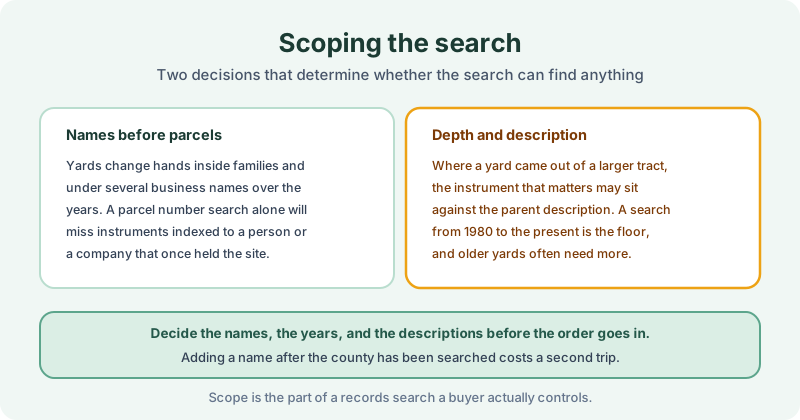
A single yard may show up under a personal name in the 1970s, a partnership in the 1980s, and two successive limited liability companies since. Instruments indexed to any of those names will not surface from a parcel number search alone, which is the same problem that makes chain of title work inseparable from a lien search. Leases matter too, since the operator was often a tenant while the ground stayed with a family trust. And where a yard was carved out of a larger farm or industrial tract, the instrument that matters may be recorded against the parent description rather than today’s lot.
Abandoned yards add one more layer. Many of them passed through a tax foreclosure or a land bank at some point, and those conveyances often strip the ownership history that would have told you who ran the operation. When the deed you are handed comes from a county or a municipal authority, treat the names behind it as part of the search rather than as settled background.
Deciding the scope
Set the names, the years, and the descriptions before the order goes in. Ask for every operator name known, for the parent tract where a split happened, and for adjacent parcels where the operation clearly spilled past its own line. Recording and indexing practice varies by county, so the report should state which indexes were reviewed and which years were unavailable. Our FAQ covers the mechanics, and the sample report shows the format.
The 1980 Environmental Lien & AUL report is built for exactly this kind of parcel: certified title abstractors review land title and judicial records from 1980 to the present and document every environmental lien, encumbrance, and AUL found, with the recorded instruments attached. It’s $425, delivered by email in 3–5 business days. Order online, or read how the search is actually performed first.
Get an E1527-21 compliant lien & AUL report
Our 1980 Environmental Lien & AUL reports are researched by certified title abstractors, cover judicial records, and are guaranteed accurate. Delivered in 3–5 business days.
or call 877-848-5337