
Published
A fertilizer plant is two industrial operations wearing one name. The nitrogen side made ammonia, nitrate and urea, and the phosphate side ran sulfuric and phosphoric acid through rock to make superphosphate, leaving a gypsum stack behind it. Either history can put recorded instruments on a parcel, and a buyer reading only the current deed will see none of them. The adjacent lane, covered in our note on a former agricultural chemical dealer, is a distribution site rather than a manufacturing one, and the record profile is materially lighter.
What the operation left behind
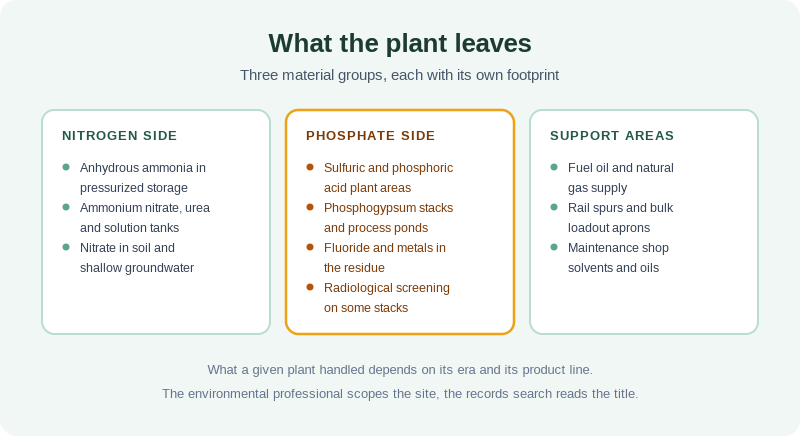
The nitrogen side handled anhydrous ammonia in pressurized storage, along with ammonium nitrate and urea solutions in bulk tanks. Nitrate in soil and in shallow groundwater is the common legacy, and it migrates readily, which is why a nitrogen plant can affect parcels well beyond its own fence.
The phosphate side is heavier. Acid plant areas, process ponds and phosphogypsum stacks carry fluoride, sulfate and metals, and some stack material carries naturally occurring radioactive material that gets screened for separately. Support areas round it out, with fuel oil storage, rail spurs, bulk loadout aprons and a maintenance shop that used solvents and oils like any other plant.
What a given plant actually handled depends on its era and its product line, and none of that is a records question. Characterizing the site is the environmental professional’s work. The title research answers a narrower question, which is what somebody recorded about it.
What can appear in the land record
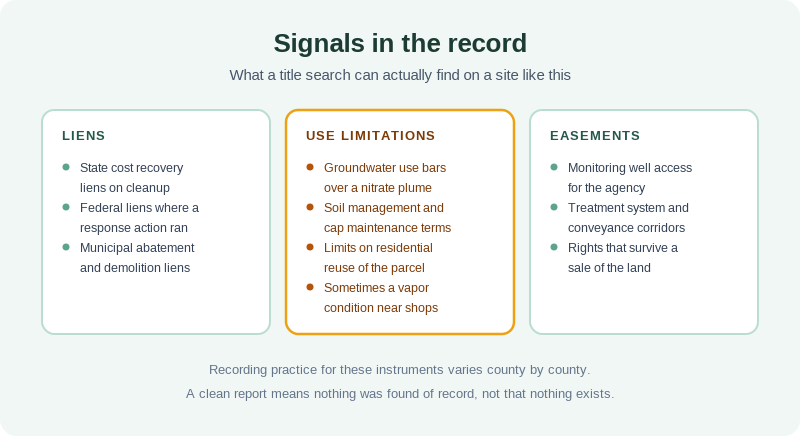
Three categories matter. Environmental liens filed by a state cost recovery program, or federally where a response action ran, along with municipal abatement and demolition liens on a plant that was torn down. Activity and use limitations, which on a nitrate site frequently bar groundwater use over the plume, and on any capped area set soil management and cap maintenance terms. And access easements granted so an agency or a responsible party can reach monitoring wells and treatment equipment, which survive a sale of the land.
A groundwater restriction is the one most likely to catch a buyer off guard, because it limits something nobody planned to use. The mechanics of those instruments are set out in groundwater use restrictions in the land record, and what an AUL obliges an owner to do is covered in what an AUL actually requires.
Why the term searched decides the answer
Fertilizer manufacturing peaked between the 1950s and the 1980s, and a good many of these plants closed in the 1980s and 1990s when phosphate production consolidated. That timing matters. The filings that record a cleanup were indexed against whoever owned the site when the agency acted, which is usually two or three transfers back from the present owner.
A current owner search on a parcel like this will come back clean and mean very little. Searching from 1980 forward reaches the ownership eras that generated the filings, which is the reason the term exists.
What the search covers
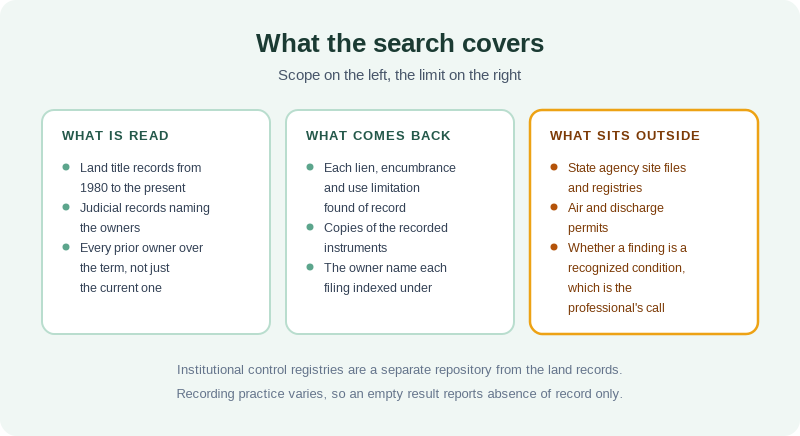
The search reads land title records from 1980 to the present and judicial records naming the owners over that span, covering every prior owner rather than only the current one. It returns each lien, encumbrance and use limitation found of record, with copies of the instruments and the owner name each filing was indexed under.
State agency site files, institutional control registries, and air and discharge permits sit outside it. Those are separate repositories, and the institutional control registries post explains which ones. Recording practice varies by county, so an empty result reports an absence of record rather than an absence of conditions. Whether a finding amounts to a recognized environmental condition is the environmental professional’s judgment and not the search’s. Common questions about scope are answered on the FAQ, and a sample report shows the format the findings come back in.
The takeaway
Treat a former fertilizer plant as two site histories on one parcel, search the full term rather than the current owner, and expect the recorded findings to name somebody nobody in the current chain recognizes. Where phosphate was processed, ask specifically about stack and pond areas, because those are the parts most likely to carry a recorded restriction that outlasts the plant.
Our 1980 Environmental Lien & AUL report is where that research lands. Certified title abstractors review land title and judicial records from 1980 to the present and document every environmental lien, encumbrance, and AUL found, with the recorded instruments attached. It’s $425, delivered by email in 3–5 business days. Order online, or read former pesticide formulation plant due diligence for the closest neighboring archetype.
Get an E1527-21 compliant lien & AUL report
Our 1980 Environmental Lien & AUL reports are researched by certified title abstractors, cover judicial records, and are guaranteed accurate. Delivered in 3–5 business days.
or call 877-848-5337