Published
Foundries anchored American industrial towns for a century, and their parcels are now business parks, big box retail, and housing. They belong in this series of archetypes alongside the machine shop and the plating shop, with one feature that sets them apart: the principal waste streams were bulky, inert-looking, and genuinely useful, so they were spread around rather than disposed of. That single fact changes how the diligence has to be scoped.
What a foundry leaves in volume
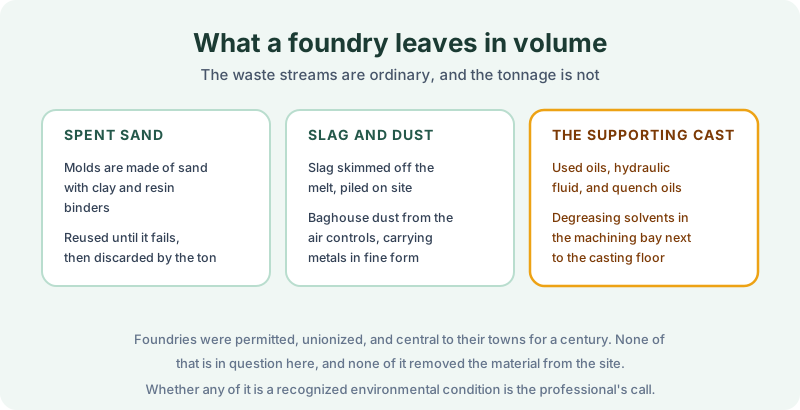
Sand casting is the core process. Molds are built from sand bound with clay and, in later decades, chemical resins. The sand is reused until it degrades and then discarded, in tonnages that dwarf anything a small shop produces. Slag skimmed off the melt was typically piled on site. Baghouse dust captured by air pollution controls concentrates metals in a very fine form, which is why it is treated more carefully than the sand.
Around the casting floor sit the ordinary industrial suspects: used oils, hydraulic and quench oils, and chlorinated solvents in the machining bay where castings were finished. So a foundry parcel can present metals in fill and solvents in groundwater, from two different parts of the same building.
Whether any of this amounts to a recognized environmental condition is a determination for the environmental professional working from sampling data and screening levels. It is not a records question.
The material did not stay put
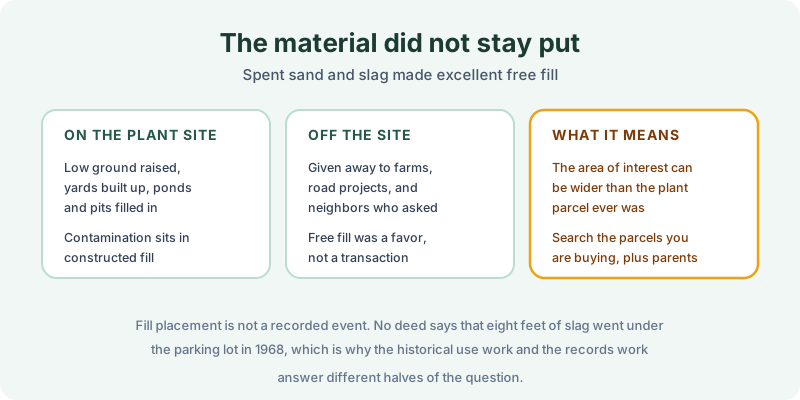
Here is what makes this archetype different. Spent sand and slag are excellent structural fill, and for most of the twentieth century using them that way was normal, lawful, and free. On the plant site, low ground got raised, yards were built up, and ponds and pits were filled in, which means contamination frequently sits inside constructed fill rather than in native soil.
Off the site, the material went wherever someone wanted fill. Farm lanes, road projects, and neighbors who asked. It was a favor rather than a transaction, and favors leave no paper.
The consequence for scoping is direct: the area of potential interest can be wider than the industrial parcel ever was. If you are acquiring several parcels near a former foundry, all of them belong in the search, along with the parent tracts they were split from. Fill placement is not a recorded event, and no deed will tell you that eight feet of slag went under the parking lot in 1968.
There is a second reason to widen the net. Where a state program did investigate a foundry, the study area frequently extended past the plant boundary to follow the fill, and the restrictions that came out of it can therefore sit on parcels that were never part of the works. A neighboring lot with an AUL recorded against it, and no industrial history of its own, is a genuinely common pattern and a confusing one to encounter for the first time at a closing table.
What the recorder can tell you
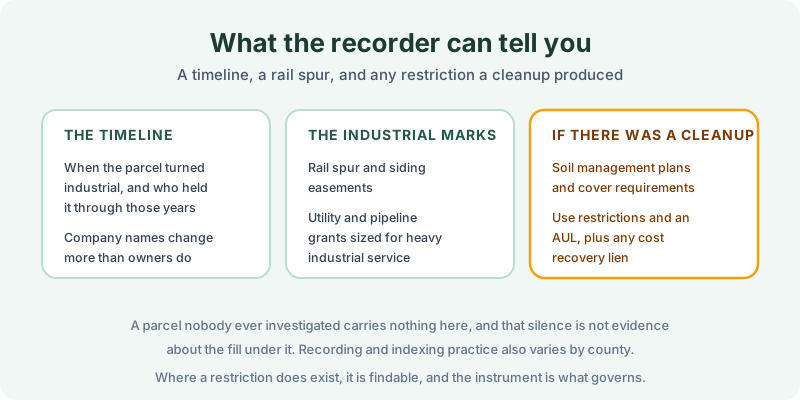
The records contribution is the timeline and the encumbrances. A chain of title search establishes when the parcel became industrial and who held it through the operating years, and on foundries the corporate history is unusually tangled: the same works often traded through several company names without changing hands in any real sense.
The industrial marks are useful too. Rail spur and siding easements, and utility grants sized for heavy service, are recorded and dated, and they bracket the operating period the same way they do on a rail corridor parcel.
Where a cleanup happened, the recorded output is the exposure that travels with the land: soil management plans, cover requirements, use restrictions and an activity and use limitation, and occasionally a cost recovery lien. On a parcel developed with no investigation, the record holds nothing on this subject, and that silence says nothing about the fill.
Where the records half stops
A search reports what was found of record for the parcel and term searched, on the date searched. It cannot tell you what the fill is made of, how deep it goes, or where it came from. Sampling answers that, and recording and indexing practice varies by county, so an empty result reflects the record rather than proving anything about the ground.
Order the records half
Former foundry parcels are redeveloped constantly, and the parcel level question is whether anything was recorded against the land. Our 1980 Environmental Lien & AUL report answers it: certified title abstractors review land title and judicial records from 1980 to the present and document every environmental lien, encumbrance, and AUL found, with the recorded instruments attached. It’s $425, delivered by email in 3–5 business days. Order online, or see a sample report first. The REC determination stays with your environmental professional.
Get an E1527-21 compliant lien & AUL report
Our 1980 Environmental Lien & AUL reports are researched by certified title abstractors, cover judicial records, and are guaranteed accurate. Delivered in 3–5 business days.
or call 877-848-5337