Published
The former gas station and the neighborhood dry cleaner get the attention because they are visible from the road. The third member of that family is quieter and, on a per-site basis, often costlier: the metal shop. Machining, plating, tool and die, radiator repair, small fabrication. Buildings that look like nothing much, sitting on parcels that changed hands three times since the equipment left, and carrying a solvent history that ended up in the land records.
The solvent that ran the industry
For most of the twentieth century, degreasing metal parts meant trichloroethylene (TCE) and its relatives. It cut oil fast, it was cheap, and vapor degreasers were standard equipment in shops that had four employees and shops that had four hundred. Perchloroethylene, the dry cleaning solvent, appears on these sites too, along with 1,1,1-trichloroethane in later years.
The chemistry has the same unhelpful properties across that family. Chlorinated solvents are denser than water, so a release sinks rather than floats, moving down past the water table and into an aquifer where it resists breaking down for decades. Plumes run long. And because these compounds volatilize readily, they bring vapor intrusion with them, the pathway ASTM E1527-21 squarely includes in a Phase I’s scope.
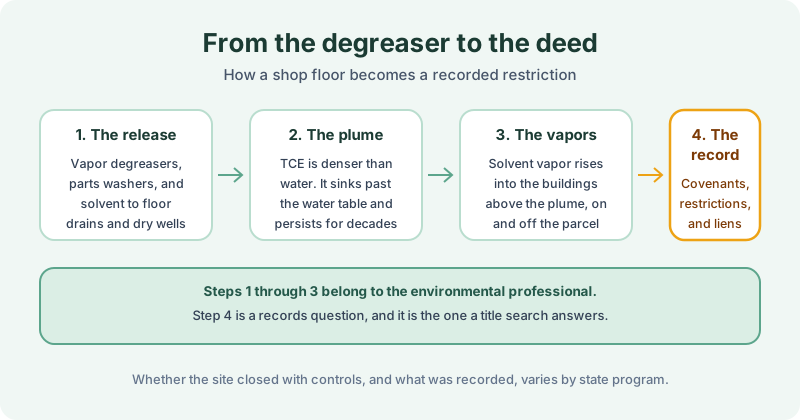
What made shops different from cleaners was the plumbing. Solvent went to floor drains, to dry wells, to septic systems, and to sewer lines, often as ordinary daily practice at a time when nobody considered it a problem. A single spill is rarely the story. Thirty years of routine disposal usually is. Small shops also tended to leave thin regulatory paper behind them, which is part of why they surface late in a Phase I rather than early.
TCE is a CERCLA hazardous substance, which puts these releases fully inside federal Superfund liability as well as state cleanup law, with cost recovery liens included. There is no petroleum exclusion here to route the matter to a state program the way there is for a leaking gasoline tank.
What ends up recorded
Modern cleanups on industrial parcels close the modern way: risk-based, with residual contamination managed in place under controls. Those controls are frequently recorded against the title, which is what puts them inside the scope of a records search.
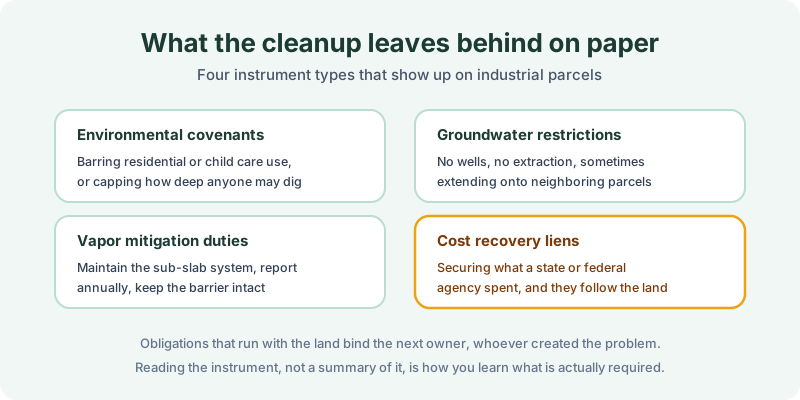
The instruments follow a familiar pattern. Environmental covenants barring residential or child care use, or limiting excavation depth. Groundwater restrictions prohibiting wells, sometimes extending across parcel lines to neighbors who never operated anything. Vapor mitigation obligations requiring an owner to maintain a sub-slab system and report on it. And liens securing agency expenditures, which attach to the property and do not care who caused the release.
In Phase I terms, a solvent release closed with residuals under controls is a textbook CREC, and the recorded instruments are frequently what document the controls. That determination belongs to the environmental professional. Locating and copying the instruments is the records half of the job.
The parcel may not be the parcel
Industrial due diligence has a trap that retail diligence mostly avoids: the land itself gets rearranged after the operating years end.
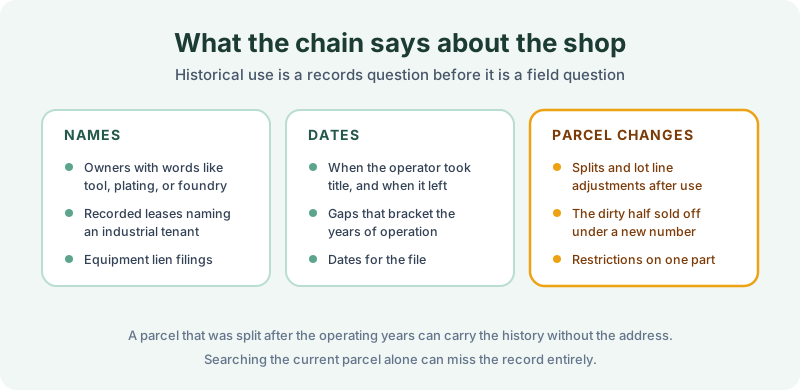
A shop closes, the building comes down, and the site gets split into two or three lots that sell separately over the following decade. Each of those carries a new parcel number and a new address, and the half with the old degreasing room may now be the back of a parking lot. Recorded restrictions can sit on one resulting parcel and not another. Searching only the current parcel description can miss the record that matters.
This is exactly the gap a supplemental chain of title search fills. Owner and tenant names carrying words like tool, plating, or foundry point to industrial use directly. Recorded dates bracket the operating years. Splits and lot line adjustments show where the ground went. That is historical use evidence developed from records rather than from directories, and the user has obligations here that a consultant cannot discharge alone.
Check the record before the price is agreed
Former industrial parcels get redeveloped constantly, and many close cleanly under controls that make the reuse safe. The difference between a manageable CREC and a surprise at closing is whether anybody read the record first. Our 1980 Environmental Lien & AUL report covers that half: certified title abstractors review land title and judicial records from 1980 to the present and document every environmental lien, encumbrance, and AUL found, with the recorded instruments attached. It’s $425, delivered by email in 3–5 business days. Order online, and if something does surface, here is how to read it.
Get an E1527-21 compliant lien & AUL report
Our 1980 Environmental Lien & AUL reports are researched by certified title abstractors, cover judicial records, and are guaranteed accurate. Delivered in 3–5 business days.
or call 877-848-5337