Published
The corner gas station might be the most frequently traded small commercial property in America, and almost every one of them, past or present, comes with the same feature: tanks in the ground. For buyers, developers, and the environmental professionals writing their Phase I ESAs, that makes the former station the single most familiar version of a property with an environmental past. It also makes it a property where the land records have usually had something to say.
Half a million releases and counting
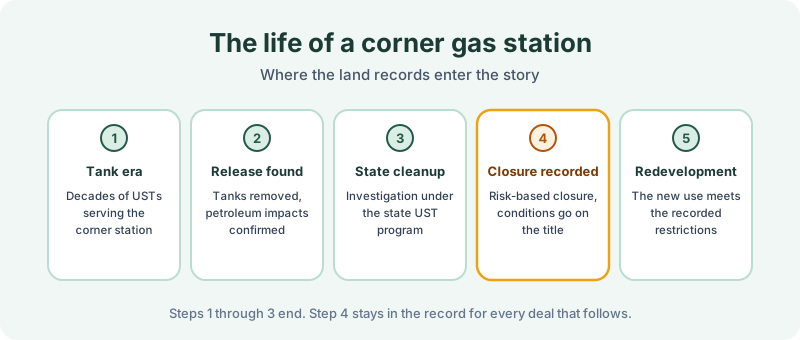
Underground storage tanks leaked for decades before anyone was required to notice. Federal regulation arrived in the mid-1980s, when Congress added the UST program to RCRA and later created a trust fund for leaking-tank cleanups, with states running the programs day to day. Since then, regulators have confirmed more than half a million UST releases nationwide. The encouraging part: the great majority have been investigated and closed out. The part that matters for your deal: how they were closed.
“Closed” is not the same as “clean record”
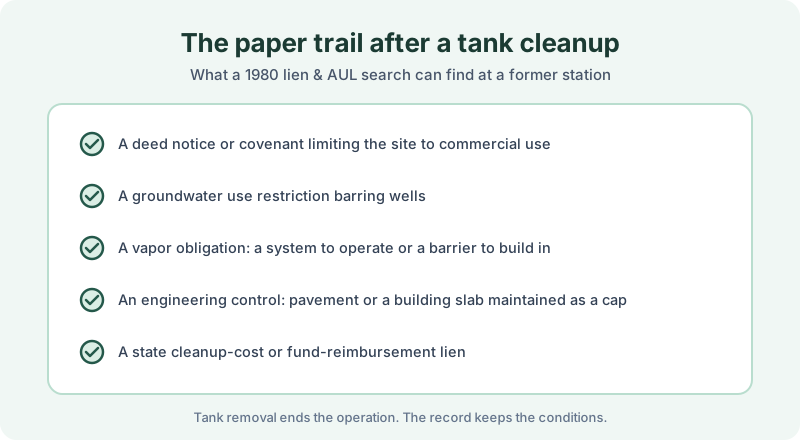
Most LUST cleanups end the modern way: risk-based. Petroleum-impacted soil stays under the slab, groundwater is left to attenuate, and the closure letter arrives with conditions designed to keep people away from what remains. In many states, those conditions go on record against the title. After a tank-site closure, a title search can hold:
- A deed notice or covenant limiting the property to commercial or industrial use
- A groundwater use restriction barring wells
- A vapor intrusion obligation: a mitigation system to operate, or a vapor barrier required in new construction
- An engineering-control requirement to maintain the pavement or building slab acting as a cap
- A state cleanup-cost or fund-reimbursement lien where public money paid for the work
In Phase I terms, a tank release cleaned to unrestricted standards is the classic HREC. One closed with residual contamination under controls is a CREC, and a recorded instrument is often what confirms which one the environmental professional is looking at.
Where the liens come from (hint: not CERCLA)
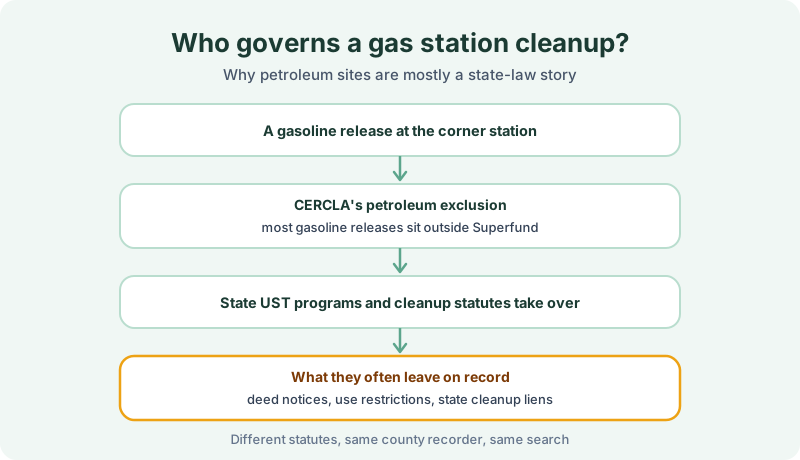
Gas stations are also a good reminder that environmental liens aren’t only a Superfund story. CERCLA largely excludes petroleum, so a straight gasoline release usually isn’t a federal Superfund matter at all. The action is in state law: state UST programs order and fund cleanups, state cleanup statutes let agencies recover their costs with recorded liens, and a few states’ superlien statutes reach petroleum sites, where a cleanup lien can prime even an earlier mortgage. Different statute, same county recorder, same search.
The redevelopment trap
Former stations get reborn as drive-throughs, small retail, and, increasingly, housing, and that last one is where the record bites. A deed notice restricting the site to commercial use is a veto on the townhouse plan. A vapor mitigation requirement changes the building design. Brownfield redevelopers learn this early: the recorded restrictions are site-planning documents, and finding them after the architect has been paid is the expensive order of operations.
The 1980 window covers the whole tank era
Here’s a tidy fact: the entire UST regulatory era postdates 1980. Every closure condition, deed notice, and state tank-fund lien ever recorded falls inside the window a 1980 environmental lien and AUL search reviews. And when the Phase I also needs to establish when the corner lot became a gas station in the first place, that’s the historical-use question a supplemental chain of title search answers, reaching back 50 years or to 1940.
Our 1980 Environmental Lien & AUL report covers the records half of a tank-site deal: certified title abstractors review land title and judicial records from 1980 to the present and document every environmental lien, encumbrance, and AUL found, with the recorded instruments attached. It’s $425, delivered by email in 3–5 business days, and the combined report with a chain of title adds the ownership history. Order online before the site plan gets drawn.
Get an E1527-21 compliant lien & AUL report
Our 1980 Environmental Lien & AUL reports are researched by certified title abstractors, cover judicial records, and are guaranteed accurate. Delivered in 3–5 business days.
or call 877-848-5337