Published
A country elevator is a small parcel with an outsized record problem. The buildings look agricultural, the lot is often less than an acre beside a rail siding, and the use that matters was a liquid poured into stored grain year after year at one spot on that lot. Where those older fumigants reached shallow groundwater, the resulting plume does not respect the property line, and because these elevators sit inside small towns rather than out in the section, the affected area can include houses. That is what makes the scoping different from the pattern in our note on former agricultural chemical dealers, which often involved larger yards further from anybody’s well.
What the elevator left behind
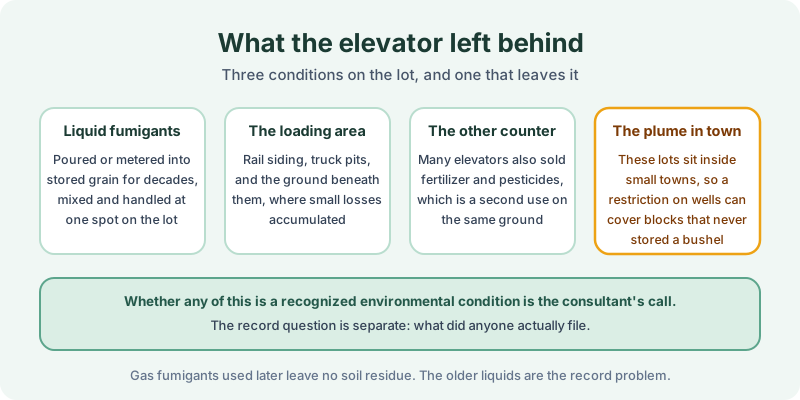
Liquid fumigants are the signature. They were applied to stored grain for decades to control insects, they were handled at a fixed point on the lot, and losses at the mixing and application step went into the ground there.
The loading area contributed the slow accumulation. Rail sidings, truck pits, and the ground beneath them absorbed small quantities continuously rather than in one event.
The other counter matters because many elevators were also the local farm supply, selling fertilizer and crop chemicals from the same yard, which puts a second and unrelated use on the same ground.
The plume in town is the item that reshapes a transaction. Where groundwater was affected, an agency response often includes restrictions on new wells across an area rather than on one lot, and that area can cover blocks of ordinary residential property. Whether any of this amounts to a recognized environmental condition is a determination for the environmental professional, not for the abstractor. The record question is separate: what did anyone file.
One distinction is worth keeping straight. The gas fumigants used more recently do not leave a soil or groundwater residue in the way the older liquid products did, so the era of operation matters as much as the use itself.
What the record may carry
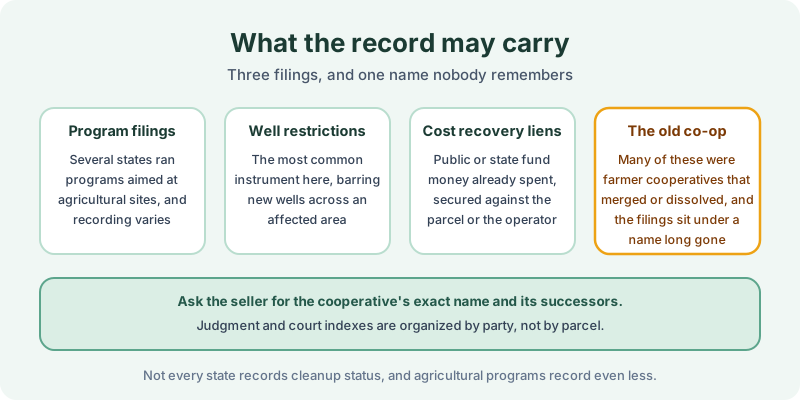
Program filings appear where a state recorded enrollment, a notice, or a closure document. Several states ran programs aimed specifically at agricultural sites, and their recording practice is uneven, which our note on voluntary cleanup programs describes.
Well restrictions are the instrument to expect here, more than a soil covenant, and our note on groundwater use restrictions covers how they read. The underlying instrument type is the one in our note on environmental covenants and UECA.
Cost recovery liens secure money already spent, and on agricultural sites that can include a state fund rather than a general appropriation.
The old cooperative is the name problem. A great many of these elevators were farmer cooperatives that merged, were bought by a regional co-op, or simply dissolved, and filings, judgments, and consent orders sit under whichever name was current at the time. Ask the seller for the exact name and its successors, the point our note on judicial records makes about party indexes generally.
Scoping the search
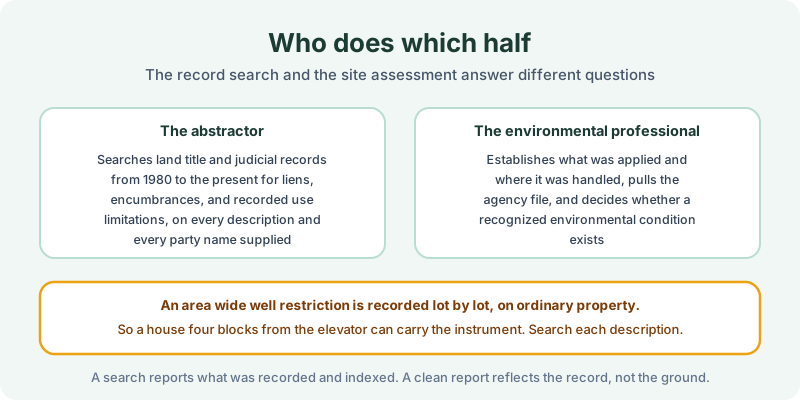
The practical consequence of an area wide restriction is that it gets recorded lot by lot. A buyer of a house four blocks from the elevator can hold an instrument limiting wells, with no industrial history in that parcel’s own chain at all. So if a transaction covers more than one description, each one needs its own search, and a residential parcel near a known site is worth searching rather than assuming.
Two inputs make the search materially better on these files. The first is the era, because a lot that handled liquid products into the early 1980s is a different record proposition from one that switched to gas fumigants before then. The second is whether the elevator also sold farm chemicals, since that pulls a second set of program filings and a second set of party names into scope.
Read the result with the right expectation. These lots are small, the operators were often local, and a great many elevators closed without any agency involvement, so a clean report is a common and legitimate outcome that reflects the record rather than the ground. The FAQ covers how we handle thin or unindexed counties, and a sample report shows the format the findings arrive in.
The 1980 Environmental Lien & AUL report is the record half of this work. Certified title abstractors review land title and judicial records from 1980 to the present and document every environmental lien, encumbrance, and AUL found, with the recorded instruments attached. It is $425, delivered by email in 3–5 business days. Order online, and send us the historic elevator or cooperative name along with the address.
Get an E1527-21 compliant lien & AUL report
Our 1980 Environmental Lien & AUL reports are researched by certified title abstractors, cover judicial records, and are guaranteed accurate. Delivered in 3–5 business days.
or call 877-848-5337