
Published
Before natural gas pipelines reached American cities, nearly every town of any size made its own gas from coal or oil. The plants were compact, they operated for decades, and by 1960 almost all of them were gone. What they left is coal tar, and it is one of the most persistent conditions in urban due diligence. The parcels are now parking lots, transit yards, riverfront apartments, and city parks, which is exactly why they show up in transactions that look nothing like an industrial deal. The record problem resembles the one in our note on former wood treating sites: the chemistry is old, and the filings, where they exist at all, are recent.
What the plant left behind
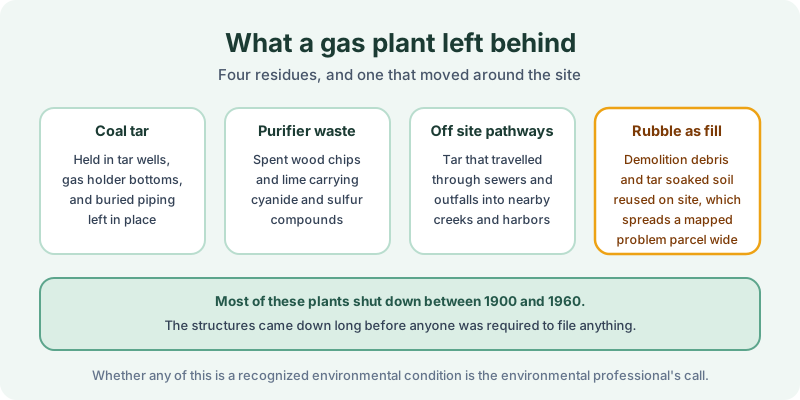
Coal tar is the signature. It was a byproduct, it was sometimes sold and sometimes simply stored on site, and it collected in tar wells, in the bottoms of gas holders, and in the buried piping that connected them. Below-grade structures were routinely left in place when the plant came down.
Purifier waste is the second stream. Spent wood chips and lime used to strip impurities from the gas carry cyanide and sulfur compounds, and the waste was often piled or spread near the works.
Off-site pathways matter because these plants sat next to water. Many were built on a river, a canal, or a harbor for coal delivery, with sewer and outfall connections that carried tar away from the parcel.
Demolition fill is the item that turns a mapped condition into an unmapped one. Structures were knocked into their own foundations and graded over, and tar-affected soil was reused across the property. Whether any of that amounts to a recognized environmental condition is a determination for the environmental professional, not for the abstractor. The record question is separate: what did anyone file.
What the record may carry
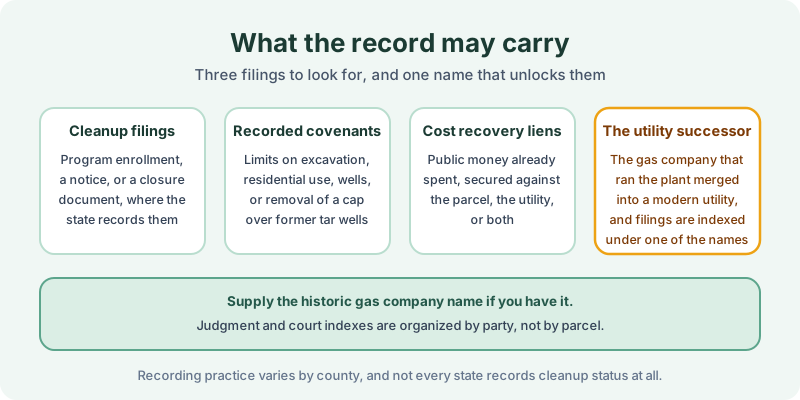
Three filings are worth hunting for. Cleanup program filings appear where a state records enrollment, a notice of contamination, or a closure document, and our note on voluntary cleanup programs covers how uneven that practice is. Recorded covenants are the consequential item, because the usual outcome on an MGP site is not removal but containment, and the instrument then limits excavation, residential use, groundwater wells, or disturbance of a cap. Those are the subject of our note on environmental covenants and UECA. Cost recovery liens secure public money already spent and may run against the parcel, the utility, or both.
Timing is worth noting. These sites were not investigated when they closed. They were investigated in the 1980s and later, when utilities inventoried their own historic properties, when a redevelopment proposal required sampling, or when a state program went looking. That sequence puts most of the paperwork squarely inside the 1980 forward window a lien and AUL search covers, which is unusual for a use that ended this long ago.
The name is the unlock. The company that operated the plant was usually a local gas light company that merged into a larger utility, sometimes through three or four corporate generations. Filings, judgments, and settlements are indexed under whichever name was current at the time, so a historic company name supplied by the client is often the single most valuable input to a search. That dependency is the subject of our note on judicial records.
Scoping the search
Two wrinkles are specific to these parcels. The first is footprint. A works that occupied four city blocks in 1915 has since been split into a dozen lots under a dozen owners, so a covenant recorded against the original tract may sit under a legal description that no longer matches the lot being sold. The second is registry coverage. Several states track institutional controls in a database instead of only in the county books, which is why our note on institutional control registries treats the registry and the recorder as two different searches.
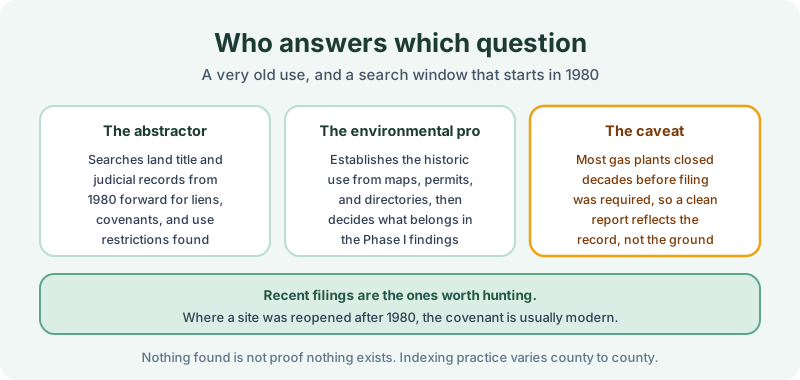
Read the result carefully. A search reports what was recorded and indexed over the term searched, and a plant that closed in 1948 and was never revisited will generate nothing at all, so a clean report reflects the record rather than the ground. The FAQ covers how we handle thin or unindexed counties, and a sample report shows the format the findings arrive in.
The 1980 Environmental Lien & AUL report is the record half of this work. Certified title abstractors review land title and judicial records from 1980 to the present and document every environmental lien, encumbrance, and AUL found, with the recorded instruments attached. It is $425, delivered by email in 3–5 business days. Order online, or see our note on chain of title in a Phase I ESA for how the ownership history fits the rest of the report.
Get an E1527-21 compliant lien & AUL report
Our 1980 Environmental Lien & AUL reports are researched by certified title abstractors, cover judicial records, and are guaranteed accurate. Delivered in 3–5 business days.
or call 877-848-5337