Published
Packing houses and rendering works sit in an awkward category. The chemistry is not exotic, so they get treated as light industrial and sometimes as agricultural, and the diligence gets scaled accordingly. What they actually leave is a set of systems that failed slowly and a wastewater history that often ran off the property onto fields nobody thinks to search. These parcels turn up in transactions on the edges of small cities, where a plant closed in the 1980s or 1990s and the land is now wanted for housing or distribution. The record profile has more in common with our note on former agricultural chemical dealers than with a factory, because the governing program was frequently agricultural rather than industrial, and agricultural programs record less.
What the plant left behind
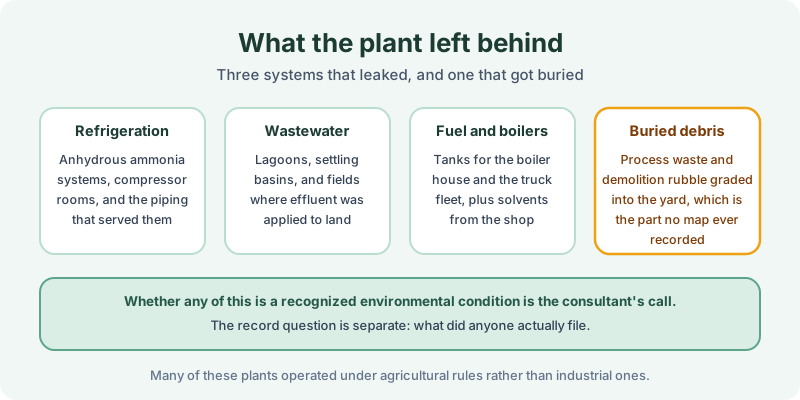
Refrigeration is the system people remember, because anhydrous ammonia plants were large, they ran continuously, and the compressor rooms and piping were extensive. Ammonia itself does not persist in soil the way a solvent does, and the equipment rooms, sumps, and oil separators that served the system are a different matter.
Wastewater is the defining condition. High strength effluent went to lagoons, settling basins, or fields where it was applied to land under permit. Lagoons were closed by draining and filling, sometimes carefully and sometimes not, and the closed basin is still there under whatever was graded over it.
Fuel and boilers contributed the ordinary industrial items: tanks for the boiler house and the truck fleet, plus solvents and degreasers from the maintenance shop.
Buried debris is the item that turns a mapped condition into an unmapped one. Process waste and demolition rubble were graded into the yard, and nothing about that ever reached a map or a filing. Whether any of this amounts to a recognized environmental condition is a determination for the environmental professional, not for the abstractor. The record question is separate: what did anyone file.
What the record may carry
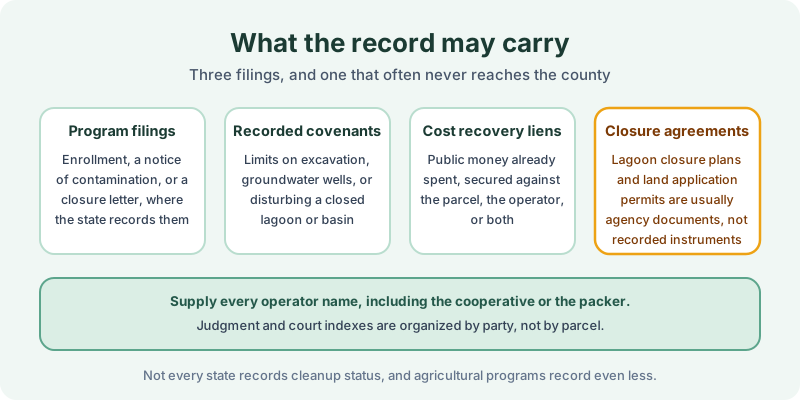
Program filings appear where a state records enrollment, a notice of contamination, or a closure document, and practice is uneven, as our note on voluntary cleanup programs explains.
Recorded covenants are the consequential instrument where one exists, limiting excavation, groundwater wells, or disturbance of a closed lagoon or basin. Those are the subject of our note on environmental covenants and UECA, and the groundwater half is covered in our note on groundwater use restrictions.
Cost recovery liens secure public money already spent and may run against the parcel, the operator, or both.
Closure agreements are the gap worth naming. Lagoon closure plans and land application permits are ordinarily agency documents rather than recorded instruments, so the county can be silent while a substantial file exists at the state.
Names matter here as much as anywhere. Plants passed between packers, cooperatives, and independent renderers, and judgments and consent orders are indexed under whichever name was current, the pattern described in our note on judicial records.
Scoping the search
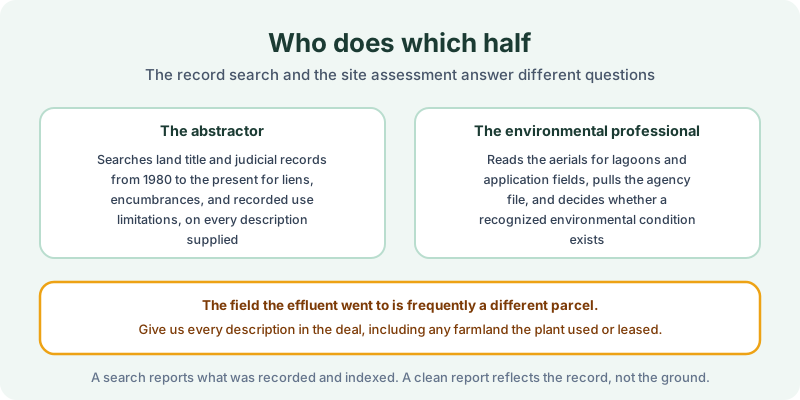
One wrinkle dominates the rest. The land where effluent was applied is frequently not the plant parcel. It may be a field a quarter mile away that the operator owned separately or leased, and a restriction recorded against that field will never appear in a search of the plant site. If the transaction includes surrounding farmland, each legal description needs its own search, and it is worth asking the seller directly which ground the plant used.
A second wrinkle is footprint. A plant that occupied thirty acres with rail access has usually been split since, so a covenant recorded against the original tract can sit under a description that no longer matches the lot being sold. Ask for the pre-subdivision description wherever the tract was divided, because that is where an older instrument will be indexed.
Read the result with the right expectation. A search reports what was recorded and indexed over the term searched, so a plant closed under an agricultural permit with nothing filed against title will generate a clean report that reflects the record rather than the ground. The FAQ covers how we handle thin or unindexed counties, and a sample report shows the format the findings arrive in.
The 1980 Environmental Lien & AUL report is the record half of this work. Certified title abstractors review land title and judicial records from 1980 to the present and document every environmental lien, encumbrance, and AUL found, with the recorded instruments attached. It is $425, delivered by email in 3–5 business days. Order online, and tell us how many descriptions the deal involves so the scope is set before anything is run.
Get an E1527-21 compliant lien & AUL report
Our 1980 Environmental Lien & AUL reports are researched by certified title abstractors, cover judicial records, and are guaranteed accurate. Delivered in 3–5 business days.
or call 877-848-5337