Published
A closed paper mill is one of the largest single-owner industrial footprints a buyer is likely to encounter, and it rarely comes as one parcel. The mill sits on a river because the process needed water, the treatment lagoons sit alongside it, and the sludge disposal ground sits somewhere else again, frequently under a different legal description and sometimes under a different owner. That structure is what makes the record work here a scoping problem before it is a research problem. The pattern rhymes with our note on former textile mills: a water-dependent process, a long operating life, and a waste stream that had to go somewhere on the property.
What the mill left behind
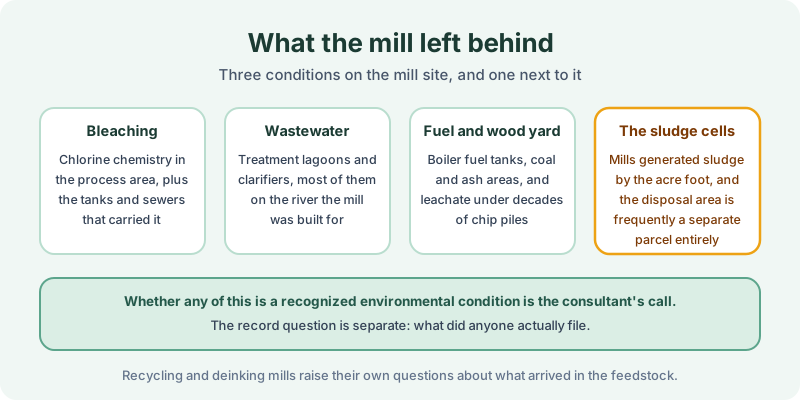
Bleaching is the chemistry people ask about. Chlorine based bleaching sequences ran for decades before mills moved away from them, and the process area, the tanks, and the sewers that served them are where that history sits.
Wastewater is the largest physical feature. Treatment lagoons and clarifiers were built to handle enormous volumes, and closing one means draining, dewatering, and covering it, which leaves a structure below grade rather than an absence.
Fuel and the wood yard contributed the ordinary items: boiler fuel tanks, coal and ash handling areas, and leachate under chip piles that sat in the same place for fifty years.
The sludge cells are the item that changes the search. Mills generated residual solids at a scale that required dedicated disposal ground, and that ground is frequently a separate parcel. Whether any of this amounts to a recognized environmental condition is a determination for the environmental professional, not for the abstractor. The record question is separate: what did anyone file.
Recycling and deinking mills raise an additional question, because their feedstock was somebody else’s paper and nobody controlled what arrived with it.
What the record may carry
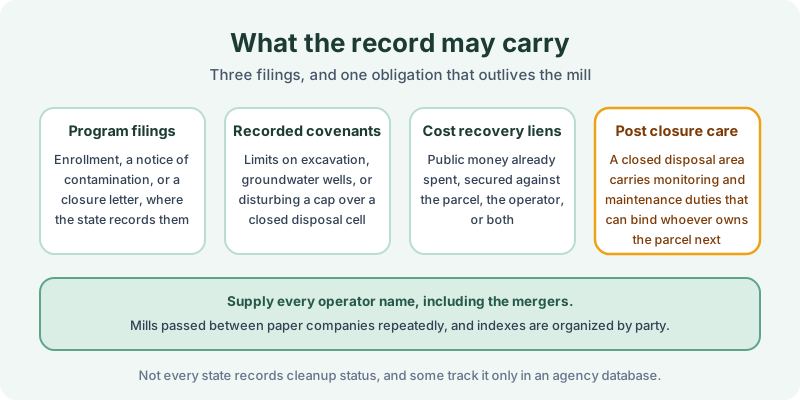
Program filings appear where a state records enrollment, a notice, or a closure document, and practice varies, which our note on voluntary cleanup programs covers.
Recorded covenants are the consequential instrument, and on mill sites they usually attach to the closed disposal area rather than to the process area: limits on excavation, on groundwater wells, or on disturbing a cap. Those are the subject of our note on environmental covenants and UECA.
Cost recovery liens secure public money already spent and may run against the parcel, the operator, or both.
Post closure care is the obligation worth understanding before closing. A closed disposal cell carries monitoring and maintenance duties that can bind whoever owns that parcel next, and those duties are usually documented at the agency with a recorded instrument pointing at them rather than reproducing them. Our note on what an AUL actually requires explains why the operative document matters more than the summary.
Names are the usual unlock. Mills changed hands repeatedly as paper companies consolidated, and judgments, consent orders, and settlements are indexed under whichever name was current at the time, the point our note on judicial records develops.
Scoping the search
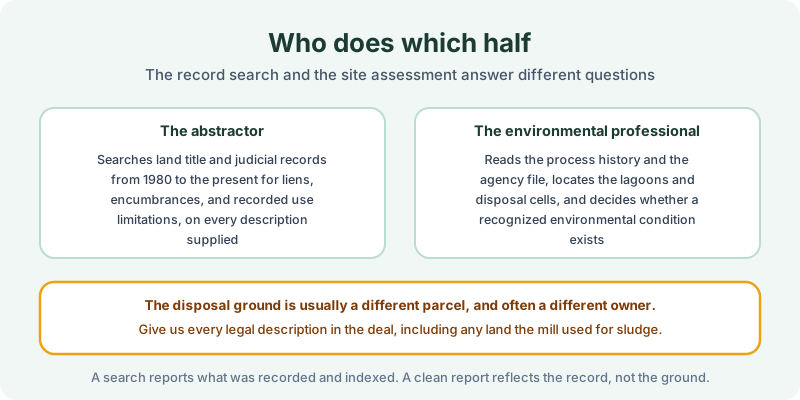
Ask the seller directly which ground the mill used for sludge and where the lagoons were, then give us every legal description involved. A restriction recorded against the disposal parcel will not appear in a search of the mill parcel, and a buyer acquiring the mill without the disposal ground can still inherit a neighbor with a monitoring obligation and an access right.
Footprint compounds this. A mill campus that ran to two hundred acres has often been split for redevelopment, so an instrument recorded against the original tract may sit under a description that no longer matches the lot being sold. Ask for the pre-subdivision description wherever the tract was divided.
Read the result with the right expectation. A search reports what was recorded and indexed over the term searched, so a mill managed for years under an agency file with nothing recorded against title will produce a clean report that reflects the record rather than the ground. The FAQ covers how we handle thin or unindexed counties, and a sample report shows the format the findings arrive in.
The 1980 Environmental Lien & AUL report is the record half of this work. Certified title abstractors review land title and judicial records from 1980 to the present and document every environmental lien, encumbrance, and AUL found, with the recorded instruments attached. It is $425, delivered by email in 3–5 business days. Order online, and tell us how many descriptions the deal involves so the scope is set before anything is run.
Get an E1527-21 compliant lien & AUL report
Our 1980 Environmental Lien & AUL reports are researched by certified title abstractors, cover judicial records, and are guaranteed accurate. Delivered in 3–5 business days.
or call 877-848-5337