Published
Old textile mills are among the most sought after redevelopment buildings in the country. Heavy timber, tall windows, a riverfront location, and a municipality eager to see the site reused. The chemistry that ran inside them for a century gets far less attention than the architecture, and it is the part that reaches the land record. The pattern here is close to the one described in our note on former wood treating sites: a long operating history, several distinct waste streams, and a parcel that has been carved up since the plant closed.
Four streams, and one that moves
Textile processing is not a single operation. Spinning and weaving are relatively benign; the dyeing, bleaching, and finishing end of the plant is where the inventory sat.
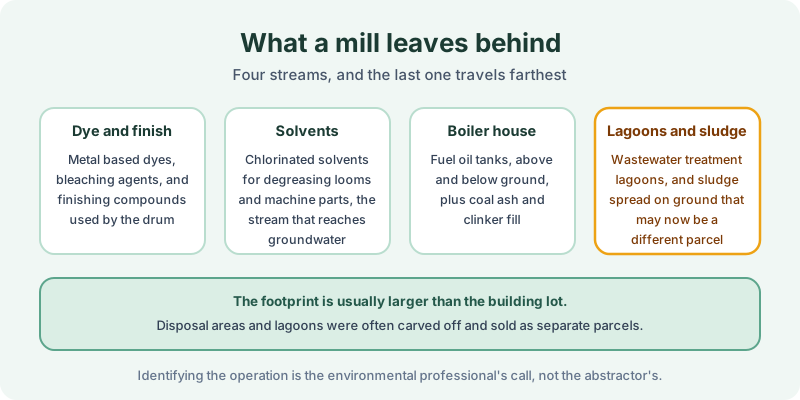
Dye and finishing chemistry ran through the plant in bulk, historically including metal based dyes and a long list of finishing compounds. Solvent degreasing is the stream that tends to matter most in a subsurface investigation, because chlorinated solvents used on looms, gears, and machine parts behave in groundwater the way they do at a machine shop or a dry cleaner. The boiler house carries its own history of fuel oil tanks above and below grade, plus coal ash and clinker used as fill across the yard. Wastewater lagoons and sludge are the fourth stream, and the one most likely to sit somewhere other than under the mill building.
Which of these matters on a given site is a question for the environmental professional. What the abstractor contributes is the record trail each of them can leave.
The footprint usually outgrew the parcel
Mill complexes were rarely one tidy lot. A company town commonly included worker housing, a company store, rail sidings, a coal yard, settling ponds, and land where sludge was spread. Over the decades those pieces were sold off in blocks, given to a municipality, or foreclosed and resold.
That history creates the specific problem this search exists to catch. A filing recorded against the original mill tract in 1988 sits in the index under a description that no longer matches the parcel a buyer is looking at today, which is the same mechanism covered in what happens to an AUL when a parcel is subdivided. Running the search on the current legal description alone can miss it. Running it through the chain, using the descriptions each conveyance actually used, is what surfaces it.
Signals in the land record
Three kinds of filings are worth looking for on a mill site, and one chain problem sits behind all of them.
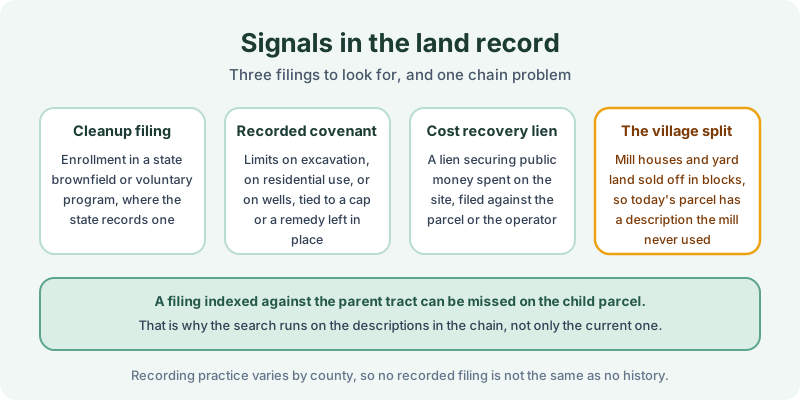
Cleanup program filings appear where a state records enrollment in a brownfield or voluntary program, which is common on mill sites precisely because redevelopment money flows through those programs. Recorded covenants are the operative documents for a reused building: a restriction on excavation below a cap, on residential use of a particular floor or parcel, or on installing a well. Our note on environmental covenants and UECA covers how those instruments are written and who can enforce them. Cost recovery liens secure public money already spent, and they can be filed against the parcel, the operator, or both.
Recording practice varies by county, and plenty of mill sites with substantial regulatory files have nothing recorded at all. A clean report reflects the record searched, not the condition of the property.
Scoping the search
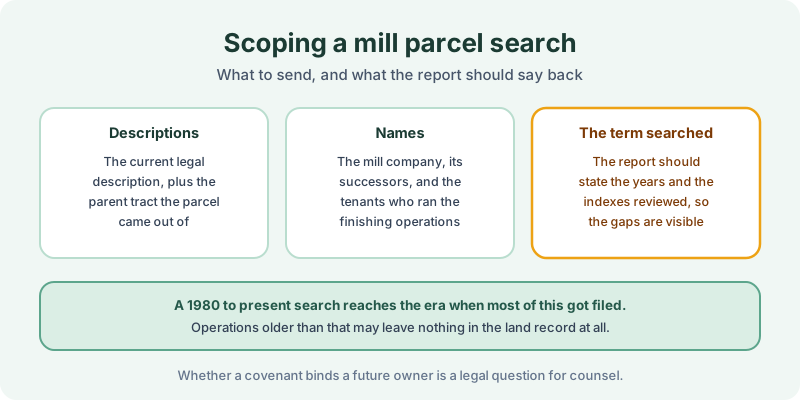
Send the current legal description and, where you have it, the parent tract the parcel came out of. Send names: the mill company, its successors and assigns, and the tenants who ran finishing operations after the original owner left. Names drive the judicial half of the search, and a dissolved entity nobody mentions is a name nobody can search.
Then read what comes back for its stated scope. A useful report names the years searched and the indexes reviewed, so a gap is visible rather than implied. Mill operations that ended before the modern regulatory era may leave nothing in the land record even though the contamination is real, which is why brownfield redevelopment diligence pairs the records search with the consultant’s file review rather than treating either as sufficient alone. Our FAQ covers what a standard term includes.
Our 1980 Environmental Lien & AUL report is built for this: certified title abstractors review land title and judicial records from 1980 to the present and document every environmental lien, encumbrance, and AUL found, with the recorded instruments attached. It’s $425, delivered by email in 3–5 business days. Order online, or see how the search is performed first.
Get an E1527-21 compliant lien & AUL report
Our 1980 Environmental Lien & AUL reports are researched by certified title abstractors, cover judicial records, and are guaranteed accurate. Delivered in 3–5 business days.
or call 877-848-5337