Published
A long low building on ten acres, loading docks along one side, a rail spur running to the back of the lot. It is leasing now as warehouse space and the listing describes it as light industrial. For thirty years it compounded and molded polymers, which meant solvents for cleaning, plasticizers and stabilizers in the mix, and a water bill large enough to need its own recorded easements. The land record describes the site’s working life quite clearly if the search reaches back far enough, and it will not describe the chemistry at all. Reading it is close cousin to a former printing plant, on a larger footprint.
The shape of the site in the chain
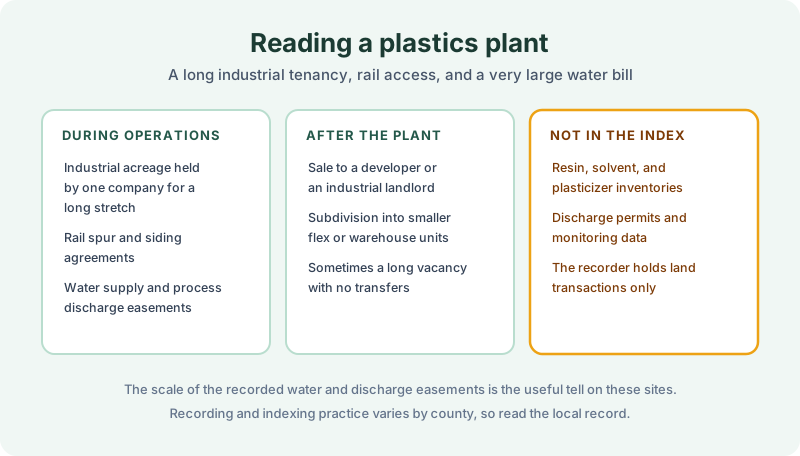
Industrial acreage held by one company for a long stretch, frequently assembled from smaller parcels when the plant was built. Rail spur and siding agreements, because resin arrived in hopper cars. And the water, which is the distinctive part. Process cooling and discharge on this scale leaves recorded supply easements and discharge routes out of all proportion to any warehouse use, and their presence in the index is a useful tell.
After the plant, the pattern is a sale to a developer or an industrial landlord, subdivision into smaller flex or warehouse units, and sometimes a long vacancy during which nothing is recorded at all.
That vacancy is worth noticing rather than skipping past. A stretch of years with no conveyances is not evidence that nothing happened on the site, it is evidence that nobody bought or sold it, and those are different claims. Remediation, agency enforcement, and the recording of a covenant can all take place during a period when the ownership index is completely silent.
What the recorder never received is the process. Resin, solvent, and plasticizer inventories, discharge permits, and monitoring data all sit with the operator and the regulator. The county index holds land transactions and nothing else, which is the boundary set out in how an environmental lien and AUL search is performed.
What the search is looking for
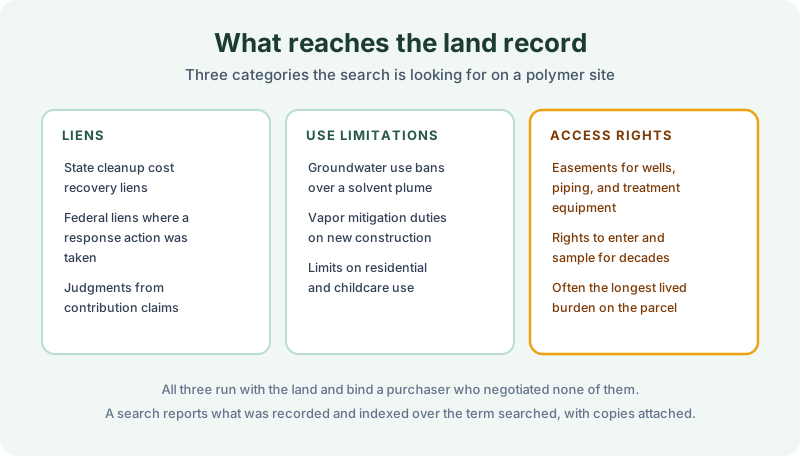
Liens. State cleanup cost recovery liens, federal liens where a response action was taken, and judgments arising from contribution claims among former operators. Priority varies, and superlien states covers that.
Use limitations. Groundwater use bans over a solvent plume, vapor mitigation duties on new construction, and limits on residential or childcare use. These are the durable instruments described in environmental covenants and UECA, and they bind a purchaser who negotiated none of them.
Access rights. Easements permitting wells, piping, and treatment equipment, with rights to enter and sample for decades. On these sites they are frequently the longest lived burden on the parcel, as covered in remediation access easements.
The operator may not be in the chain at all
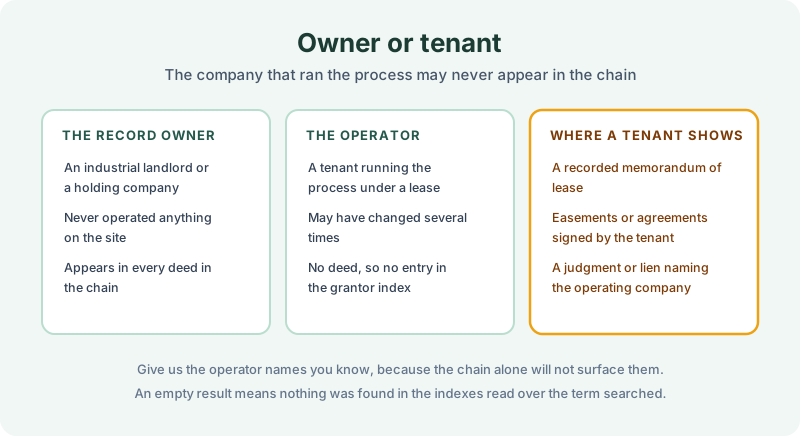
This is the point that catches people on industrial sites more than anywhere else. The record owner is often an industrial landlord or a holding company that never operated anything, and the company that actually ran the process was a tenant. A tenant signs no deed, so a tenant appears nowhere in the grantor index, and a chain search can produce a complete and accurate ownership history that never once names the business responsible for the chemistry.
Where a tenant does surface, it is through a recorded memorandum of lease, an easement or agreement the tenant signed in its own name, or a judgment or lien naming the operating company. So the practical instruction is simple. Send us the operator names you know, from a Sanborn map, a city directory, an old sign, or the consultant’s own research, because the chain will not surface them and a name search will. The same principle drives an environmental lien search for leased property.
Where the search fits
An environmental lien and AUL search answers one defined question inside the ASTM scope, which is whether the land title and judicial records show liens or use limitations affecting the property. The recognized environmental condition call belongs to the environmental professional, working from the database review, the interviews, and the reconnaissance, as set out in user responsibilities under the Phase I standard. Recording practice varies by county, so where any instrument sits is a local fact.
A 1980 Environmental Lien & AUL report closes the recorded half. Certified title abstractors review land title and judicial records from 1980 to the present and document every environmental lien, encumbrance, and AUL found, with the recorded instruments attached. It’s $425, delivered by email in 3–5 business days. Order online, or look at a sample report if you want to see the format first.
Get an E1527-21 compliant lien & AUL report
Our 1980 Environmental Lien & AUL reports are researched by certified title abstractors, cover judicial records, and are guaranteed accurate. Delivered in 3–5 business days.
or call 877-848-5337