Published
A large low building on a suburban campus, mature landscaping, a parking field sized for a shift that no longer exists. It presents as ordinary flex or office space, and forty years ago it etched wafers or assembled circuit boards using chlorinated solvents by the drum. That history rarely shows up in the marketing package, and it very often shows up in the land record, which is where the chain of title in a Phase I ESA starts earning its place.
What the chain looks like on a fab campus
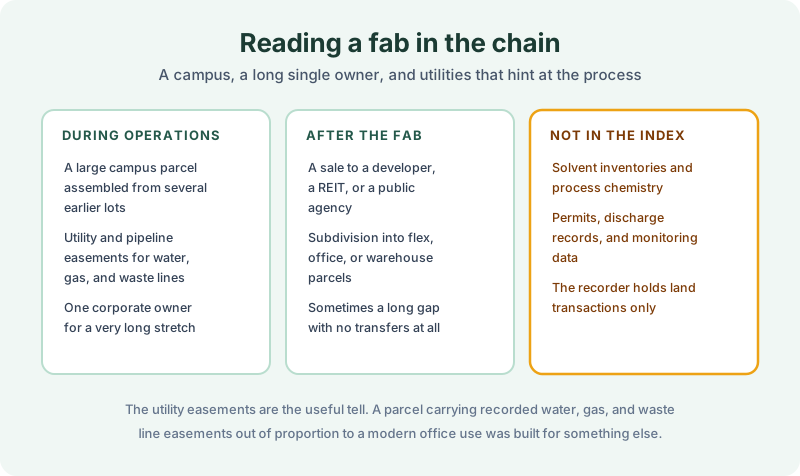
The pattern is fairly distinctive. A single corporate owner assembles several smaller lots into one campus parcel, holds it for twenty or thirty years, and records almost nothing during that period except easements. Then the operation moves offshore or consolidates, and the parcel is sold to a developer, a real estate investment trust, or a public agency, frequently followed by a subdivision into flex, office, or warehouse lots.
The easements are the tell worth watching. Water supply, gas, sanitary and industrial waste lines, and sometimes a dedicated discharge route all get recorded, and the scale of them is out of proportion to any modern office use. A parcel carrying that much recorded utility infrastructure was built for a process, not for desks.
What the recorder never received is the process itself. Solvent inventories, discharge permits, and monitoring data sit in agency files, and the county index holds land transactions only.
One more feature of these chains is worth flagging. A long stretch with no transfers at all is common on industrial campuses, because a company that builds a fab tends to keep it, and that quiet period can span the years when the handling practices of concern were ordinary. A search whose term is set by the last transfer will stop short of it. Setting the term by the history rather than by the deeds is the whole point of reaching back to 1980, and our note on why the search runs from 1980 sets out where that date comes from.
The three categories a search is looking for
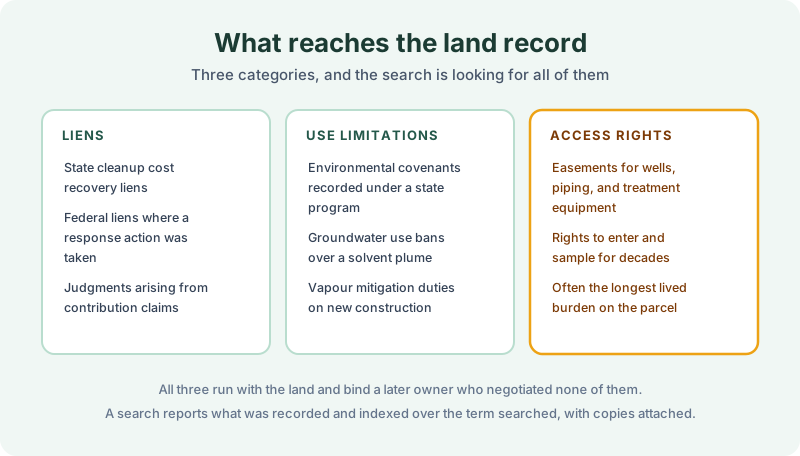
Liens. State cleanup cost recovery liens, federal liens where a response action was taken, and judgments arising out of contribution claims among former operators. Priority varies, and on that point our note on superlien states is the relevant reading.
Use limitations. Environmental covenants recorded under a state program, groundwater use prohibitions over a solvent plume, and duties to install vapor mitigation in any new construction. These are the instruments the UECA covenant framework was built to make durable, and they bind a purchaser who negotiated none of them.
Access rights. Easements permitting a responsible party to install wells, run piping, and operate treatment equipment, often with a right to enter and sample for decades. These are frequently the longest lived burden on the parcel, and our note on remediation access easements covers how they read.
The plume does not stop at the property line
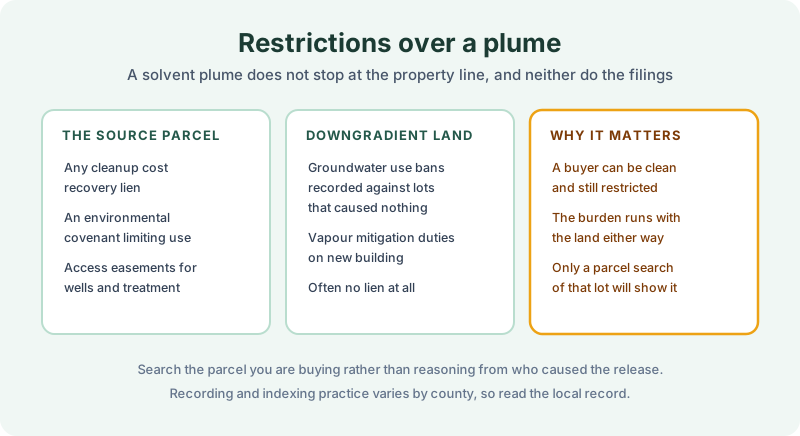
This is the point that catches buyers on adjacent land. Chlorinated solvents move with groundwater, and the restrictions that follow are recorded against whichever parcels sit over the plume. A lot that never hosted an operation, whose owner did nothing wrong, can carry a recorded groundwater use ban and a vapor mitigation requirement all the same.
So the search has to be run against the parcel you are actually buying rather than reasoned out from who caused the release. The burden runs with the land in either case, and only a search of that specific lot will surface it. Recording and indexing practice varies by county, so where these instruments sit is a local fact.
Where the search fits in the assessment
An environmental lien and AUL search answers one defined question inside the ASTM scope, which is whether the land title and judicial records show liens or use limitations affecting the property. It does not evaluate the site, and the recognized environmental condition call stays with the environmental professional, working from the database review, the interviews, and the reconnaissance. Our note on user responsibilities under the Phase I standard sets out where that division sits, and the FAQ covers the common questions about scope.
A 1980 Environmental Lien & AUL report is what closes that piece. Certified title abstractors review land title and judicial records from 1980 to the present and document every environmental lien, encumbrance, and AUL found, with the recorded instruments attached. It’s $425, delivered by email in 3–5 business days. Order online, or look at a sample report first if you want to see the format. For a comparable industrial history with a different chemistry, see our note on former metal plating shops.
Get an E1527-21 compliant lien & AUL report
Our 1980 Environmental Lien & AUL reports are researched by certified title abstractors, cover judicial records, and are guaranteed accurate. Delivered in 3–5 business days.
or call 877-848-5337