Published
A third of an acre behind a chain link fence, gravel surface, nothing on it. It is being sold as an infill lot and the price reflects that. Forty years ago it held transformers, oil filled switchgear, and a service yard where equipment was maintained, and the fluid in that equipment routinely contained PCBs. The parcel is easy to overlook because it is small and looks like nothing, and the land record describes its history quite clearly if the search reaches back far enough. Reading it is the same exercise as a railroad corridor or rail yard, on a smaller footprint.
The shape of a substation in the chain
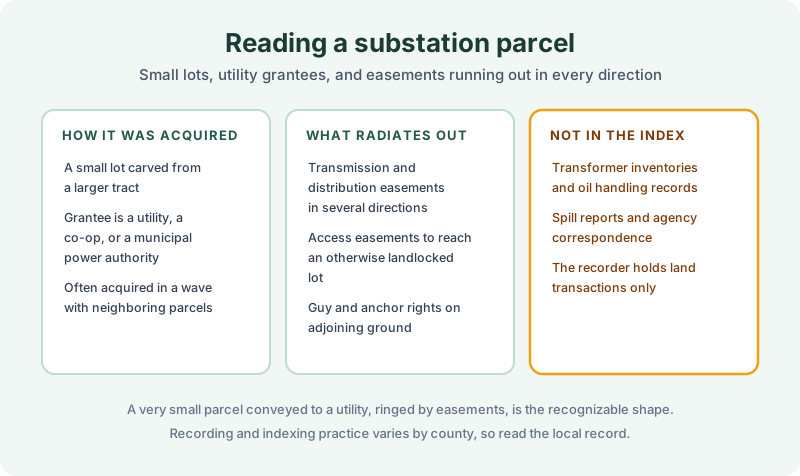
The pattern is recognizable once you have seen it. A small lot is carved out of a larger tract and conveyed to a utility, an electric cooperative, or a municipal power authority, frequently as part of a wave of similar acquisitions across neighboring parcels in the same year.
Then the easements. Transmission and distribution corridors radiating out in several directions, an access easement to reach a lot that would otherwise be landlocked, and guy and anchor rights recorded against adjoining ground. A very small parcel with a utility grantee and a ring of easements is close to a signature.
What the recorder never received is the equipment history. Transformer inventories, oil handling and disposal records, spill reports, and agency correspondence all sit in company and regulator files. The county index holds land transactions and nothing else, which is the boundary set out in how an environmental lien and AUL search is performed.
One further feature of these chains is worth noting. Utilities hold property for a very long time, so a substation parcel can sit with a single owner for fifty or sixty years with almost nothing recorded against it. That quiet stretch is not evidence that nothing happened, it is evidence that nothing was conveyed. A search whose term is set by the last transfer will stop at the sale to the current owner and never reach the acquisition that explains what the lot was, which is one of the plainer arguments for the fixed 1980 start date covered in why the search runs from 1980.
What a search is looking for
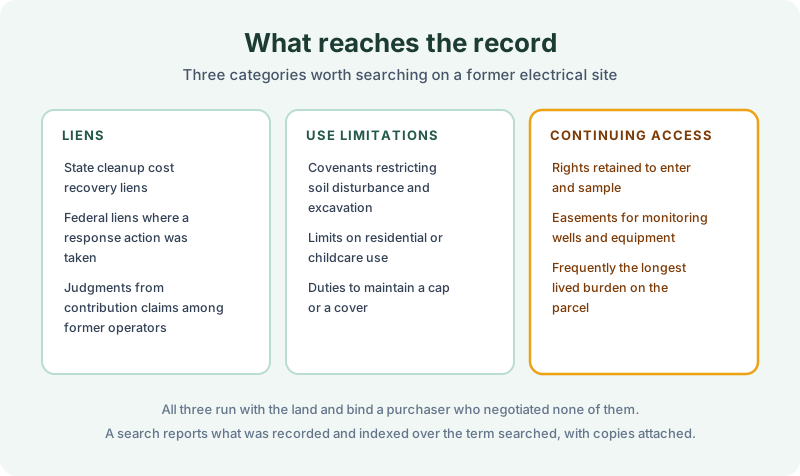
Liens. State cleanup cost recovery liens, federal liens where a response action was taken, and judgments arising from contribution claims among former operators. Priority varies, and superlien states is the relevant note there.
Use limitations. Covenants restricting soil disturbance and excavation, limits on residential or childcare use, and duties to maintain a cap or cover. These are the instruments the UECA covenant framework exists to make durable, and they bind a purchaser who negotiated none of them.
Continuing access. Rights retained to enter and sample, and easements for monitoring wells and equipment. On sites like this they are frequently the longest lived burden on the parcel, which our note on remediation access easements covers in detail.
The easements reach further than the equipment did
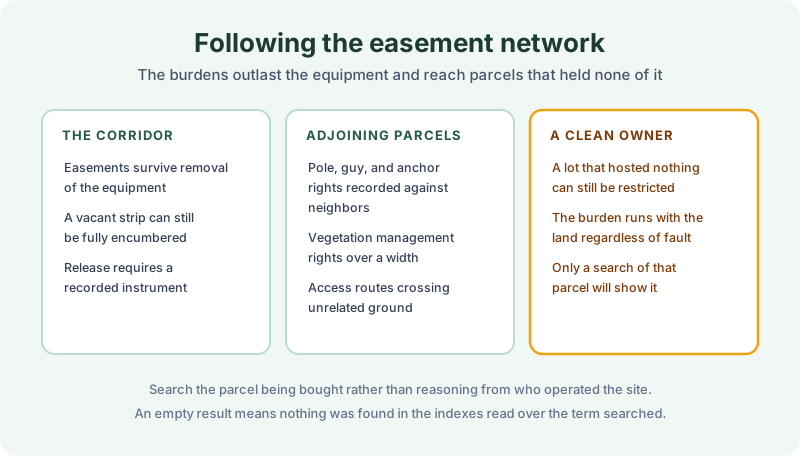
Corridor easements survive the removal of the equipment. A strip that looks like an empty margin of a field can be fully encumbered, and releasing it requires a recorded instrument that frequently nobody ever bothered to file.
The effect spreads to parcels that hosted nothing. Pole, guy, and anchor rights recorded against neighbors, vegetation management rights over a stated width, and access routes crossing unrelated ground all bind whoever owns that land now. A buyer who did nothing wrong and whose lot never held a transformer can still carry a recorded restriction, so the search has to run against the parcel actually being bought rather than reasoning from who operated the site. Recording and indexing practice varies by county, so where those instruments sit is a local fact.
Where the search fits
An environmental lien and AUL search answers one defined question inside the ASTM scope, which is whether the land title and judicial records show liens or use limitations affecting the property. The recognized environmental condition call belongs to the environmental professional working from the database review, the interviews, and the reconnaissance, as set out in user responsibilities under the Phase I standard.
A 1980 Environmental Lien & AUL report closes the recorded half. Certified title abstractors review land title and judicial records from 1980 to the present and document every environmental lien, encumbrance, and AUL found, with the recorded instruments attached. It’s $425, delivered by email in 3–5 business days. Order online, or look at a sample report if you want to see the format first.
Get an E1527-21 compliant lien & AUL report
Our 1980 Environmental Lien & AUL reports are researched by certified title abstractors, cover judicial records, and are guaranteed accurate. Delivered in 3–5 business days.
or call 877-848-5337