
Published
PFAS has moved from a specialist concern to a standard question on commercial diligence in the space of a few years, and the land record has not caught up with it. Most PFAS investigations are recent, many are ongoing, and a great deal of what a buyer wants to know sits in agency files rather than in the county recorder’s office. That gap is worth understanding before an order is placed, because it changes what a records search is being asked to do. The same distinction between recorded and unrecorded material runs through how an environmental lien and AUL search is performed.
Which sites raise the question
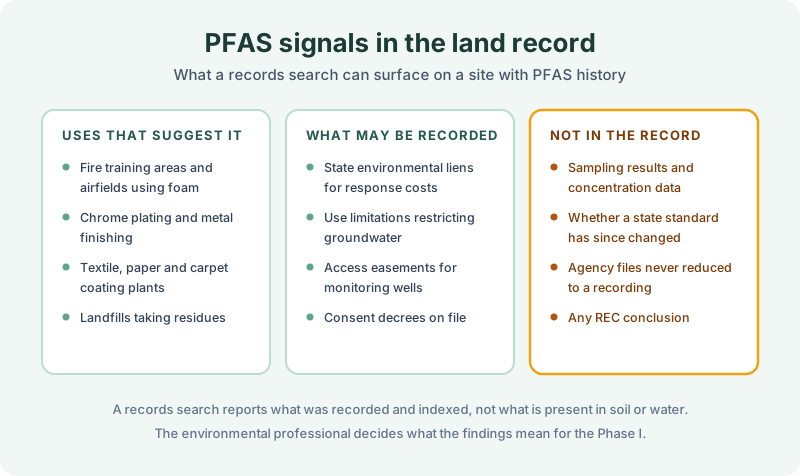
PFAS describes a large family of fluorinated compounds used since the 1950s for their resistance to heat, water, and oil. The property types that come up repeatedly are fire training areas and airfields where aqueous film forming foam was discharged, metal plating and finishing shops that used fume suppressants, textile and carpet plants applying stain resistant coatings, paper mills producing grease resistant packaging, and landfills that accepted industrial residues from any of the above.
A former military airfield is the archetype, and deed restrictions on former military property frequently reference groundwater limits that were written before PFAS was the named concern. Municipal fire training grounds sit in the same category and rarely get flagged, because nobody thinks of a fire department as an industrial user.
What can actually be recorded
Three kinds of instrument reach the land record on these sites.
- Environmental liens. Where a state has spent public money on response costs and asserted a lien against the property, that lien is filed and indexed like any other. State authority for this varies, and a handful of states give the claim priority over earlier interests, which is covered in environmental superlien states.
- Activity and use limitations. A recorded covenant limiting how the parcel may be used. On PFAS sites the near universal form is a groundwater restriction, which is the subject of groundwater use restrictions in the land record.
- Access easements. Rights granted to an agency or a responsible party to enter and maintain monitoring wells, sometimes running across parcels that were never contaminated themselves.
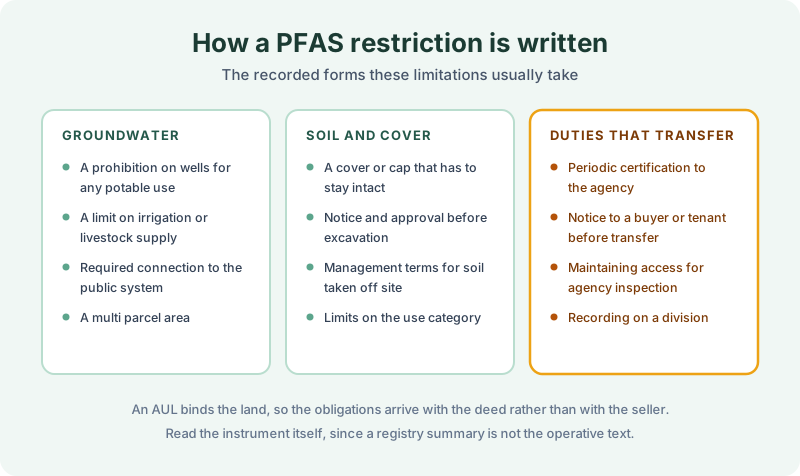
The duties in that second category are the ones that surprise people. An AUL binds the land, so periodic certification to the agency, notice on transfer, and maintenance of a cover all arrive with the deed rather than staying with the seller. What the instrument actually requires is set out in what an AUL actually requires, and the operative language is in the recorded document rather than in a registry summary of it.
Why the trail is thin
Regulation of PFAS is still being written. Many states set their first groundwater standards within the last several years, some sites are under investigation with no cleanup decision yet, and a parcel investigated in 2019 may have been closed under a standard that has since been tightened. None of that produces a recording.
There is also a timing problem specific to these compounds. A site closed years ago for solvents or petroleum, with an AUL recorded then, may now be a PFAS site as well, and the old covenant will say nothing about it. The recorded restriction is accurate about what it addresses and silent about what came later.
So the honest position is that a clean search result on a PFAS candidate site tells you nothing was found in the indexes searched. It is not evidence that the compounds are absent, and it is not a substitute for the regulatory database review and agency file work that belong to the environmental professional.
Where the search fits
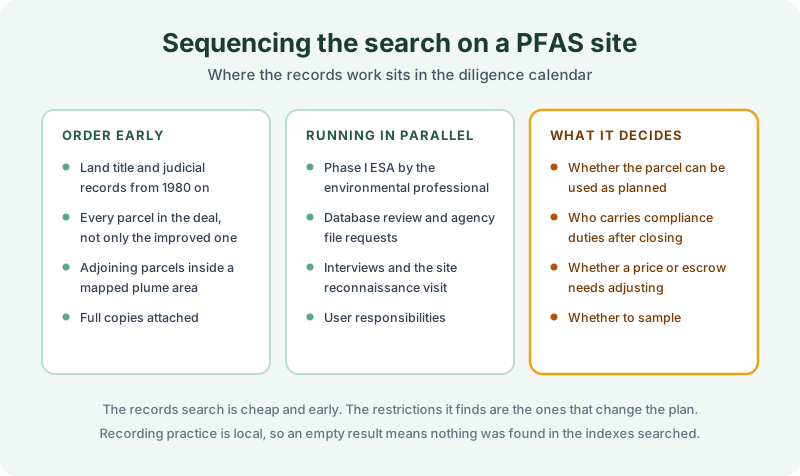
Order the records work at the front of the calendar rather than at the end of it. A recorded groundwater prohibition is a fact that can stop a deal outright when the plan involves a private well or an irrigated use, and finding it in week one costs a fraction of finding it in week six. Run every parcel in the transaction, and run adjoining parcels where a plume area has been mapped, since a restriction can be recorded against land that was never the source. The buyer’s own user responsibilities under the Phase I standard are separate obligations that a consultant cannot discharge on their behalf.
The 1980 Environmental Lien & AUL report is where that records work gets done. Certified title abstractors review land title and judicial records from 1980 to the present and document every environmental lien, encumbrance, and AUL found, with the recorded instruments attached. It’s $425, delivered by email in 3–5 business days. Order online, or read what an environmental lien means once one turns up before you do.
Get an E1527-21 compliant lien & AUL report
Our 1980 Environmental Lien & AUL reports are researched by certified title abstractors, cover judicial records, and are guaranteed accurate. Delivered in 3–5 business days.
or call 877-848-5337