Published
If the former gas station is the most familiar property with an environmental past, the dry cleaner is its quieter, meaner sibling. A neighborhood cleaner might occupy 1,200 square feet of an unremarkable strip mall, and yet dry cleaners rank among the most common sources of recognized environmental conditions in Phase I practice. The reason is chemistry.
Why such a small shop causes such a large problem
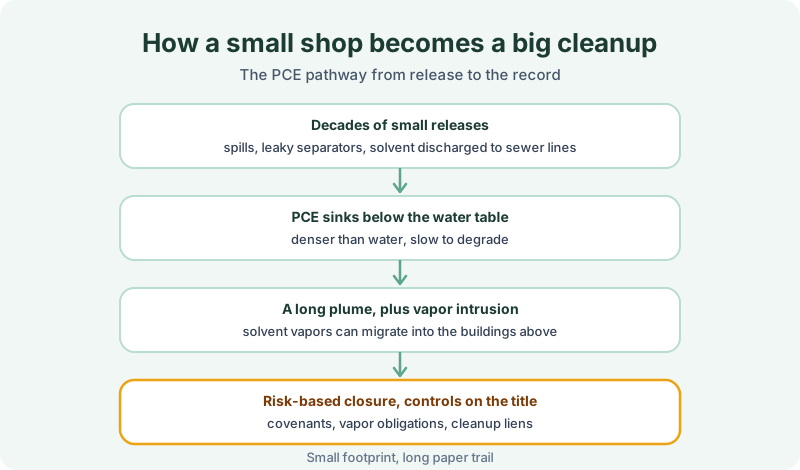
For decades, the industry’s workhorse solvent was perchloroethylene (PCE, or “perc”), a chlorinated solvent with habits that could not be more different from gasoline. Spilled gasoline floats on groundwater and, over time, degrades. PCE is denser than water: it sinks through the water table, works its way deep into an aquifer, resists breaking down, and feeds groundwater plumes that can run long distances from a release the size of a mop bucket. Decades of small spills, leaky separators, and solvent discharged to sewer lines add up. And because PCE readily volatilizes, its plumes come with a second act: vapor intrusion, solvent vapors migrating up into the buildings overhead, a pathway ASTM E1527-21 squarely includes in the Phase I’s scope.
Not a petroleum site, and that matters
The gas station post explained how CERCLA’s petroleum exclusion routes most gasoline releases to state UST programs. Dry cleaners get no such routing. PCE is a CERCLA hazardous substance, so a dry cleaner release sits fully inside federal Superfund liability as well as state cleanup law, cost-recovery liens included. About a dozen states run dedicated drycleaner remediation funds financed by industry fees, and cleanups under any of these programs tend to end the modern way: risk-based, with residual contamination managed in place and controls that, in many states, are recorded against the title.
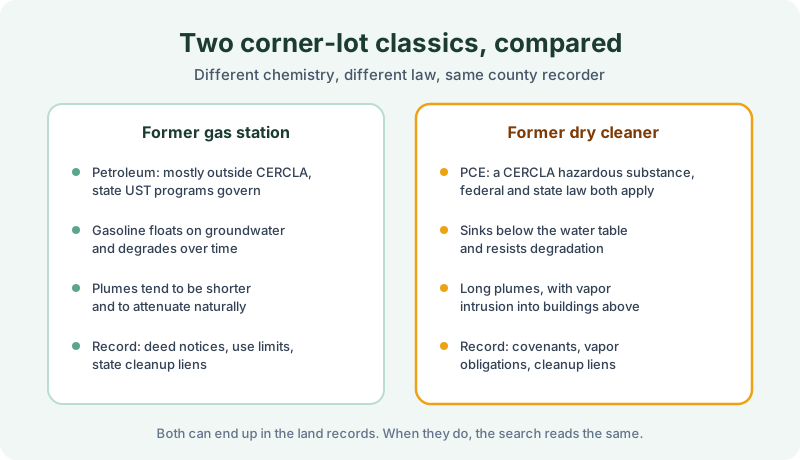
What the record can hold afterward looks familiar: environmental covenants barring residential use, groundwater restrictions, vapor mitigation obligations for the building above the plume, and liens securing what an agency or fund spent. In Phase I terms, a solvent release closed with residuals under controls is the textbook CREC, and the recorded instruments are often what document the controls.
The strip mall problem
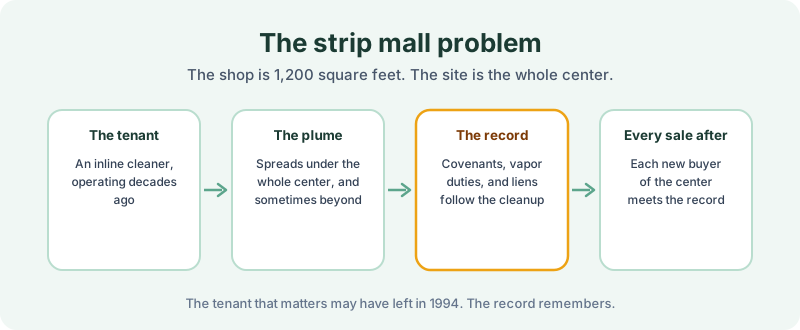
Here’s what makes dry cleaners a due-diligence trap: the shop is rarely the property. A cleaner is usually an inline tenant, so the contaminated “site” is the whole shopping center, and the plume doesn’t respect the parcel line. A buyer of the center inherits the issue with the deed; a buyer of the parcel next door can find the plume arrived years ago, and restrictions from someone else’s cleanup are sometimes recorded against neighboring parcels the plume reached. That’s why retail-property diligence checks the record even when the rent roll shows nothing but a nail salon and a sandwich shop: the tenant that matters may have left in 1994. Dating that tenancy is historical-use work, where a supplemental chain of title search earns its place in the Phase I.
Check the record before the letter of intent
None of this makes a former dry cleaner untouchable. Plenty are investigated, closed, and redeveloped, brownfield-style, under covenants that make the reuse safe. But the difference between a manageable CREC and a surprise is whether you read the record first. Our 1980 Environmental Lien & AUL report covers the records half: certified title abstractors review land title and judicial records from 1980 to the present and document every environmental lien, encumbrance, and AUL found, with the recorded instruments attached. It’s $425, delivered by email in 3–5 business days. Order online, and if something surfaces, here’s how to read it.
Get an E1527-21 compliant lien & AUL report
Our 1980 Environmental Lien & AUL reports are researched by certified title abstractors, cover judicial records, and are guaranteed accurate. Delivered in 3–5 business days.
or call 877-848-5337