
Published
Battery plants are easy to miss in due diligence because they rarely looked like heavy industry. A lead-acid manufacturer or a battery breaking operation could run out of one metal building on a two acre lot, employ thirty people, and close quietly in the 1980s. What it left behind is lead, and lead does not break down. The record profile of these parcels has more in common with our note on former shooting ranges than with a solvent site: the contaminant is a metal, it sits in shallow soil, and the remedy is usually containment rather than removal. That last point is exactly what puts these sites into the land records.
What the plant left behind
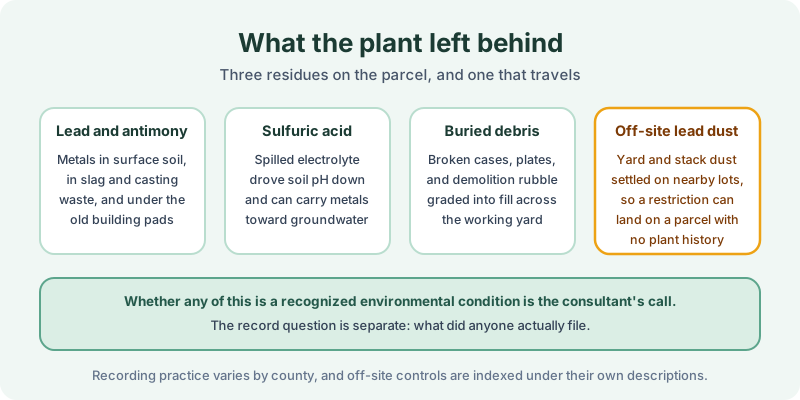
Lead and its alloys are the signature. Grid casting, plate pasting, and formation all shed lead, and secondary smelting added antimony, arsenic, and slag. Because the dust settled rather than sinking, the highest concentrations are commonly in the top foot or two of soil, which is also the depth a future owner disturbs first.
Sulfuric acid is the second stream. Electrolyte filling and spent acid handling drove soil pH down in places, and low pH can move metals that would otherwise stay put. Where a plant had a neutralization pit or a sump, that structure is often still there below grade.
Buried debris turns a mapped condition into an unmapped one. Broken cases, cut plates, and demolition rubble were routinely graded into fill across the working yard, so the footprint of the problem can be wider than the footprint of the building.
Off-site dust is the item that makes these sites different. Yard traffic and stack emissions carried lead onto adjacent lots, and where an agency later cleaned soil across a neighborhood, the paperwork can land on ordinary houses. Whether any of this amounts to a recognized environmental condition is a determination for the environmental professional, not for the abstractor. The record question is separate: what did anyone file.
What the record may carry
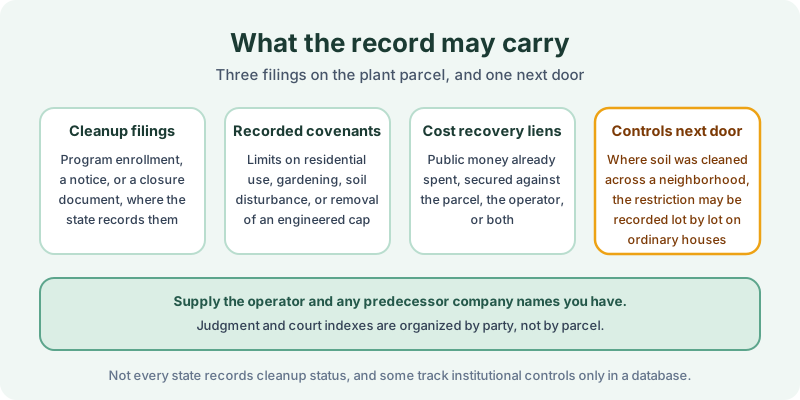
Three filings are worth hunting for on the plant parcel itself. Cleanup program filings appear where a state records enrollment, a notice of contamination, or a closure document, and our note on voluntary cleanup programs covers how uneven that practice is from state to state. Recorded covenants are usually the consequential item, because a capped or covered lead site is managed rather than cleared, and the instrument then limits residential use, gardening and soil disturbance, or removal of the cap. Those instruments are the subject of our note on environmental covenants and UECA. Cost recovery liens secure public money already spent and may run against the parcel, the operator, or both.
Timing works in a buyer’s favor here, which is unusual. Many of these operations ran into the 1970s and 1980s and were investigated as they closed or shortly after, so the filings tend to sit inside the 1980 forward window a lien and AUL search covers rather than behind it.
Names matter as much as parcels. Battery recyclers changed hands often, and small operators were frequently absorbed into scrap and metals companies, a pattern our note on former salvage yards describes from the other direction. Judgments, consent orders, and settlements are indexed under whichever name was current at the time, so a historic operator name supplied by the client is often the single most valuable input to a search. Our note on judicial records explains why.
Scoping the search
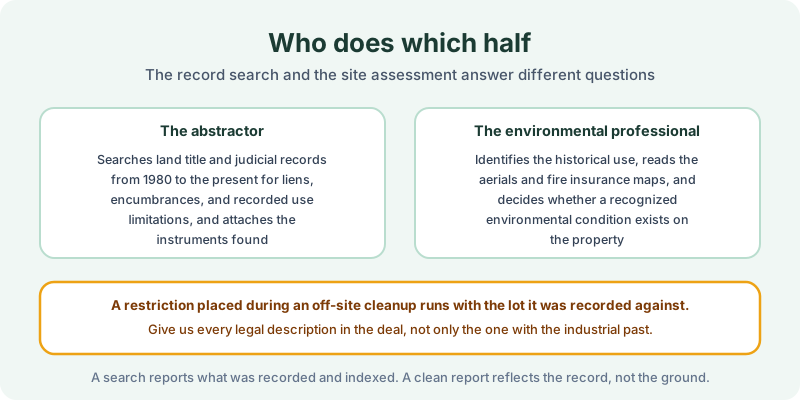
Two wrinkles are specific to these deals. The first is scope by description. A restriction recorded during an off-site cleanup runs with the lot it was recorded against, so if the transaction includes neighboring parcels, each legal description needs its own search. A buyer who orders only the industrial parcel can miss the covenant on the residential lot behind it. The second is registry coverage. Several states track institutional controls in a database rather than only in the county books, which is why our note on institutional control registries treats the registry and the recorder as two separate searches.
Read the result carefully. A search reports what was recorded and indexed over the term searched, and a small plant that closed without agency involvement can generate nothing at all, so a clean report reflects the record rather than the ground. The FAQ covers how we handle thin or unindexed counties, and a sample report shows the format the findings arrive in.
The 1980 Environmental Lien & AUL report is the record half of this work. Certified title abstractors review land title and judicial records from 1980 to the present and document every environmental lien, encumbrance, and AUL found, with the recorded instruments attached. It is $425, delivered by email in 3–5 business days. Order online, or see our note on chain of title in a Phase I ESA for how the ownership history fits the rest of the report.
Get an E1527-21 compliant lien & AUL report
Our 1980 Environmental Lien & AUL reports are researched by certified title abstractors, cover judicial records, and are guaranteed accurate. Delivered in 3–5 business days.
or call 877-848-5337